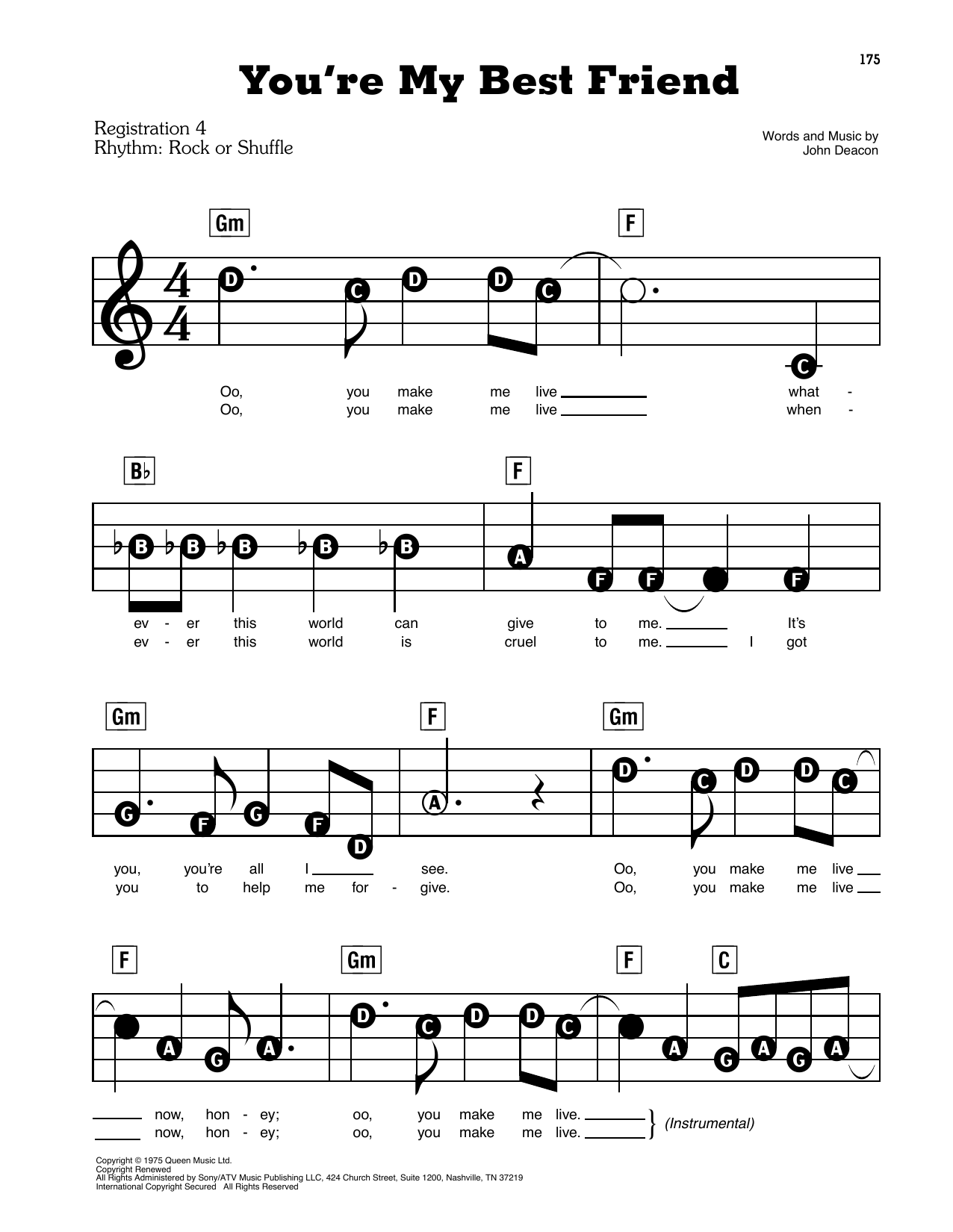
John Deacon was always the quiet one. In a band fronted by Freddie Mercury’s operatic bravado and Brian May’s celestial guitar work, Deacon usually just stayed in the pocket, keeping the pulse steady. Then came 1975. Amidst the frantic, high-stakes recording sessions for A Night at the Opera, Deacon brought a song to the table that felt... different. It wasn't a prog-rock odyssey like "Bohemian Rhapsody" or a hard-rocker like "Death on Two Legs." It was a simple, heartfelt pop tune called You're My Best Friend, and honestly, it changed the trajectory of the band’s commercial appeal forever.
It’s easy to dismiss it now as a wedding playlist staple. But back then? It was a risk.
The Wurlitzer Dispute That Defined the Sound
You've probably heard the story that Freddie Mercury hated the electric piano. It’s mostly true. When Deacon presented You're My Best Friend, he insisted it be played on a Wurlitzer. Freddie, a piano purist who worshipped the grandiosity of a Bechstein, flatly refused to play the "tinny-sounding" thing. He called it a "horrible" instrument.
So, John took it home.
He actually learned how to play the electric piano specifically for this track because he had a very specific vision for that "barking" tone the Wurlitzer provides. If you listen closely to the studio recording, that’s John Deacon on the keys, not Freddie. Freddie eventually came around to singing it—obviously—and his vocal performance is masterclass in restraint. He didn't over-sing it. He treated it with the same sweetness Deacon had written into the lyrics for his wife, Veronica Tetzlaff.
Most people don't realize how pivotal this was for Queen's internal democracy. Before this, the songwriting was heavily dominated by Mercury and May. You're My Best Friend proved that the "quiet bassist" was a secret weapon for Top 40 hits. It reached number seven on the UK Singles Chart and broke the top twenty in the US. It was the "palate cleanser" the world needed after the complexity of their earlier work.
Why the Song Still Works in 2026
It’s the honesty.
In a world of overproduced heartbreak anthems, a song about being genuinely happy with your partner is rare. Deacon wasn't trying to be Shakespeare. Lines like "Ooh, you make me live" are simple. Almost too simple? Maybe. But they resonate because they feel like something a real person would actually say to someone they love after ten years of marriage.
Musically, the song is a bit of a gear-shift for Queen. While Brian May’s Red Special guitar is there, it’s tucked into the arrangement, providing those signature orchestral swells rather than a ripping solo. The focus remains entirely on the syncopation between the bass and the Wurlitzer. It creates this "strolling" feeling. It’s a walking-pace song.
Breaking Down the Arrangement
The track starts with that iconic electric piano riff. It’s slightly distorted, giving it a warm, vintage grit. Then Roger Taylor’s drums kick in—not with the thunderous power of "We Will Rock You," but with a crisp, polite snap.
- The Bassline: Since Deacon wrote the song, the bass isn't just an afterthought. It's melodic. It moves around the chords in a way that suggests he was thinking about the song as a complete piece of music, not just a rhythm track.
- The Harmonies: Queen’s "Wall of Sound" vocals are present, but they are mixed further back than usual. This keeps the intimacy of the "best friend" theme front and center.
- The Key: It’s in C Major. The "people’s key." It feels open, bright, and resolved. There’s no tension here, just pure resolution.
Common Misconceptions About the Music Video
Everyone remembers the video. The band is in a massive ballroom surrounded by over a thousand candles. It looks romantic, right?
Actually, it was a nightmare to film.
The heat from the candles made the room nearly unbearable, and the band members have joked in various documentaries—including Days of Our Lives—that they were sweating through their clothes. Roger Taylor has mentioned that it was one of the most "uncomfortable" shoots they ever did. Yet, the final product is cozy. It’s a testament to the band’s professionalism that they look like they’re having a relaxed jam session when they were actually melting.
Also, notice the piano Freddie is "playing" in the video. It’s a grand piano. Even for the video, he couldn't bring himself to be seen miming on a Wurlitzer.
The John Deacon Legacy
When people talk about Queen, they talk about the icons. The yellow jacket at Wembley. The hair. The spectacle. But You're My Best Friend represents the soul of the band. It’s the track that proves Queen could be relatable.
Deacon would go on to write "Another One Bites the Dust" and "I Want to Break Free," but this was his first real proof of concept. He wasn't just the guy holding down the low end. He was the guy who understood the pop charts better than anyone else in the group. He knew that while people love the drama of "Bohemian Rhapsody," they need the comfort of a song about friendship.
How to Properly Appreciate the Track Today
If you really want to hear what makes this song special, stop listening to it on your phone speakers.
- Find the 2011 Remaster: The separation of the instruments is much cleaner. You can actually hear the mechanical "click" of the Wurlitzer keys.
- Focus on the Lyrics: Don't just hum along. Think about the fact that Deacon wrote this for his wife when they were young and facing the sudden, terrifying pressure of international fame.
- Isolate the Bass: If you have the stems or a good EQ, pull the bass up. It’s one of the most tasteful pop basslines ever recorded.
Actionable Insights for Songwriters and Fans
If you're looking to capture the "Queen Magic" or just understand why this song sticks, here’s the breakdown:
- Simplicity Wins: Don't be afraid of "basic" lyrics if they are sincere. "You're My Best Friend" works because it doesn't use metaphors; it uses truth.
- Tone Matters: The choice of the Wurlitzer over a standard piano changed the entire "color" of the track. If a song feels stale, swap the primary instrument for something with a different texture.
- Respect the Space: Notice how Brian May doesn't overplay. Sometimes the best thing an "expert" can do is stay out of the way of a good melody.
John Deacon eventually walked away from the music industry in the late 90s, preferring a quiet life out of the spotlight. In a way, that makes You're My Best Friend even more poignant. It’s a snapshot of a man who valued his personal relationships far more than the roar of the crowd. It remains one of the most enduring tributes to partnership ever pressed to vinyl.
To get the full experience, listen to the transition from "’39" into "You’re My Best Friend" on the original A Night at the Opera album. The contrast between the folk-inspired sci-fi of the former and the pop warmth of the latter is exactly why Queen became the biggest band in the world. They contained multitudes. And in 1975, John Deacon made sure they had a heart.



