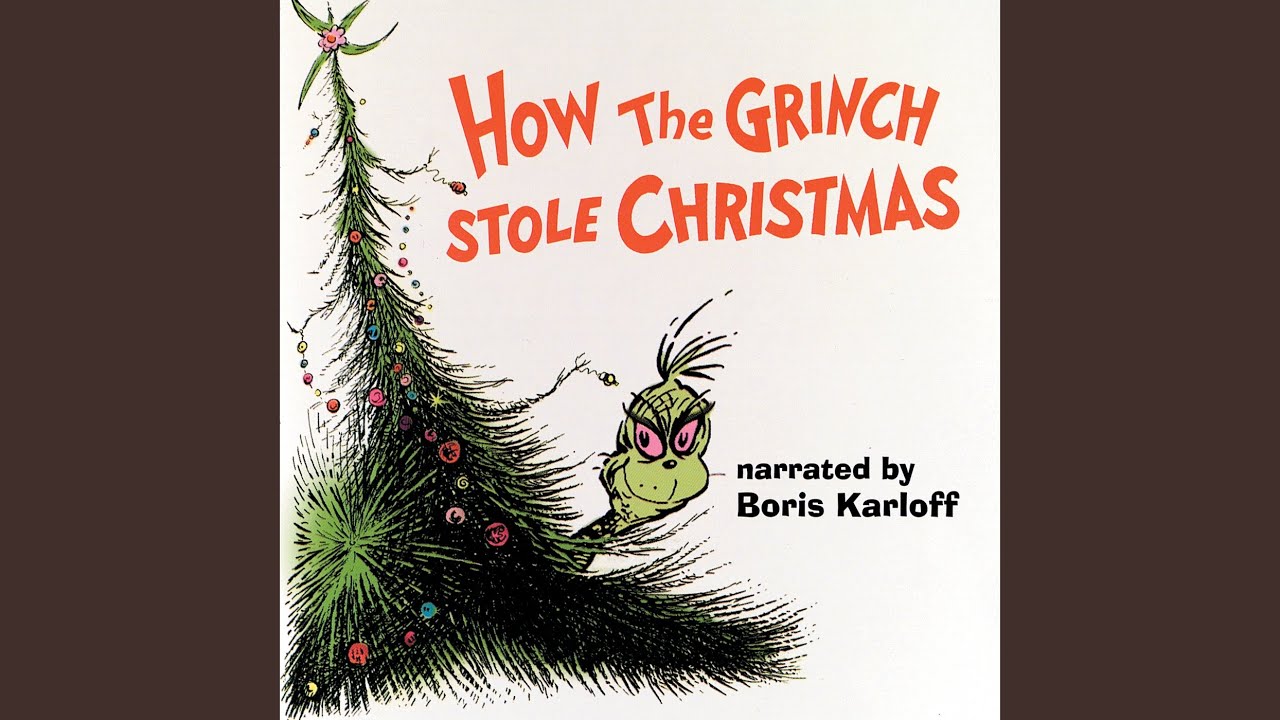
He’s a nasty waste of space. His brain is full of spiders. He’s got garlic in his soul. Honestly, when You’re a Mean One Mr Grinch first hit the airwaves in 1966 as part of How the Grinch Stole Christmas!, nobody could have predicted it would become a permanent fixture of the holiday season. Usually, Christmas music is all about sleigh bells and cozy fires. This song? It’s basically a three-minute roast. It is a masterclass in creative insults, delivered with a bass voice so deep it feels like it’s vibrating in your marrow.
People still get the singer wrong. All the time. If you grew up thinking Boris Karloff sang it because he narrated the special, you’ve been lied to. Well, not lied to, but definitely misled. Thurl Ravenscroft is the man behind that iconic, gravelly delivery. He didn't even get a credit in the original closing titles, which is a straight-up crime.
The Mystery of the Voice: Thurl Ravenscroft vs. Boris Karloff
Dr. Seuss (Theodor Geisel) wrote the lyrics, and Albert Hague composed the music. They needed someone who could sound truly subterranean. Boris Karloff, the legendary horror actor, did the narration and voiced the Grinch himself. But Karloff couldn't sing. At all. Not even a little bit.
Enter Thurl Ravenscroft.
You probably know him as the voice of Tony the Tiger—"They're Gr-r-reat!"—but his work on You're a Mean One Mr Grinch is his real masterpiece. Because his name was left off the credits, many viewers just assumed Karloff had a secret operatic range. Dr. Seuss actually felt so bad about the oversight that he personally called up newspaper columnists across the country to tell them that Ravenscroft was the one who actually knocked it out of the park.
It’s a weirdly high-stakes song. Most holiday tunes are simple. This one requires a singer who can hit a low G without sounding like they're choking. Ravenscroft’s performance is what gives the song its bite. Without that specific timbre, the lyrics might just seem silly. With him, they feel like a genuine warning.
Why the Lyrics Work (and Why They’re So Weird)
The vocabulary in this song is unhinged. In a good way. Seuss wasn't content with just calling the Grinch "bad." He had to invent specific, tactile ways to describe his vileness.
"You’re a foul one, Mr. Grinch. You have termites in your smile."
Think about that for a second. Termites. In a smile. It’s disgusting. It creates a physical reaction in the listener. This is why You're a Mean One Mr Grinch sticks in your head while other generic carols fade away. It uses visceral imagery. You aren't just hearing about a villain; you’re smelling him. "You’re a crooked dirty jockey and you drive a crooked hoss." It’s rhythmic, weird, and slightly nonsensical, which is the hallmark of Seuss’s genius.
The song follows a specific structure of escalating insults:
- Comparing him to biological hazards (cacti, eels).
- Comparing him to literal trash (banana peels with greasy black peels).
- Comparing him to social pariahs.
- The final blow: saying he's a "three-decker sauerkraut and toadstool sandwich with arsenic sauce."
Honestly, the arsenic sauce line is pretty dark for a kids' special. But that's the 1960s for you. They didn't coddle the audience.
The Musical Composition: Not Your Typical Carol
Albert Hague was a Tony-winning composer, and he treated this project with serious respect. The song isn't just a gimmick. It’s built on a bluesy, jazzy foundation that feels "cool" even though it’s about a green monster who hates joy.
The brass sections are loud and punchy. They punctuate the insults. When Ravenscroft sings "Mr. Grinch," the horns answer back with a "wa-wa" sound that feels mocking. It’s a call-and-response format that’s very common in jazz but rare in Christmas music. Most carols are designed for groups to sing together in a church or on a doorstep. This song is a solo. It’s a performance piece. It requires personality.
It’s also surprisingly complex. The key changes and the way the tempo shifts slightly keep it from feeling repetitive, even though the melody for each verse is mostly the same.
Versions and Covers: Who Did It Best?
Because the original is so perfect, covers are usually a disaster. If you try to do it exactly like Thurl, you fail. You just sound like a cheap imitation.
Tyler, The Creator took a swing at it for the 2018 movie. People were skeptical. A rapper doing a Seuss song? But it actually worked because he didn't try to out-bass Thurl. He modernized the beat and leaned into the "weirdness" of the lyrics. It felt fresh.
Then you have the Glee version or various pop covers that try to make it "pretty." They miss the point entirely. You’re a Mean One Mr Grinch is supposed to be ugly. It’s supposed to be mean. If you aren't making the audience feel a little bit uncomfortable, you're doing it wrong.
The Cultural Longevity of the Grinch
Why do we still listen to this? It’s because everyone has a "Grinch" in their life. Or, let’s be real, some days we are the Grinch. The song taps into the collective frustration people feel during the holidays. Christmas can be stressful. Everything is supposed to be perfect and sparkly. This song is the antidote to that. It’s the one moment where we can celebrate something that is explicitly not "joyful."
It also helps that the Grinch has a redemption arc. We can roast him in the beginning because we know he’s going to fix his heart later. It’s safe.
But really, the song has survived because of its craftsmanship. The rhymes are tight. "Stink, stank, stunk" is a legendary use of the English language. It’s basically a linguistic triple-threat.
Fun Facts You Can Use to Impress People at Parties
- Thurl Ravenscroft was actually a very tall man (6'5"), which matched his massive voice.
- The song was recorded at the famous Gold Star Studios in Hollywood.
- Albert Hague, the composer, later became famous to a whole new generation as the music teacher, Mr. Shorofsky, in the TV show Fame.
- The original TV special had a tiny budget, which is why the animation is sometimes a bit rough, but the music was where they spent the effort.
What Most People Get Wrong About the Meaning
There is a common misconception that the song is just about being "grumpy." It’s actually more specific than that. The lyrics describe a total lack of empathy. "Your heart is an empty hole."
In the context of the story, the song acts as the psychological profile of the antagonist. It sets the stakes. If the Grinch is truly this bad—if his heart is a "dead tomato splotched with moldy purple spots"—then his eventual transformation is a bigger miracle. The song makes the ending of the story meaningful. Without the "Mean One" setup, the "his heart grew three sizes" moment doesn't land.
Actionable Takeaways for Grinch Fans
If you're looking to dive deeper into the world of this holiday classic or use it for your own festivities, here’s how to do it right.
Check the Credits Next time you watch the special, look for Thurl’s name. You won’t find it in the original 1966 version. It’s a great reminder of how even the most talented people can go unrecognised for their best work.
Analyze the Rhyme Scheme If you're a writer or a poet, look at how Seuss uses "internal rhyme." He doesn't just rhyme the ends of lines. He stuffs rhymes inside the sentences. It’s a great lesson in how to make language feel "bouncy" even when the subject matter is dark.
Use the Right Audio Source If you're putting this on a holiday playlist, make sure you have the remastered version. The original mono recordings can sound a bit thin on modern speakers. The 50th-anniversary soundtracks have a much better bass response, which is crucial for hearing those low notes.
Performance Tips Planning to sing this at karaoke? Don't try to hit the low notes if you can't. It’ll just sound like you’re growling. Instead, focus on the "enunciation." The Grinch is precise. He’s theatrical. Lean into the "nasty" words. Over-pronounce the "S" in "spiders" and the "K" in "stunk."
The Legacy of the Mean One Ultimately, the song is a reminder that even the most "un-holiday" things can become holiday traditions. It broke the mold. It gave us permission to laugh at the "bad guy" and enjoy a little bit of cynicism alongside our eggnog. That’s why we’ll still be singing about arsenic sauce and greasy banana peels fifty years from now.
To get the full experience, listen to the track back-to-back with some 1960s lounge jazz. You'll hear exactly where Albert Hague was getting his inspiration from. It’s more of a "cool cat" record than a children’s song, which is why it never feels dated. It’s just timelessly, wonderfully mean.



