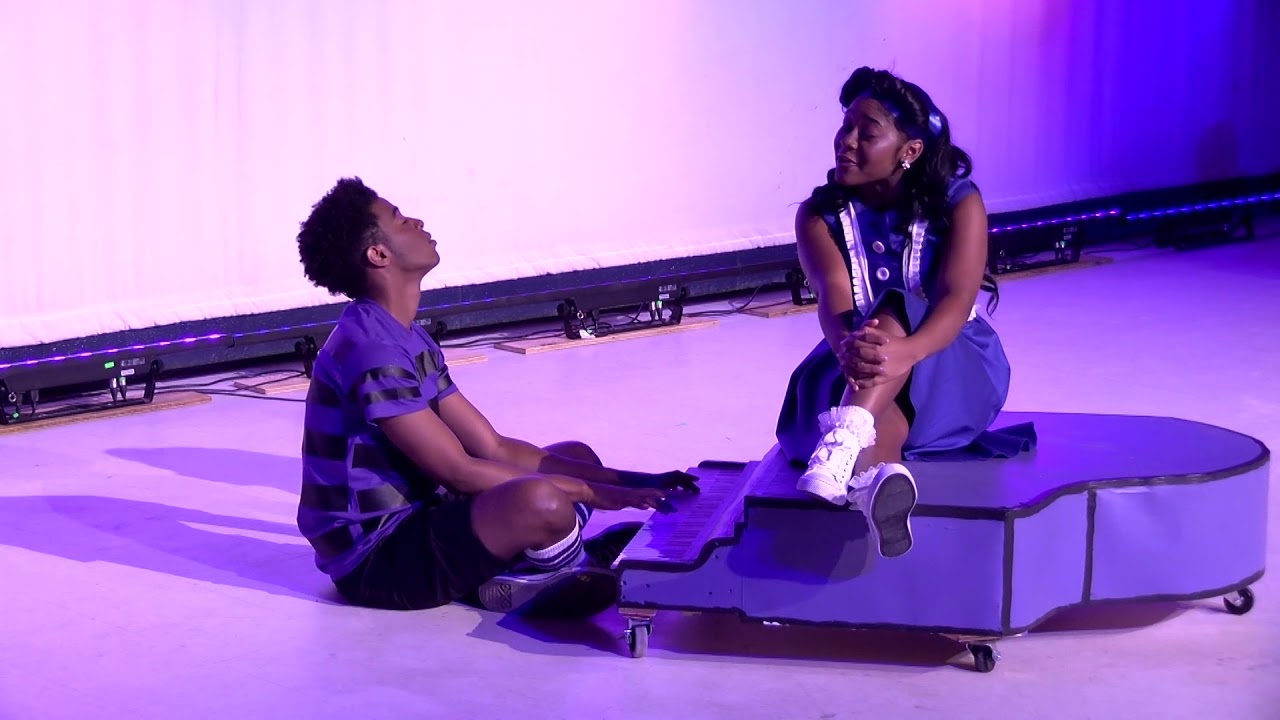
Charlie Brown is a loser. He knows it, his dog knows it, and the girl who sits behind him in school definitely knows it. But somehow, for over fifty years, You're a Good Man, Charlie Brown has remained the most-produced musical in the history of American theater. It isn't because of the plot. There isn't one. The show is basically a series of comic strips stitched together with some of the catchiest, most deceptively complex music ever written for the stage.
Honestly, it’s a weird show. It shouldn't work. It’s a group of grown adults dressed like five-year-olds, singing about philosophy, kite-flying, and the crushing weight of social anxiety. Yet, from high school gyms to the bright lights of Broadway, it persists.
The 1967 Gamble That Changed Everything
Back in the mid-sixties, Charles Schulz’s Peanuts was already a juggernaut. It was everywhere. But a musical? That felt like a stretch. Clark Gesner, the composer, didn't even start with a full script. He just wrote some songs based on the characters and sent them to Schulz.
The original 1967 Off-Broadway production was "starved" for resources. No elaborate sets. No giant doghouse that actually looked like a house. Just some primary-colored blocks and a few talented actors. It was minimalist before minimalism was cool. Gary Burghoff—who everyone later knew as Radar from MASH*—was the original Charlie Brown.
It was a massive hit.
Why? Because it captured the "Peanuts" vibe perfectly. It wasn't "kiddy." Schulz always wrote his characters as small adults dealing with very big, very real problems. The musical leans into that. When Charlie Brown sings "The Kite," it’s not just about a toy. It’s about the desperate, fleeting hope that maybe, just this once, things won’t go wrong. It’s about the human condition, man.
The 1999 Revival and the Kristin Chenoweth Factor
If you grew up in the late nineties, you probably know the revised version of You're a Good Man, Charlie Brown. This is the one that added "Beethoven Day" and "My New Philosophy."
The 1999 Broadway revival did something risky. They replaced the character of Patty (not Peppermint Patty, just "Patty") with Sally Brown. It was a stroke of genius. It gave the show a new energy, mostly because they cast a then-unknown Kristin Chenoweth.
She was a firecracker.
Chenoweth won a Tony for the role, and her performance of "My New Philosophy" became the gold standard for musical theater auditions for the next two decades. The revival also gave us Anthony Rapp—fresh off his success in RENT—as the "blockhead" himself. Seeing the guy who played Mark Cohen transition into the kid who can’t kick a football was jarring for some, but it proved the show’s versatility.
The 1999 version also beefed up the orchestrations. The original 1967 sound was very "rink-a-dink" piano and percussion. The revival brought in a full, lush sound that made the emotional moments hit way harder. "Happiness," the finale, became less of a simple nursery rhyme and more of a soaring anthem about finding peace in the small stuff.
What Most People Get Wrong About the Show
People think it's easy.
Directors see "small cast, simple set" and think they can throw it together in a week. They’re wrong. You're a Good Man, Charlie Brown is incredibly difficult to perform because it requires actors to be sincere without being "cutesy."
If you play it like a "kid show," it dies.
The humor comes from the contrast between the characters' ages and their thoughts. Linus isn't just a kid with a blanket; he’s a burgeoning intellectual grappling with the void. Lucy isn't just a "crabby" girl; she’s a girl who realizes her own power and doesn't know what to do with it. Snoopy is... well, Snoopy is a dog who thinks he’s a World War I flying ace. That requires a level of physical comedy that would break most performers.
The Complexity of "The Book Report"
Take the song "The Book Report." It’s a masterpiece of counterpoint. Four characters (Charlie Brown, Lucy, Linus, and Schroeder) all sing about their struggle to write 100 words on Peter Rabbit.
- Lucy is just trying to pad the word count by listing every vegetable in the garden.
- Schroeder is treating it like a high-art critique.
- Linus is over-analyzing the psychological motivations of the characters.
- Charlie Brown is just paralyzed by the deadline.
Musically, it's a nightmare to rehearse. The rhythms are jagged. The way the melodies overlap requires perfect timing. It’s a sophisticated piece of music disguised as a joke. That’s the "secret sauce" of the whole show.
Why We Still Care About Charlie Brown in 2026
We live in a world that is loud. Constant notifications. Constant pressure to be "on."
Charlie Brown is the antidote.
He is the patron saint of the "average joe." He’s the guy who tries his best and still ends up with a rock in his trick-or-treat bag. There’s something deeply comforting about watching a character fail, pick himself up, and try again tomorrow. In a world of curated Instagram lives, Charlie Brown is the messy reality.
The song "Happiness" lists things like "climbing a tree," "finding a pencil," and "knowing a secret." It’s a reminder that life isn't made of huge, cinematic moments. It’s made of the gaps in between.
Schulz once said that Charlie Brown must be the one who suffers because he is a caricature of the average person. Most of us will win more than we lose, but we feel the losses more. You're a Good Man, Charlie Brown gives us permission to feel those losses and then laugh at them.
The Technical Side: Producing the Show
If you're looking to put this on, don't skimp on the music director. The vocal arrangements are tight. You need singers who can handle the 1960s pop-jazz influence of the original and the musical theater "belt" of the revival.
The staging is also a puzzle. Because it's episodic, you have to find a way to keep the momentum going. If the blackouts between "sketches" are too long, the audience checked out five minutes ago. You need a set that is modular—pieces that move fast.
Many modern productions have started experimenting with digital backdrops, using Schulz’s actual line art to create the world. It’s a cool touch, but it shouldn't distract from the actors. At the end of the day, you just need a boy, a dog, and a really bad kite.
Final Actionable Insights for Fans and Producers
If you’re a fan, go back and listen to the 1967 original cast recording. It has a dry, witty edge that the more polished revival sometimes loses. It feels more like a "jazz record" than a "Broadway show."
For those looking to perform or direct, lean into the "existentialism" of the script. Don't let the actors "play young." Let them play the truth of the moment. The more seriously Charlie Brown takes his failure, the funnier and more heart-wrenching it becomes.
- Watch the 1985 animated special based on the musical. It’s a great way to see how the songs translate back into the medium they came from.
- Study the 1999 revival script if you want more character development for the female leads.
- Don't overcomplicate the "Snoopy" moments. The best Snoopy is one who uses their imagination, not a bunch of expensive props.
You're a Good Man, Charlie Brown isn't going anywhere. As long as there are people who feel like they don't quite fit in, or people who find joy in a cold piece of pepperoni, this show will have a home. It’s a "good" show, but more importantly, it’s an honest one.



