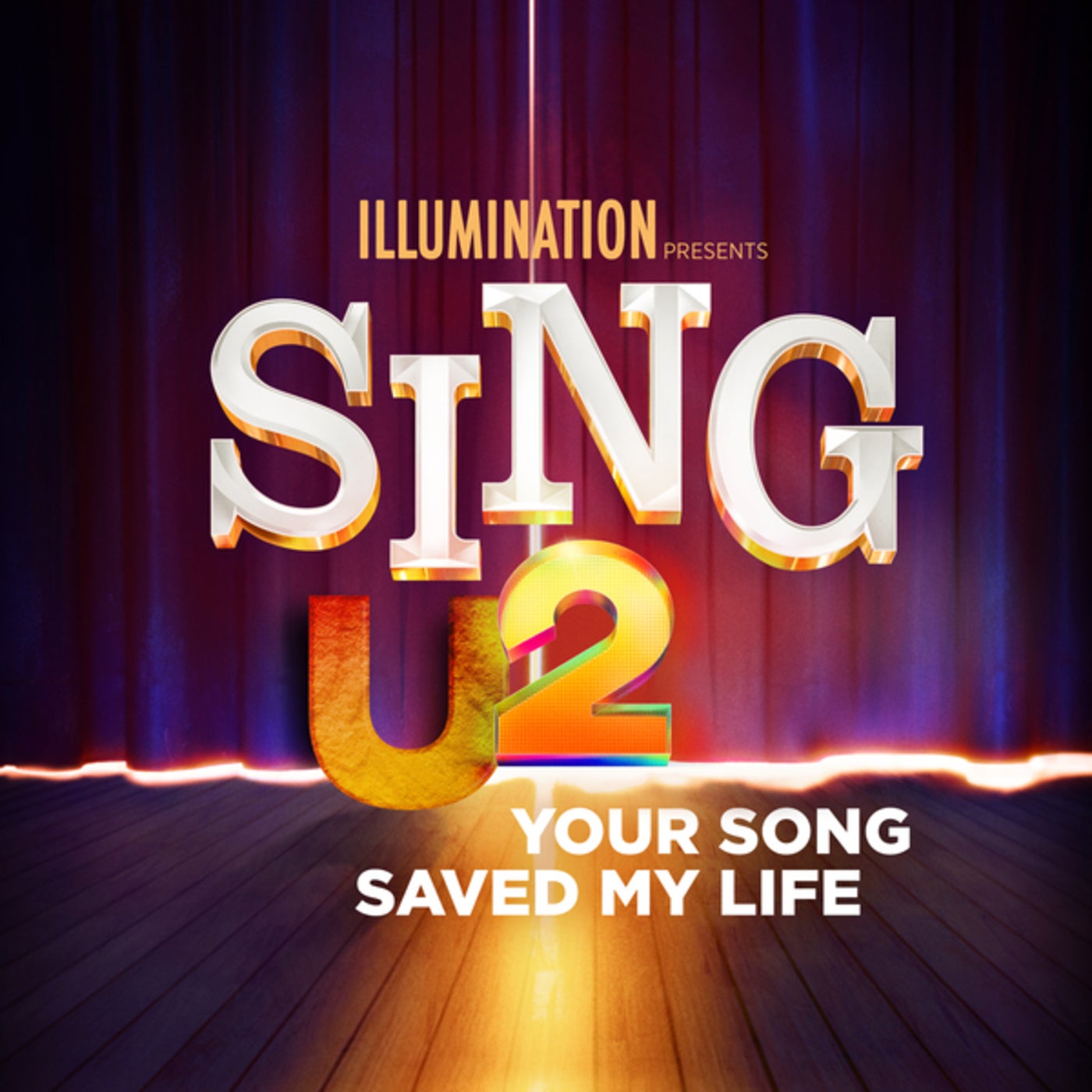
Music is a strange, invisible force. It’s basically just vibrations in the air, but somehow those vibrations can stop someone from jumping off a bridge or help a kid survive high school. That isn’t hyperbole. It’s the literal truth for millions of people. When U2 released Your Song Saved My Life for the Sing 2 soundtrack, it wasn’t just a catchy ballad for an animated movie. It was a genuine acknowledgment of that weird, spiritual, and often life-saving connection we have with melodies.
Bono has always been a bit of a preacher. You either love that about him or you find it exhausting, but he’s remarkably consistent. He wrote this track with the Edge and Linda Perry, and honestly, it’s one of the most straightforward things they’ve done in years. No irony. No "The Fly" sunglasses. Just a piano-driven tribute to the songs that act as a safety net.
The Story Behind Your Song Saved My Life
The track dropped in November 2021. It marked U2’s first new cinematic contribution in quite a while, following "Ordinary Love" for the Mandela biopic. While the movie Sing 2 is about a bunch of animals putting on a show, the song hits a much deeper nerve. Bono voices a character in the film named Clay Calloway, a reclusive lion rockstar who stopped playing music after his wife died.
That character arc is the foundation here. The idea that music can be a burial ground for grief, but also the only thing that can dig you out of it. When we talk about how Your Song Saved My Life resonates, we’re looking at the intersection of professional songwriting and the very real phenomenon of "music therapy" in the wild.
The lyrics don't try to be overly clever. They ask if you've ever been "stuck in a corner" or if you've "lost your way." It’s simple. It’s direct. It sounds like something a friend tells you at 3 AM when you’re both staring at the ceiling.
Why Music Actually Saves People (The Science Bit)
It sounds like a cliché, right? "This song saved my life." People say it on YouTube comments all the time. But if you look at the work of Dr. Daniel Levitin, a neuroscientist who wrote This Is Your Brain on Music, there’s a biological basis for this. Music triggers the amygdala and the cerebellum. It releases dopamine, sure, but it also regulates cortisol—the stress hormone.
When someone says Your Song Saved My Life, they might be talking about a specific moment of crisis. Maybe they were dealing with suicidal ideation, and a specific lyric made them feel "seen" for the first time. It’s about the feeling of shared experience. You aren't alone if someone else felt this way enough to write a chorus about it.
- Social Connection: Music acts as a "virtual social agent." Even if you are physically alone, the voice in the speaker provides a sense of presence.
- Catharsis: Shouting along to a loud bridge allows for a release of pent-up aggression or sadness that words alone can't touch.
- Time-Traveling: Music can anchor you to a memory of a better time, reminding you that your current state isn't permanent.
Bono, Clay Calloway, and the Reclusive Rockstar
In Sing 2, Bono’s character, Clay Calloway, is basically a stand-in for every artist who ever felt like the industry or life chewed them up and spat them out. The song serves as the emotional climax. It’s about the fans telling the artist, "Your work kept me going," and the artist realizing that their pain had a purpose.
Think about the legacy of U2. They’ve been around since the late 70s. They’ve seen every trend come and go. But they stay relevant because they lean into these big, earnest emotions. Your Song Saved My Life doesn't care about being "cool." Cool is temporary. Saving lives is a different league entirely.
Interestingly, the song was recorded with a very stripped-back feel. The Edge’s piano is prominent. There’s a choir toward the end. It feels like a hymn. That was intentional. It’s supposed to feel like a sanctuary.
The "Save My Life" Phenomenon Beyond U2
U2 isn't the first to tackle this, obviously. Think about "Killing Me Softly" or even "Music" by Madonna. But the phrasing in Your Song Saved My Life is more literal. It’s part of a broader cultural conversation about mental health that started gaining massive steam around the early 2020s.
Artists like Billie Eilish, Lewis Capaldi, and Demi Lovato have all been incredibly vocal about their struggles. Their fans often use the exact phrase "your song saved my life" in their DMs and meet-and-greets. It’s a heavy burden for an artist to carry. Bono, being a veteran of the global stage, seems to be saying "I hear you" to those fans.
The Controversy: Is it Too Cheesy?
Let's be real. Some critics hated this song. They called it "syrupy" or "over-earnest." That’s the risk you run when you write about big, messy human emotions. In a world of cynical TikTok hits and 15-second loops, a five-minute ballad about the redemptive power of music can feel a bit... much.
But here’s the thing: music critics aren’t usually the ones who need their lives saved at 10 PM on a Tuesday. The people who love Your Song Saved My Life are the ones who find themselves in the lyrics. They don't care about the chord progression being "predictable." They care that the song makes them feel less like a ghost in their own house.
Music as a Tool for Resilience
- Distraction: Sometimes you just need to drown out the intrusive thoughts.
- Validation: Hearing a struggle mirrored in a song makes that struggle feel legitimate.
- Routine: Putting on a specific album can be the only thing that gets someone out of bed.
The Impact of the Sing 2 Soundtrack
It’s easy to dismiss a movie soundtrack, but Sing 2 was a massive hit. It introduced U2 to a generation of kids who probably only knew Bono as "that guy who put an album on my iPhone without asking." By placing Your Song Saved My Life in a family movie, the message reaches people who might not be looking for a deep philosophical epiphany but end up having one anyway.
The soundtrack also featured covers of Prince, Taylor Swift, and Elton John. It was a celebration of the "Great Songbook." U2’s original track acted as the thesis statement for the whole film: Music is more than entertainment; it’s a survival mechanism.
How to Use Music for Your Own Mental Health
If you find yourself gravitating toward Your Song Saved My Life or any song that feels like a lifeline, there are ways to lean into that for genuine well-being. It isn't just about passive listening.
First, try creating a "Resilience Playlist." This isn't just a list of happy songs—happy songs can actually be annoying when you're depressed. It’s a list of songs that make you feel understood. Maybe they’re dark. Maybe they’re loud. But they are honest.
Second, pay attention to the lyrics. Write them down. If Your Song Saved My Life hits you a certain way, figure out which line specifically does the heavy lifting. Is it the part about being "scared of the light"? Or the part about the "melody that sets you free"? Understanding your triggers—both positive and negative—is a huge part of emotional intelligence.
Third, share it. There’s something powerful about telling someone else, "Hey, listen to this, it helped me." It breaks the isolation.
The Legacy of the Song
Will Your Song Saved My Life be remembered as U2’s greatest hit? Probably not. It won't replace "With or Without You" or "One." But it serves a specific, vital purpose in their discography. It’s a "thank you" note to the medium of music itself.
It reminds us that songs are permanent. People die, bands break up, but the recording remains. It sits there, waiting for someone to be in a dark enough place to need it. And when that person finally presses play, the song does its job. It saves them.
The song is a reminder that even the biggest stars in the world started as fans. Bono was a kid in Dublin listening to the Ramones and David Bowie, feeling like those songs were the only things keeping his world from falling apart. He’s just paying it forward.
Immediate Steps to Connect Through Music
If you're feeling overwhelmed or just need a reminder of why you love music, take these actions today:
- Identify your "Life-Saver": Pick the one song that has historically been there for you. Listen to it today with no distractions. No phone, no multitasking. Just the sound.
- Read the Lyrics: Go to a site like Genius and look at the "Your Song Saved My Life" lyrics. See how the collaboration between Bono and Linda Perry shaped the narrative of the song.
- Externalize the Emotion: If a song saved your life, write a brief note (even if you never send it) to the artist. Acknowledging that impact out loud reinforces the positive neural pathways associated with that music.
- Build a "Crisis" Playlist: Curate ten songs that have a 100% success rate at changing your mood or grounding you. Keep it downloaded on your phone for when you don't have a signal or the mental energy to search.
Music is the only thing we have that can bypass the logical brain and go straight to the nervous system. Whether it’s U2 or a lo-fi beat, if it works, it’s valid. Your Song Saved My Life is just a public admission of a private miracle that happens every single day.



