Movie nights usually involve a lot of scrolling. You've probably spent forty minutes looking for something "vibey" only to end up watching a sitcom rerun. But then there’s Your Sister's Sister. Released in 2011, this Lynn Shelton film is a masterclass in how to make a movie about people just... talking. It doesn't need explosions. It doesn't need a massive twist. It just needs three people, a remote cabin in the Pacific Northwest, and a really uncomfortable secret.
Honestly, the setup sounds like the start of a bad joke. A guy goes to his friend's family cabin to grieve his dead brother, only to find the friend's sister already there. They get drunk. They hook up. Then the friend shows up the next morning. It’s messy. It’s awkward. It’s exactly how life feels when you’re caught between who you are and who you’re supposed to be.
Why Your Sister's Sister Works When Other Indies Fail
Most "mumblecore" movies from that era feel pretentious. They try too hard to be "natural" and end up being boring. Lynn Shelton was different. She understood that naturalism requires incredible skill. In Your Sister's Sister, the dialogue was largely improvised based on a very tight story outline. This gives the film a lived-in quality. When Mark Duplass, Emily Blunt, and Rosemarie DeWitt are on screen, you aren't watching actors hitting marks. You're watching people process grief and attraction in real-time.
Duplass plays Jack, a man spiraling after his brother's death. Blunt is Iris, his best friend who might want more. DeWitt is Hannah, Iris's sister who is dealing with a recent breakup.
The chemistry is the engine.
If you’ve ever had a conversation that felt like walking on eggshells, you’ll recognize the dinner scene. It’s long. It’s filled with pauses. You can see the gears turning in Iris’s head as she realizes something is off between Jack and her sister. It’s rare to see a movie capture the specific tension of a three-person dynamic where two people share a secret and the third is the one they both love most.
The Lynn Shelton Method
Lynn Shelton, who tragically passed away in 2020, had a specific way of working. She didn't hand out 90-page scripts. Instead, she provided a "scriptment." This was a detailed map of the emotional beats.
- Actors would discuss their characters' backstories for weeks.
- They would arrive at the location and "live" in the space.
- The cameras would roll for long periods to catch the accidental stumbles in speech.
This approach is why Your Sister's Sister feels so different from a standard Hollywood rom-com. In a big-budget movie, every word is polished. In this film, people interrupt each other. They say "um" and "uh." They trail off. It’s vulnerable. It’s also incredibly funny in a way that feels earned rather than scripted.
The Complicated Morality of Iris, Jack, and Hannah
We need to talk about the "incident." Jack and Hannah’s one-night stand is the catalyst for everything, but the movie refuses to make anyone a villain.
Jack is grieving. Hannah is hurting. They find a weird, temporary solace in each other. Most movies would turn this into a tawdry soap opera plot. Here, it’s treated as a profound lapse in judgment by two people who are essentially good but currently broken.
- Jack's Perspective: He's lost. He thinks he's helping Iris by staying away, but he ends up causing more damage.
- Hannah's Perspective: She's the "older, wiser" sister who realizes she’s just as lost as anyone else.
- Iris's Perspective: She is the bridge. She’s the one who brought everyone together, and she’s the one who stands to lose the most.
The film forces you to ask: how much do we owe our friends? Does Iris have a "claim" on Jack even if they weren't dating? Is Hannah’s betrayal worse because she’s family, or is Jack’s worse because he’s the best friend?
A Pacific Northwest Aesthetic
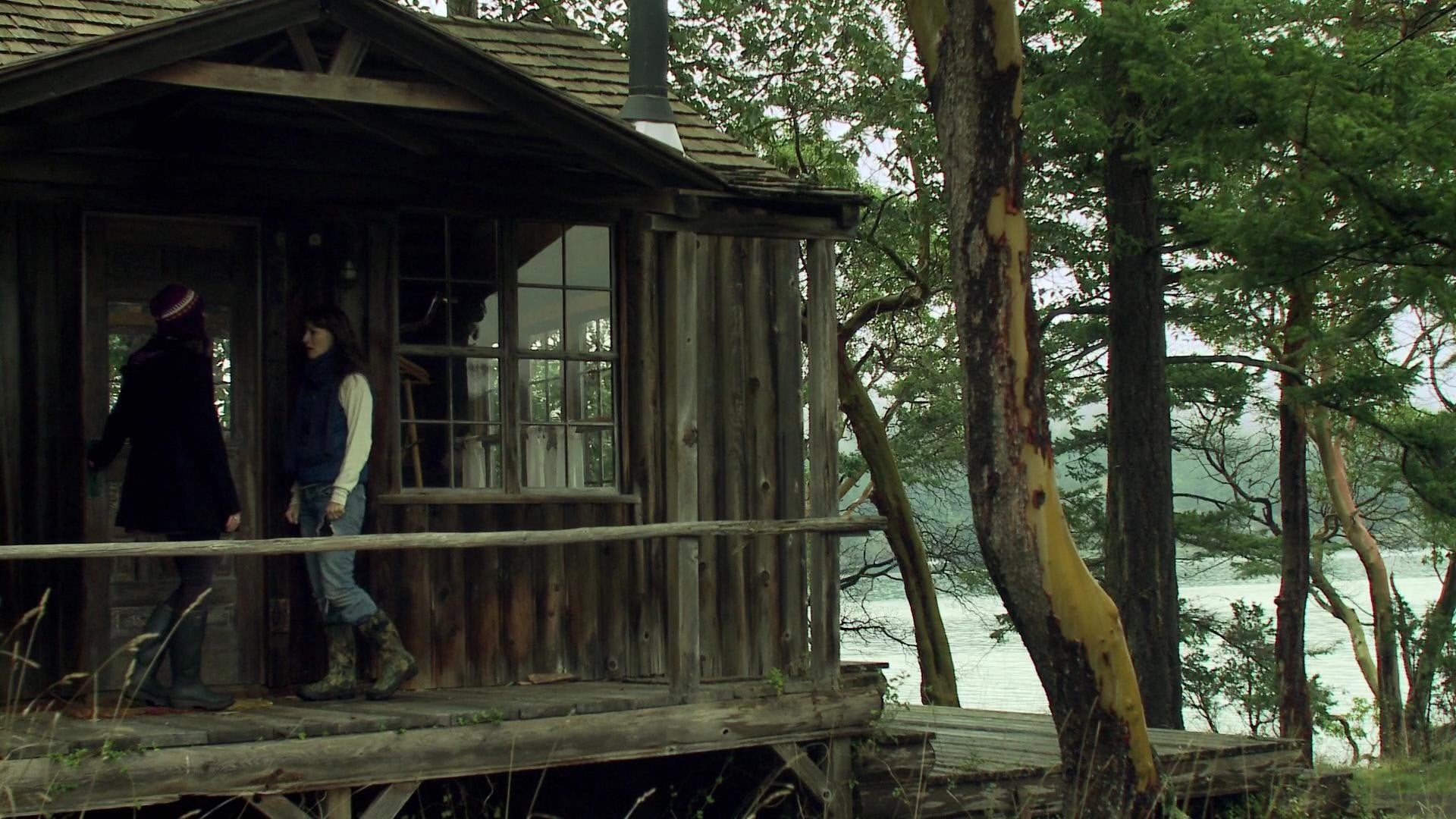
The setting is practically a fourth character. Filmed on Vashon Island in Washington, the cabin is cozy but claustrophobic. The rain, the grey skies, and the towering evergreens reflect the internal state of the characters. It’s beautiful, but there’s a sense of being trapped. You can’t just walk away when you’re on an island. You have to deal with the person sitting across the table from you.
The Legacy of the 2011 Indie Boom
Your Sister's Sister came out during a specific window in American cinema. IFC Films was pushing these small, character-driven stories into the mainstream. It was a time when you could have a hit movie that cost less than a million dollars to make.
Today, these stories often get lost on streaming platforms or turned into eight-episode limited series that feel padded. This movie is a lean 90 minutes. It says what it needs to say and gets out. It’s a reminder that a great story doesn't need a huge "hook" if the characters are compelling enough.
Critics at the time, like Roger Ebert, praised the film for its "uncanny ability to eavesdrop on life." It currently holds a high fresh rating on Rotten Tomatoes, not because it’s a flashy masterpiece, but because it’s consistent. It respects the audience's intelligence. It doesn't over-explain the ending. It trusts you to understand the ambiguity of the final frame.
What Most People Miss About the Ending
Without spoiling the very last shot, there’s a revelation that changes the stakes for everyone. A lot of viewers find it frustrating because the screen cuts to black right when things get "interesting."
But that’s the point.
The movie isn't about the resolution of the plot; it’s about the shift in the relationships. By the end, the secret is out. The hierarchy of the trio has shifted. Whether they stay friends or become a family unit is less important than the fact that they finally had to be honest with each other. The cut to black is an act of mercy. It lets the characters have their private moment after we’ve spent 90 minutes voyeuristically watching their worst mistakes.
Technical Brilliance in Simplicity
Benjamin Kasulke, the cinematographer, used handheld cameras to follow the actors. This wasn't just a stylistic choice; it was a necessity of the improvisational style. If an actor decided to walk across the room suddenly, the camera had to be ready to follow.
This creates a "documentary" feel without the shaky-cam headache. You feel like you’re in the room. You’re sitting on the floor with them, drinking that cheap tequila.
The sound design is equally sparse. There’s no swelling orchestra to tell you how to feel. If a scene is awkward, it’s quiet. The silence is deafening. It forces the audience to sit with the discomfort, which is exactly where the best drama lives.
Comparing Your Sister's Sister to Humpday
If you liked Shelton’s previous hit, Humpday, you’ll notice similar themes. Both movies explore the boundaries of platonic male-female and male-male friendships. But Your Sister's Sister feels more mature. It trades the "bro-y" humor of Humpday for a more delicate exploration of sisterhood and the lingering effects of death.
Rosemarie DeWitt is particularly stunning here. While Emily Blunt was the "big star" at the time, DeWitt provides the grounding force. Her Hannah is prickly and defensive, but she slowly peels back the layers to show a woman who is terrified of being alone.
Practical Takeaways for Your Next Rewatch
If you’re going to watch (or rewatch) this, don't treat it like background noise. It’s a "listen-to" movie.
- Watch the eyes. Because so much is improvised, the actors are constantly reacting to things they didn't know were going to be said. Their facial expressions are often more honest than the words.
- Pay attention to the geography of the cabin. Notice how the characters move closer and further apart as the power dynamics shift.
- Listen to the sound of the environment. The cracking of the fire, the rain on the roof—it all adds to the feeling of isolation.
How to Apply the Lessons of the Film
This movie isn't just entertainment; it’s a case study in communication. We often hide things to "protect" people we love, but Your Sister's Sister argues that the hiding is what does the damage, not the truth itself.
- Acknowledge the Elephant: If there is tension in a relationship, ignoring it doesn't make it go away. It just makes the eventual explosion bigger.
- Grief isn't Linear: Jack’s behavior is erratic because grief is erratic. The film reminds us to have a little more grace for people who are mourning.
- Honesty is a Tool, Not a Weapon: When the truth finally comes out in the film, it’s painful, but it’s also the only way any of them can move forward.
If you're looking for a film that captures the weird, messy, beautiful reality of being a human in your 30s, you can't do much better than this. It’s a small film with a massive heart. It’s the kind of movie that makes you want to call your siblings—or maybe just your best friend—and make sure everything is okay.
To get the most out of your experience with Your Sister's Sister, try watching it alongside other Lynn Shelton works like Laggies or Sword of Trust. Seeing the evolution of her "naturalist" style provides a deeper appreciation for how she managed to capture lightning in a bottle with this specific trio of actors. Pay close attention to the way the film handles the "reveal" at the end; it’s a perfect example of how to use an open ending to spark discussion rather than provide easy answers.