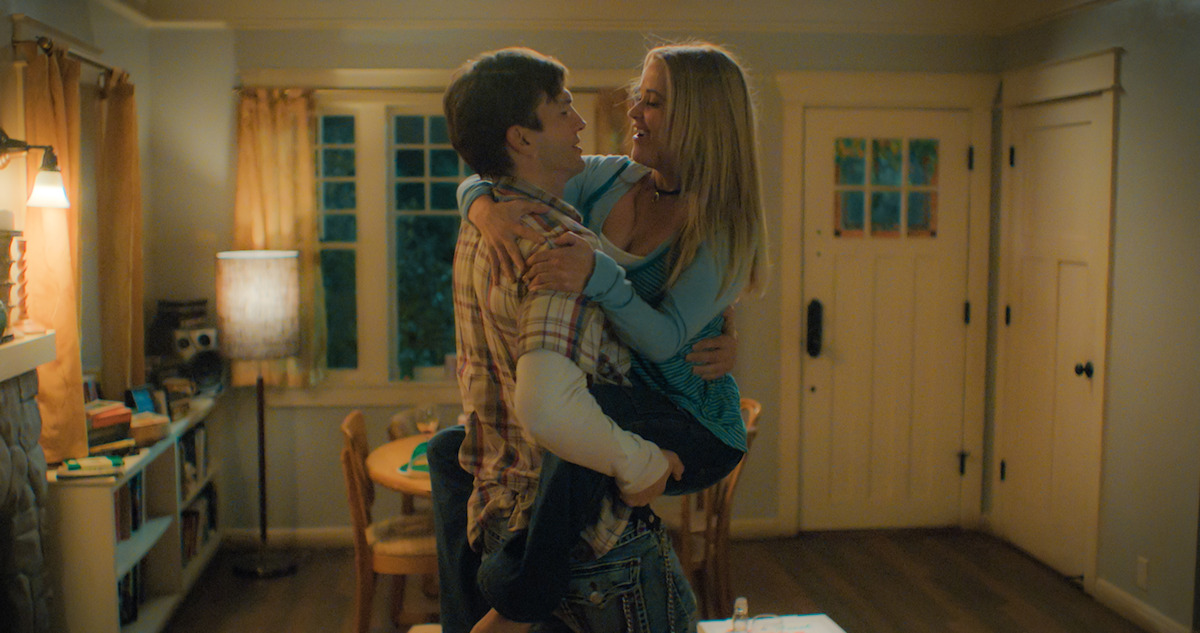
Netflix knows exactly what you want on a Tuesday night when you're too tired to think but too wired to sleep. You want the comfort of a familiar face and a story where nobody actually gets hurt. That's essentially the DNA of Your Place or Mine, the 2023 romantic comedy starring Reese Witherspoon and Ashton Kutcher. It’s a movie that feels like a warm blanket you’ve owned for ten years—a bit thin in places, totally predictable, but exactly what you need when the world feels too loud.
Honestly, the setup is classic. Peter and Debbie are best friends. They had a one-night stand twenty years ago and decided to keep it platonic ever since. He’s a wealthy, sterile-apartment-living consultant in New York. She’s a hyper-organized single mom in Los Angeles. They swap lives for a week. She goes to his place to finish a certification; he goes to hers to watch her son.
It’s a "long-distance" romance in the most literal sense.
The Strange Magic of the Split-Screen
Director Aline Brosh McKenna—who, let’s be real, is a legend for writing The Devil Wears Prada—takes a big risk here. For about 90% of the runtime, the two leads aren’t even in the same room. Usually, that’s a death sentence for a rom-com. We want the sparks. We want the accidental hand-brushing. Instead, we get a lot of FaceTime calls and split-screen conversations.
It’s weirdly effective.
By keeping them apart, the movie focuses on how they perceive each other's lives rather than their physical chemistry. Peter realizes Debbie’s life is exhausting but deeply meaningful. Debbie realizes Peter is actually a talented writer who’s been hiding his manuscript in a literal oven. It’s a bit on the nose, sure. But it works because Witherspoon and Kutcher are pros at playing people who are comfortable with each other.
There's this one scene where they're talking on the phone while watching the same movie. It’s a trope, obviously. But the way they fall asleep "together" across two different time zones captures that specific 21st-century intimacy we all know too well. It’s about being present without being there.
Why Your Place or Mine Actually Matters for the Genre
Let's talk about the "adult" rom-com. For a long time, Hollywood thought people over 40 didn't want romance unless it involved a terminal illness or a messy divorce. Your Place or Mine rejects that. It treats mid-life not as a crisis, but as a time for a second act.
Debbie isn't looking for a man to save her. She’s looking for a week of freedom to rediscover who she is outside of being "Jack’s Mom." Peter isn't some playboy who needs to grow up; he’s a guy who realized he stopped taking risks because he was afraid of failing.
- The Career Pivot: It’s rare to see a movie where a major plot point is a woman taking an accounting program. It’s grounded.
- The Side Characters: Jesse Williams shows up as Theo, the "other guy." Usually, the other guy is a jerk. Here, he’s a brilliant, handsome editor who actually appreciates Debbie. It makes the stakes higher because she actually has a good choice to make.
- The Soundtrack: If you like The Cars, you’re going to love this. The movie uses their music as a literal heartbeat for the story.
Most critics were pretty lukewarm on the film when it dropped. They called it "safe." And you know what? They’re right. It is safe. But sometimes safety is the point. We’ve seen enough "subversive" comedies that forget to be funny or romantic. This movie stays in its lane, and that’s why it stayed in the Netflix Top 10 for so long.
The Los Angeles vs. New York Aesthetic
The movie is a visual love letter to two very different vibes. Debbie’s L.A. home is cluttered, green, and sunny. It feels lived-in. Peter’s New York apartment is a minimalist nightmare—all glass, gray, and expensive whiskey.
When they swap, the fish-out-of-water elements are subtle. Debbie doesn't suddenly become a high-fashion socialite; she just enjoys the silence of a guest room. Peter doesn't become a "soft" dad overnight; he just learns that a kid needs more than a structured schedule.
There is a specific kind of joy in watching Reese Witherspoon organize a kitchen that isn't hers. It’s basically "organizational porn" for the Pinterest crowd.
Let's Be Honest About the Flaws
It’s not perfect. No movie is. The biggest gripe most people have is that the climax happens in an airport. Again. The "airport run" is the most overused cliché in the history of cinema. In Your Place or Mine, it feels especially forced because they spent the whole movie being emotionally mature, only to have a public shouting match near a TSA line.
Also, the kid, Jack. He has a bunch of allergies and is "fragile." It’s a bit of a tired trope for a single-mom narrative. We get it—she’s overprotective. But did we need the scene where Peter takes him to an audition for a hockey team just to prove a point? Probably not. It felt like a different movie for a second there.
Then there’s Tig Notaro. She plays the "sardonic best friend" character. She’s hilarious, as always, but the movie doesn't give her enough to do. She’s basically a walking sounding board for Peter’s internal monologue.
The "Best Friends to Lovers" Trope Done Right?
The "friends to lovers" thing is hard to pull off because you have to convince the audience why they didn't just date ten years ago. This movie handles it by suggesting that they weren't the right versions of themselves yet. Peter was too scared; Debbie was too busy.
It’s a mature take.
It suggests that timing actually matters as much as chemistry. You can love someone for twenty years and still not be ready to live with them. That’s a very "grown-up" realization for a movie that looks like a candy bar.
Real-World Takeaways from the Film
If you're watching this and thinking about your own life, there are actually some decent nuggets of wisdom buried under the Netflix sheen.
- Communication isn't just talking. It’s what you don't say. Peter kept his book a secret because he didn't want to be judged by the person whose opinion mattered most.
- The "Gap Year" for adults. Debbie taking a week for herself isn't selfish; it’s necessary maintenance.
- Honesty over ego. The movie ends when they finally stop trying to protect each other’s feelings and just say what they want.
If you're looking for a deep, philosophical exploration of the human condition, you're in the wrong place. But if you want to see two charming people realize they've been in love while looking at beautiful interiors, you've hit the jackpot.
How to Enjoy Your Place or Mine Today
If you haven't seen it yet, or you're planning a rewatch, don't overthink it.
First, ignore the Rotten Tomatoes score. This is a "vibe" movie, not a "prestige" movie. Critics often penalize rom-coms for being rom-coms. Second, pay attention to the background details in the apartments. The production design tells more of the story than the dialogue sometimes.
Actionable Steps for the Rom-Com Fan:
- Watch for the Chemistry: Even though they are apart, look at how their body language changes when they are on the phone versus when they are with other people.
- Check the Soundtrack: Look up the "Your Place or Mine" playlist on Spotify. It’s a top-tier collection of power-pop and 80s hits that perfectly fits the "Gen X/Millennial bridge" demographic.
- Double Feature Idea: If you like this, watch The Holiday. It’s the spiritual predecessor to this "house swap" subgenre and handles the emotional beats with a similar level of cozy competence.
The reality is that Your Place or Mine isn't trying to reinvent the wheel. It just wants to make sure the wheel is well-oiled and painted a nice shade of eggshell blue. It succeeds because it knows its audience: people who want to believe that it’s never too late to change your life, or your zip code, for the person who has always been there.
Stop scrolling through the "Trending Now" section for forty minutes and just hit play. It’s exactly what it looks like, and in a world of "prestige TV" that leaves you feeling depressed, that’s actually a pretty great thing.