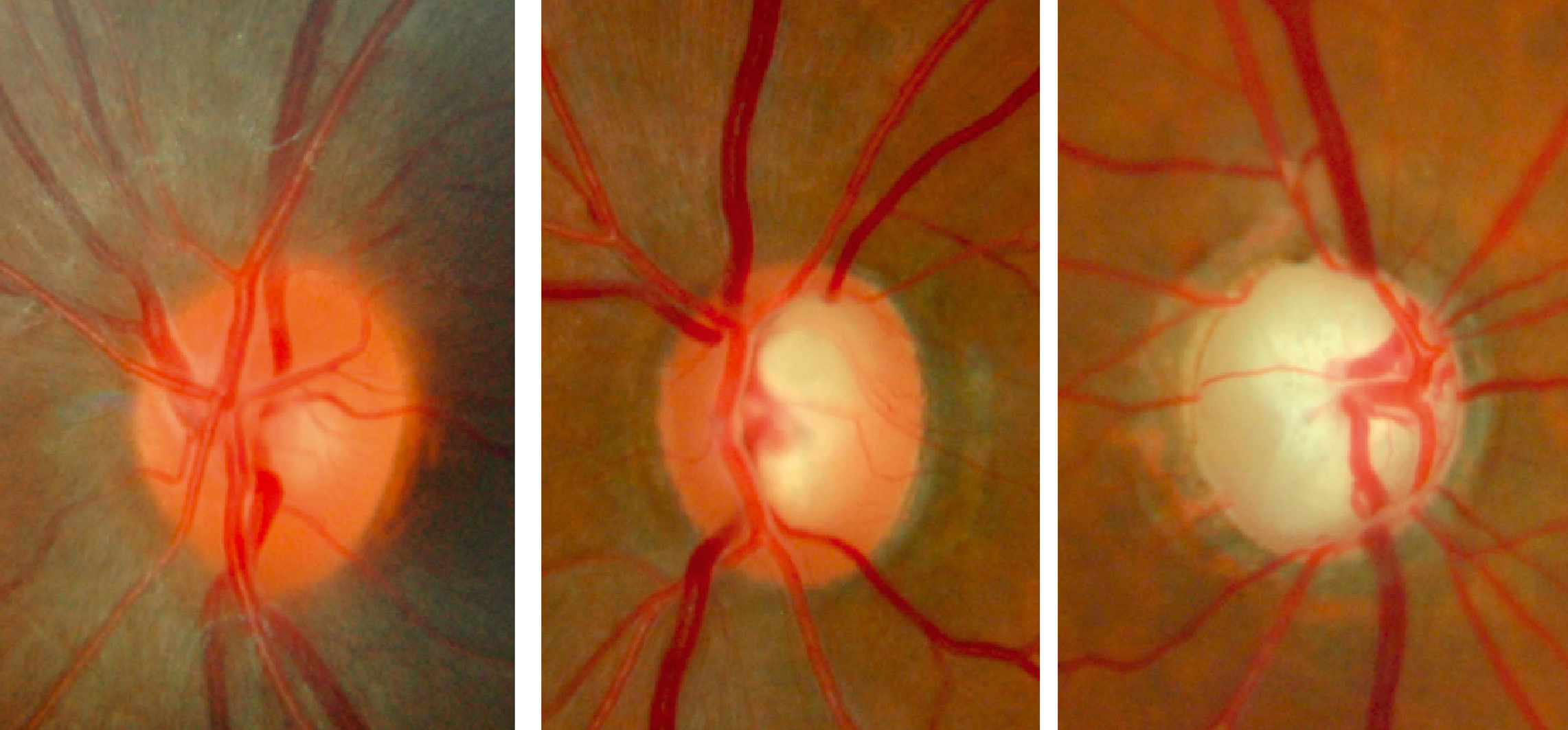
You’re reading this right now because of a biological cable about the thickness of a shoelace. It’s tucked away behind your eyeball, hidden in the dark, bony safety of your skull. We’re talking about the optic nerve. Without it, your eyes are basically just expensive glass marbles that can't talk to your brain.
Think about it. Light hits your retina. That light turns into electrical zaps. But those zaps don't just float through the air to your visual cortex. They need a bridge. That bridge is a massive bundle of over a million nerve fibers. It’s honestly a miracle of engineering. If even a small section of these fibers gets pinched or frayed, your world starts to go dark in very specific, often terrifying ways.
Most people think vision happens in the eye. It doesn't. The eye is just the camera lens; the brain is the computer. The optic nerve is the high-speed fiber-optic cable connecting the two.
What the Optic Nerve Actually Does (Beyond the Textbook)
The optic nerve is the second cranial nerve. Scientists call it CN II. But that sounds too sterile for what’s actually happening. Imagine 1.2 million tiny copper wires wrapped in a thick layer of insulation. That insulation is called myelin. In the rest of your body, nerves can sometimes grow back or heal. Not here. The optic nerve is technically an outgrowth of the central nervous system. It’s brain tissue that decided to take a walk out to the face.
Because it’s brain tissue, it’s incredibly sensitive.
When light hits the photoreceptors in your retina—the rods and cones—it triggers a chemical reaction. This reaction creates an electrical impulse. These impulses gather at a spot called the optic disc. You might know this as your "blind spot." There are no sensors there because that’s where the cable plugs in. From that disc, the optic nerve travels backward through the optic canal, a narrow tunnel in the sphenoid bone.
Then things get weird.
The two nerves from each eye meet at a junction called the optic chiasm. Here’s the crazy part: they swap some information. About half of the fibers from your left eye cross over to the right side of the brain, and vice versa. This "crossing over" is why you have depth perception. It’s how your brain triangulates distance. If we didn't have this crossover at the chiasm, you’d be living in a flat, 2D world, constantly bumping into doorframes.
The Glaucoma Connection: The Silent Thief
You can't talk about the optic nerve without talking about glaucoma. It’s the elephant in the room. Most people think glaucoma is "high eye pressure," but that’s not quite right. Glaucoma is actually a disease of the optic nerve itself. The pressure is just the thing doing the damage.
Imagine a garden hose. If you step on it, the pressure builds up. In your eye, if the fluid (aqueous humor) doesn't drain right, the pressure rises. This pressure pushes back against the optic nerve. Because the nerve is trapped in that bony tunnel, it has nowhere to go. It starts to suffocate. The fibers on the outer edges die first.
That’s why people with glaucoma lose their peripheral vision first. It’s sneaky. You don't notice the "tunnel vision" until the tunnel is very, very small.
Dr. Shan Lin, a renowned glaucoma specialist, often points out that you can have "normal" eye pressure and still have optic nerve damage. This is called normal-tension glaucoma. It suggests that some people just have "weaker" nerves or poor blood flow to the area. It’s not just about the numbers on a tonometer at the doctor's office; it's about the physical integrity of those million-plus fibers.
Optic Neuritis and the MS Link
Sometimes the damage isn't from pressure. Sometimes your own body decides to attack the cable. This is optic neuritis.
It usually feels like a dull ache behind the eye that gets worse when you move your eyeball. Then, things get blurry. Colors—especially red—start to look washed out or grey. It’s like someone turned down the saturation on your TV.
For many people, this is a one-off event. Maybe a viral infection triggered some inflammation. But for others, it's the first sign of Multiple Sclerosis (MS). Since the optic nerve is coated in myelin, and MS is a disease that eats away at myelin, the optic nerve is often the "canary in the coal mine."
According to the National Multiple Sclerosis Society, about 50% of people with MS will experience optic neuritis at some point. It’s a stark reminder that your eyes are literally a window into the health of your entire nervous system.
Why You Can't Just Get an "Optic Nerve Transplant"
We live in an era of heart transplants and bionic limbs. So, why can't we just swap out a damaged optic nerve?
The short answer: it’s too complicated.
When you cut a nerve in your finger, the ends can sometimes find each other and regrow. But the optic nerve is part of the Central Nervous System (CNS). CNS neurons are notoriously bad at regenerating. They’re actually surrounded by "inhibitor" molecules that tell them not to grow. Evolution probably did this to keep our brain connections stable, but it’s a nightmare for modern medicine.
Researchers like Dr. Jeffrey Goldberg at Stanford are working on ways to "re-awaken" these cells. They’re looking at gene therapy and special proteins that might trick the nerve into growing again. We aren't there yet. Right now, once those fibers are gone, they’re gone for good.
Papilledema: When Your Brain Is Under Pressure
Sometimes the optic nerve acts as a warning light for things happening deep inside your skull. If you have a brain tumor, a blood clot, or even just idiopathic intracranial hypertension (basically, too much brain fluid), that pressure has to go somewhere.
It often travels down the sheath surrounding the optic nerve.
When a doctor looks into your eye with that bright light (an ophthalmoscope), they aren't just checking your vision. They’re looking at the optic disc. If the disc looks swollen or blurry, that’s papilledema. It’s a medical emergency. It means the pressure inside your head is so high it’s literally squeezing the nerve out of the eye.
Everyday Habits That Actually Help
Honestly, we take this little cord for granted. You’re using it to process these words, to see the color of your coffee, to navigate your house. So how do you keep it from fraying?
- Watch your blood pressure. High BP can damage the tiny vessels that feed the nerve. No blood, no oxygen. No oxygen, dead nerve.
- Quit the cigarettes. Smoking is incredibly toxic to the optic nerve. It’s linked to something called Leber’s Hereditary Optic Neuropathy (LHON), which can cause sudden, permanent blindness in young men.
- Eat your greens. Lutein and zeaxanthin (found in kale and spinach) are great for the retina, but B12 and folate are the real heroes for nerve health. A B12 deficiency can actually cause "nutritional optic neuropathy," where the nerve just starts to waste away.
- Get a dilated eye exam. This is the big one. An eye doctor can see the physical health of your optic nerve head. They can see the "cupping" that indicates glaucoma years before you notice a single blind spot.
The optic nerve is a masterpiece of biological engineering. It’s a million-stranded bridge that translates the physical world into the mental one. It’s fragile, it’s irreplaceable, and it’s currently working overtime to help you read this.
Protecting Your Visual Lifeline
If you’ve noticed any weird changes—like colors looking dull, a persistent ache when moving your eyes, or "missing" patches in your side vision—don't wait. These aren't just "getting old" symptoms. They are specific distress signals from your optic nerve.
Immediate Steps for Nerve Health
- Schedule a visual field test: This is different from the "read the letters on the wall" test. It checks your peripheral sensitivity and can map out early nerve damage.
- Monitor "flickering" or "dimming": If your vision dims when you exercise or take a hot shower (known as Uhthoff's phenomenon), it’s a classic sign of nerve conduction issues.
- Know your family history: Glaucoma and certain neuropathies are highly hereditary. If your grandmother lost her sight, you need to be twice as vigilant.
Maintaining the health of your optic nerve is fundamentally about managing systemic health. Since this nerve is an extension of your brain, what’s good for your grey matter is good for your vision. Keep the blood flowing, keep the inflammation down, and make sure that high-speed cable stays plugged in and powered up.
/i.s3.glbimg.com/v1/AUTH_08fbf48bc0524877943fe86e43087e7a/internal_photos/bs/2025/H/e/ewwgKCQCSopdUJUwy6DA/imagem-2025-04-27-114802986.png)


