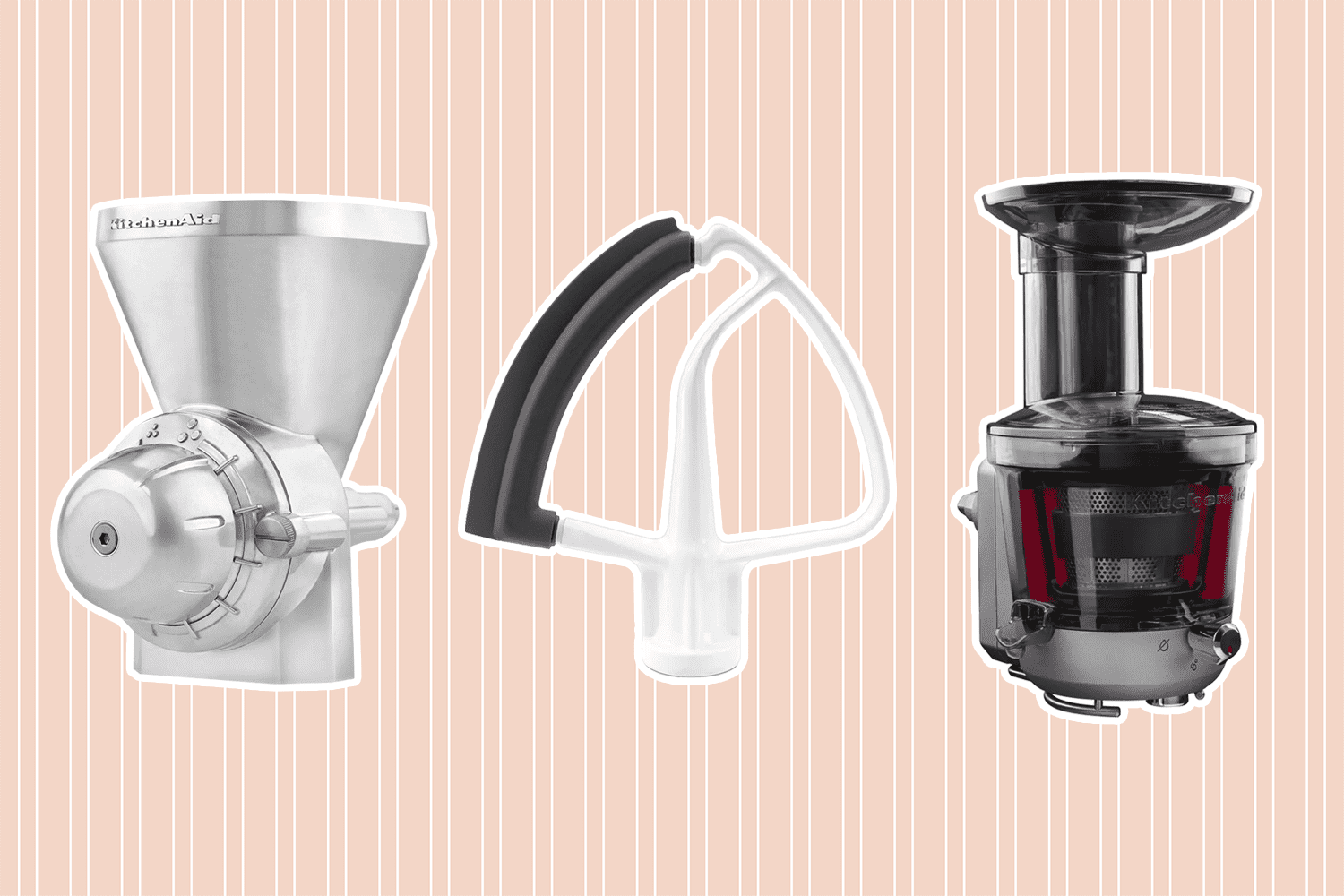
You probably bought that KitchenAid stand mixer for the bread dough, right? Or maybe the cookies. But honestly, the whisk attachment for KitchenAid is the unsung hero that actually determines whether your pavlova peaks or your whipped cream turns into a sad, watery mess. It’s that balloon-shaped wire contraption—technically called the Wire Whip—that looks simple but is surprisingly finicky. If you’ve ever heard a terrifying rhythmic clink-clink-clink against the bottom of your stainless steel bowl, you know exactly what I mean. It feels like the machine is eating itself. It isn't, usually. But it’s a sign that your tolerances are off, and in the world of high-speed aeration, tolerances are everything.
Most people just toss the whisk in the dishwasher and call it a day. Big mistake. Huge. Unless you have the specific professional-grade burnished or stainless versions, that standard aluminum hub is going to oxidize and turn your hands (and your egg whites) gray. We’re going to get into why that happens, how to recalibrate your mixer in thirty seconds, and why the "11-wire" upgrade might actually be the only thing standing between you and a perfect soufflé.
The Calibration Crisis: The Dime Test
If your whisk attachment for KitchenAid is leaving a puddle of unmixed egg yolk at the very bottom of the bowl, your mixer is sitting too high. If it’s scratching the metal, it’s too low. KitchenAid engineers actually built in a way to fix this, but nobody reads the manual. It's basically a secret screw.
Here is how you handle it. Grab a literal dime. Drop it in the bowl. Turn the mixer to speed 2 with the whisk attached. If the whisk doesn't touch the dime, it's too high. If it drags the dime continuously around the bowl, it’s too low. You want that whisk to just nudge the dime about half an inch every few rotations. You’ll find the adjustment screw right in the neck of the tilt-head models. A tiny turn to the right raises the head; a turn to the left lowers it. It’s a game of millimeters. People think their mixer is broken when it’s just a screw that vibrated loose over three years of making buttercream.
I’ve seen people return entire machines to Williams-Sonoma because of this. Don't be that person. Just get a screwdriver.
Why Your Whisk is Turning Grey
Let’s talk about the "Grey Residue of Death." It’s the most common complaint with the standard whisk attachment for KitchenAid. Most mixers come with a burnished aluminum whip. It looks shiny and nice when you unbox it. Then, you put it in the dishwasher. The high heat and harsh detergents strip the protective coating, causing the aluminum to oxidize.
Next time you touch it, your fingers come away covered in a dark, metallic soot. If you use it to whip cream, that cream is going to look like it was dragged through a charcoal pit. Once this oxidation starts, it’s a massive pain to stop. You can try a paste of vinegar and baking soda, or a heavy-duty scrub with Bar Keepers Friend, but honestly? It’s often better to just upgrade to the 100% stainless steel version (part number KSM5THWWSS for the 5-quart tilt-head). It’s dishwasher safe. You can be lazy with it. It’s worth the twenty bucks just to never worry about "grey whipped cream" ever again.
The 6-Wire vs. 11-Wire Debate
If you’re still using the standard 6-wire whisk that came in the box, you’re basically driving a Ferrari in second gear. The 11-wire whip is a total game-changer for high-volume tasks. More wires mean more air. More air means your egg whites reach stiff peaks in about half the time.
However, there’s a catch.
The 11-wire whisk is usually designed for the larger bowl-lift models (like the Pro 600 or the Commercial series). If you try to force a large-capacity whisk into a 4.5-quart Artisan bowl, you’re going to have a bad time. The geometry is different. The whisk needs space to create a vortex. If the whisk is too crowded by the bowl walls, it actually prevents air from folding in. It’s physics. You want the wires to have enough "swing" to pull air from the surface down into the liquid.
Troubleshooting Common Whisk Disasters
Sometimes the wires pop out of the hub. This usually happens because someone tried to use the whisk attachment for KitchenAid for something heavy, like chilled butter or thick cookie dough. Stop doing that. The whisk is for air. It’s for liquids. It’s for eggs, heavy cream, and maybe a very light sponge cake batter. If the wires are bent, the balance is ruined. A wobbly whisk at Speed 10 creates enough centrifugal force to actually damage the internal gears (the "transmission") of your mixer.
- Vibration: If the mixer is walking across the counter, your whisk is likely bent or the bowl isn't locked in.
- Clicking: That’s the "Dime Test" issue mentioned above. Your whisk is hitting the dimple at the bottom of the bowl.
- Splashing: You’re probably starting too fast. Always start on "Stir" for 5 seconds before jumping to Speed 8 or 10.
KitchenAid’s own "Use and Care" guides explicitly state that the wire whip should not be used for heavy mixtures. If you need to cream butter and sugar, use the paddle (the flat beater). Using the whisk for butter is a shortcut to a broken $400 appliance.
The Science of Aeration
Why does the shape of the whisk attachment for KitchenAid even matter? It’s all about surface area and the "planetary action." Unlike a hand mixer where you move the beaters, the KitchenAid whisk moves in one direction while the entire shaft rotates in the opposite direction. This ensures every part of the bowl is hit.
When you’re making a meringue, you’re trying to stretch protein bonds to trap air bubbles. If your whisk is dirty—even a tiny speck of fat or oil—those proteins won't stretch. Pro tip: wipe your whisk wires down with a bit of lemon juice or white vinegar before you start. It strips any lingering grease that your dish soap might have missed.
Finding the Right Part for Your Model
Not all whisks are created equal. This is where most people get frustrated. You go on Amazon, search for a whisk attachment for KitchenAid, buy the first one you see, and it doesn't fit.
You must know your model number. It’s on a sticker under the base.
- Tilt-Head (Artisan/Classic): These use the K45WW style whisks. They are shorter.
- Bowl-Lift (Professional/Pro 600): These use much longer whisks, often with a different mounting pin.
- Mini (3.5 Quart): These have a specialized, smaller whisk that is not interchangeable with anything else.
If you have a 7-quart or 8-quart commercial mixer, your whisk is a beast. It’s reinforced. Do not try to save $10 by buying an off-brand "universal" whisk. I’ve seen those snap mid-whip, sending shards of wire into a batch of frosting. Stick to OEM (Original Equipment Manufacturer) or high-end certified stainless replacements from reputable brands like New Metro Design if you must go third-party.
Maintenance and Longevity
To keep your whisk in top shape, stop banging it against the side of the bowl to get the excess frosting off. That’s how you misalign the wires. Use a spatula. It’s boring, but it works. If you have the aluminum version, hand-wash it immediately and dry it. Don't let it soak in the sink. Water trapped in the hub leads to internal corrosion.
Also, check the "pin" on your mixer’s shaft. If the whisk feels loose or jiggles excessively even when locked, that pin might be wearing down. A tiny bit of food-grade grease on the attachment point once a year can prevent the metal-on-metal grinding that eventually makes the whisk impossible to remove.
Actionable Steps for Better Results
Stop treating your whisk like a generic tool. It’s a precision instrument. If you want to actually improve your baking today, do these three things:
- Perform the Dime Test: Check your clearance right now. If your whisk has been scraping the bowl, you’re eating microscopic bits of metal. If it’s too high, you’re wasting ingredients.
- Audit your Material: Look at the hub of your whisk. If it’s dull grey, it’s aluminum. Stop putting it in the dishwasher. If you can afford it, buy the KSM5THWWSS stainless steel version so you never have to hand-wash it again.
- Degrease before Whisking: Before doing egg whites, wipe the whisk and the bowl with a paper towel dipped in vinegar. This single 10-second step is the difference between a flat meringue and a towering one.
The whisk attachment for KitchenAid is remarkably durable if you don't abuse it. Treat it like a whisk, keep it calibrated, and it’ll likely outlive the mixer itself. Just remember: it’s for air, not for dough. Keep the heavy stuff for the hook and let the whisk do what it does best—making things light.



