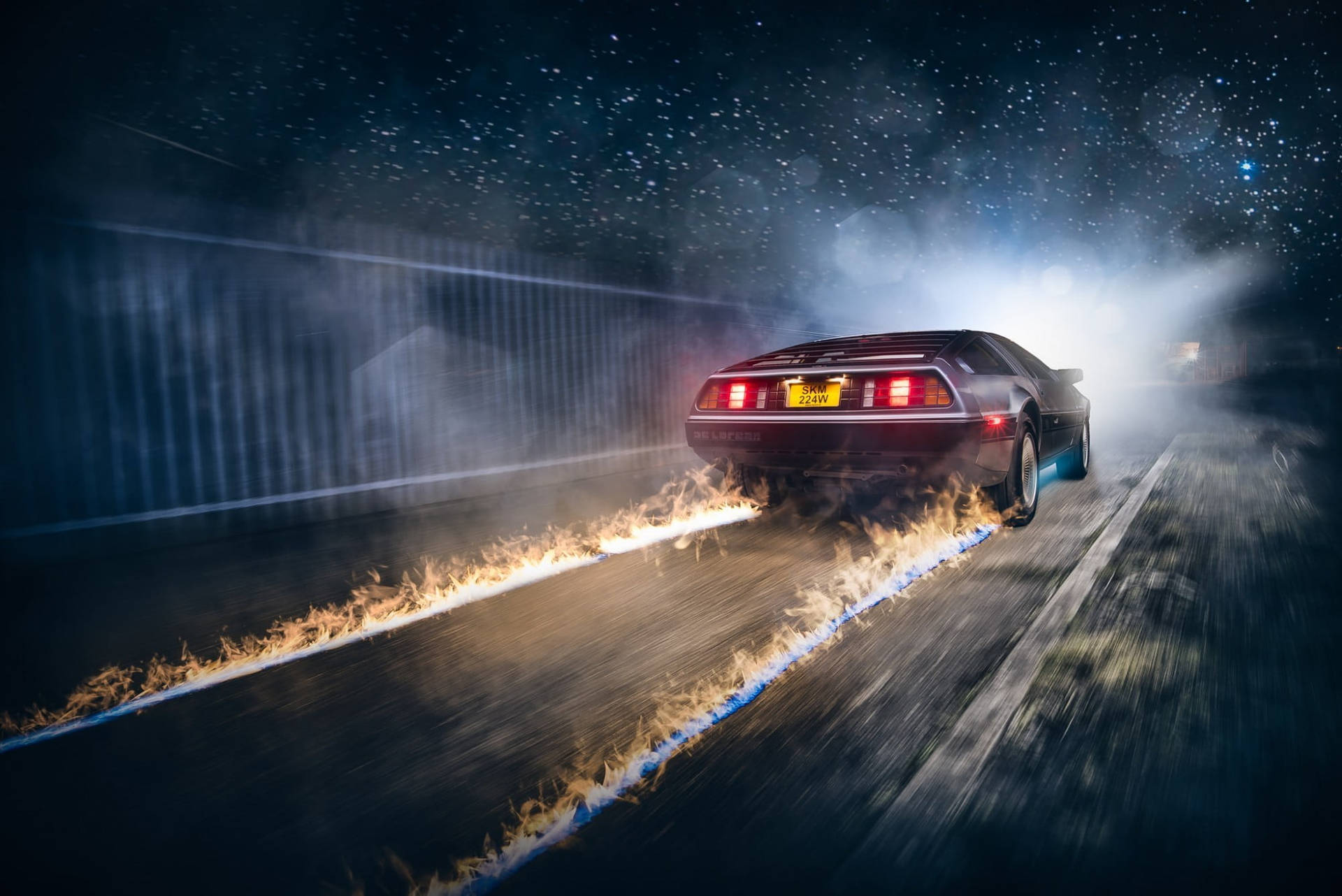
It starts with a smell. Maybe it’s that acrid, "electrical" scent that reminds you of a dying toaster, or perhaps it’s the heavy, sweet aroma of vaporizing coolant. Then the smoke drifts from the vents or the edge of the hood. Panicking is the default setting here, but honestly, if your car is on fire, you have significantly less time to react than the movies lead you to believe. Hollywood loves a slow-burn buildup followed by a massive, gasoline-drenched explosion. Real life is grittier, faster, and usually involves a lot of melting plastic and toxic fumes before you even see a flame.
Most people assume car fires are the result of high-speed collisions. They aren't. According to the National Fire Protection Association (NFPA), mechanical or electrical failures cause about two-thirds of all vehicle fires. Your car is essentially a pressurized system of flammable fluids—gasoline, oil, brake fluid, transmission fluid—surrounded by miles of copper wiring and flammable insulation. When something goes wrong, it goes wrong fast.
Why a car is on fire more often than you think
Modern cars are safer than ever, yet we still see hundreds of thousands of highway fires every year. Why? Because we push our machines harder and keep them longer. A tiny leak in a high-pressure fuel rail can turn a commute into a survival situation in seconds. When fuel hits a hot exhaust manifold, which can easily reach 800 degrees Fahrenheit, it doesn't just smoke. It ignites.
There's also the "stuff" we leave in our cars. You’ve probably heard about clear plastic water bottles acting like magnifying glasses in the sun, focusing a beam of light onto a leather seat until it smolders. It’s rare, but it happens. More common? Lithium-ion batteries in cheap dash cams or forgotten power banks overheating in a 130-degree cabin. Once a lithium battery goes into thermal runaway, you aren't putting it out with a handful of dirt.
Electrical shorts are the silent killers of older vehicles. Over time, wire insulation becomes brittle. Vibrations rub that brittle plastic against the metal chassis until—pop—you have a direct short to ground. That generates immense heat instantly. If that wire is near a greasy engine block, you have the perfect recipe for a disaster.
The anatomy of the first minute
If you see smoke, pull over. Immediately. Don't wait for a "better" spot. Don't try to make it to the next exit. Signal, get to the shoulder, and kill the engine. Turning off the ignition is vital because it stops the flow of fuel if you have an electric fuel pump and cuts the current to a short-circuiting electrical system.
Get everyone out. This sounds obvious, right? But people often reflexively try to grab their laptop bag or their phone. Forget it. The interior of a car is a cocktail of synthetic materials. When polyurethane foam and plastic trim burn, they release hydrogen cyanide and carbon monoxide. Inhaling that smoke for even a few seconds can disorient you or knock you out.
Never pop the hood fully
This is the mistake that turns a small engine fire into a total loss. If you see smoke coming from the hood, your instinct is to open it and see what's happening. Don't. Fire needs three things: fuel, heat, and oxygen. By popping the hood, you are providing a massive gulp of fresh oxygen to a fire that was previously smothered by the engine bay's tight quarters. The result is a "backdraft" effect where flames can leap out at your face. If you have a fire extinguisher and feel brave enough to use it, only crack the hood slightly—using the release lever from inside—and spray through the gap. If the flames are already visible, just walk away.
The lithium-ion problem in EVs
We need to talk about Electric Vehicles (EVs) because the "car is on fire" scenario changes completely when there's a massive battery pack involved. There is a lot of misinformation out there. No, EVs do not catch fire more often than gas cars. Statistically, they are actually less likely to ignite. However, when an EV battery does go, it’s a nightmare for first responders.
Gasoline fires are hot and fast, but we know how to starve them of oxygen. Lithium-ion battery fires create their own oxygen through chemical reactions. This is known as thermal runaway. You can dump thousands of gallons of water on a Tesla or a Ford F-150 Lightning and the fire might still reignite hours later. Firefighters in places like California have actually had to submerge entire cars in specialized "quench tanks" to stop the reaction. If your EV starts venting thick, sweet-smelling white or grey smoke from underneath, stay at least 50 feet away. The fumes are incredibly toxic, containing hydrofluoric acid.
Real-world causes most people ignore
- The "Slow Leak": That small oil drip you’ve been ignoring? It coats the engine block in a layer of grime that acts like a wick.
- Aftermarket Wiring: That DIY subwoofer installation or those cheap LED light strips are notorious for starting fires. If you didn't use a fuse, you've built a heating element.
- Dry Leaves: In the fall, parking over a pile of dry leaves can be fatal. Your catalytic converter stays hot enough to ignite brush for a long time after the car is off.
- The Forgotten Rag: Mechanics are human. Occasionally, a greasy rag gets left in the engine bay after a service. It sits there until it vibrates onto the exhaust.
What to do when you’re stuck inside
This is the nightmare scenario. If the doors won't open because the electronics have fried or the frame is warped, you need a way out. Tempered glass—which is what your side windows are made of—is incredibly strong. You cannot kick it out. You shouldn't try to punch it.
You need a dedicated glass breaker tool kept within arm's reach of the driver's seat. Not in the trunk. Not in the glovebox that might be jammed. If you don't have one, the metal prongs of your headrest can sometimes be used to pry the glass at the bottom corner, but it's difficult. Aim for the corners of the window, not the center; the center is the most flexible and strongest part of the pane.
Insurance and the aftermath
Once the fire department has done their job and you’re standing there looking at a charred skeleton, the reality of the "total loss" sets in. Most standard "Comprehensive" insurance policies cover fire damage. "Collision" only does not. If you only have basic liability, you’re likely on the hook for the towing fees and the loss of the vehicle.
The investigator will look for the point of origin. If they find that the fire was caused by a known manufacturer defect, you might have a claim against the car company. Brands like Hyundai and Kia have issued massive recalls over the last few years for "spontaneous engine fires" related to ABS sensors and fuel leaks. Always check your VIN on the NHTSA website. It takes two minutes and could literally save your life.
Practical Steps to Take Now
You don't need to live in fear, but you should be prepared. Start by checking your car's fluids. A clean engine is a safer engine.
- Buy a 2.5lb ABC Dry Chemical Extinguisher. Keep it secured in the passenger cabin using a proper mount. A loose extinguisher becomes a projectile in a crash.
- Mount a seatbelt cutter/glass breaker tool where you can reach it while buckled in. Velcro it to the center console or the side of the driver's door.
- Check for recalls. Go to NHTSA.gov/recalls and enter your VIN. If there is a fire-related recall, get it fixed immediately. Dealers usually do these for free.
- Sniff test. If you smell something burning while driving, don't "wait and see." Pull over and do a visual inspection.
- Clean your engine bay. If it's covered in oily gunk, use a degreaser. Just be careful not to soak the sensitive electronics.
If your car is on fire, your only job is to get yourself and your passengers to safety. The car is metal and plastic; it can be replaced. You can't. Once you are out and at a safe distance—at least 100 feet—call emergency services. Do not go back for your wallet. Do not try to save the car. Just watch it burn from a distance and be glad you're not in it.