You probably know the drill. You go to the doctor, complain about heavy periods or acne, and walk out with a tiny plastic pack of pills. They tell you it’s 99% effective. They tell you it might make your skin clear up. But they rarely tell you about the neurobiology. It’s kinda wild when you think about it. We’ve been using the pill for decades, yet the conversation about your brain on birth control is only just hitting the mainstream.
For a long time, the medical community viewed the pill as something that stayed "below the neck." The logic was simple: synthetic hormones shut down ovulation, thinning the uterine lining and thickening cervical mucus. Job done. But your brain is the command center for all those hormones. When you swallow that pill, you aren't just changing your ovaries; you are fundamentally altering the chemical signaling that reaches your prefrontal cortex and your amygdala.
The Chemistry of the "Synthetic" Shift
Let’s get technical for a second, but keep it real. Most oral contraceptives use a combination of synthetic estrogen (ethinyl estradiol) and progestin. These aren't identical to what your body makes. They’re close, like a key that almost fits the lock but turns it a bit differently.
When you’re on the pill, your natural production of estradiol and progesterone drops off a cliff. Your brain's hypothalamus stops sending signals to the pituitary gland. No signal means no ovulation. But those natural hormones have jobs in the brain that go way beyond making babies. Estradiol, for instance, is a massive player in dopamine and serotonin regulation. It helps with synaptic plasticity—basically, how well your brain cells talk to each other. When you replace that pulsing, rhythmic natural cycle with a flat line of synthetic hormones, things change.
Some women feel totally fine. Others feel like they’ve been wrapped in a wet blanket for three years and don't know why.
What Your Brain on Birth Control Actually Looks Like
Research from institutions like the University of Salzburg has looked at brain structure using MRI scans. It turns out that some women on the pill have slightly thinner cortical areas in the orbitofrontal cortex and the posterior cingulate cortex. Those are big words for the parts of your brain that help you make decisions and process emotions.
Does this mean the pill is "shrinking" your brain? Not exactly. It means the brain is adapting. It's plastic. It changes when you're pregnant, it changes when you're stressed, and it changes when you're on medication. But it’s a shift we should probably be talking about more during those ten-minute doctor appointments.
The Mood Connection and the Danish Study
In 2016, a massive study out of the University of Copenhagen changed the conversation. They looked at over a million women. One million. The data showed that women on the combined pill were 23% more likely to be prescribed an antidepressant for the first time than non-users. For the progestin-only pill (the "mini-pill"), that number jumped to 34%.
For some people, this is a "no duh" moment. They’ve felt the "pill blues" personally. For others, it’s a shock.
Why does this happen? It might be the way synthetic progestins interact with GABA receptors in the brain. GABA is your "chill out" neurotransmitter. Natural progesterone breaks down into something called allopregnanolone, which calms the brain. Some synthetic progestins don't do this as effectively, or they might even block the calming effect.
- Progestin types matter. Not all pills are the same. Older versions like levonorgestrel are "androgenic," meaning they’re more like testosterone.
- Newer generations like drospirenone (found in Yaz) act differently on the kidneys and mood.
- Individual sensitivity is the wildcard. Your best friend might feel amazing on the same pack that makes you want to cry at a gum commercial.
Stress, Cortisol, and Staying "On"
Here is something weird. Women on the pill often have higher levels of cortisol-binding globulin. This means if you take a blood test, your total cortisol (the stress hormone) looks high. However, the pill also seems to blunt the spike in cortisol you’d usually get when something stressful happens.
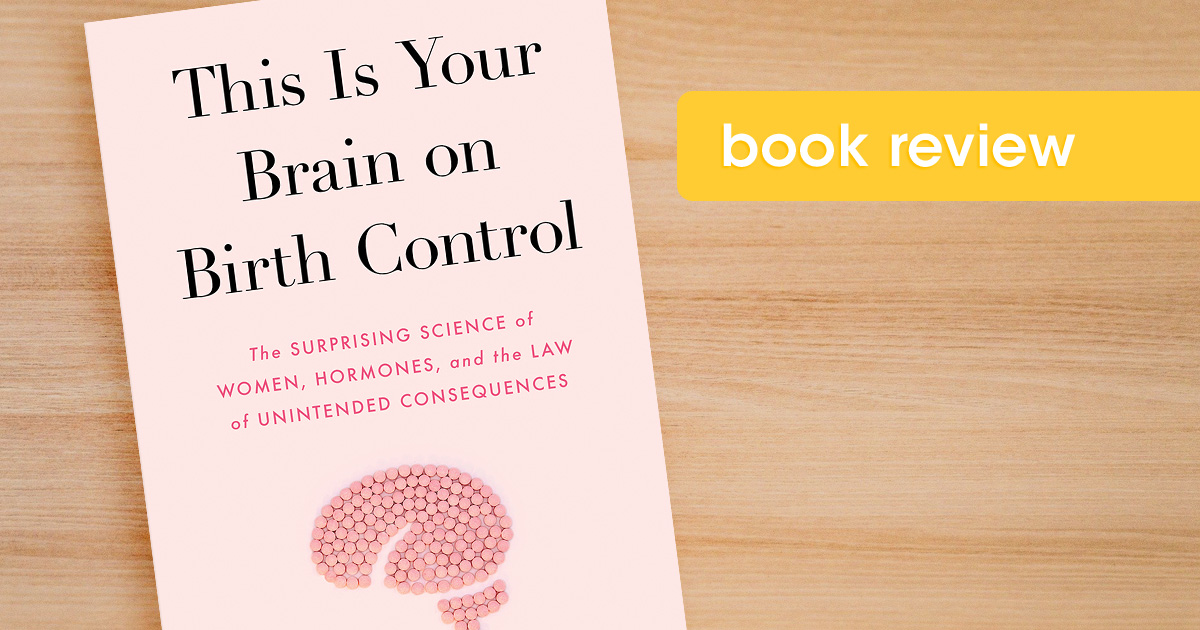
Think of it like a thermostat that's stuck. You’re at a high baseline of stress hormones, but your body can’t react properly when a real "predator" (or a bad work email) shows up. Dr. Sarah Hill, a leading researcher and author of This Is Your Brain on Birth Control, notes that this can lead to a feeling of being "flat." You don't get the highs, but you don't get the lows either. You’re just... there.
The Social Side Effects Nobody Expected
This is where the research gets controversial and honestly, a little bit strange. There’s a body of evidence suggesting that your brain on birth control might change who you’re attracted to.
Under natural conditions, women at the high-fertility window of their cycle usually prefer men with more "masculine" traits—think stronger jawlines or deeper voices. This is evolutionary biology 101. But when you’re on the pill, that preference often flattens out. Some studies have even followed couples where the woman met her partner while on the pill, then went off it. Occasionally, they report a shift in physical attraction.
Is it going to ruin your marriage? Probably not. But it highlights how deeply these hormones weave into our social fabric. It affects how you read faces. It affects how you respond to competition. It even affects your memory. Research suggests pill users might remember the "gist" of an emotional story better, while natural cyclers remember the specific, gritty details.
Why We Weren't Told
Medical gaslighting is a real thing. For decades, if a woman told her doctor the pill made her depressed, she was often told it was "in her head" or "not a side effect."
The truth is that early clinical trials didn't prioritize mood. They prioritized "does she get pregnant?" and "is she dying?" Mood is subjective. It’s hard to measure in a lab. Plus, the pill was a massive win for women’s liberation. Acknowledging side effects felt, to some, like giving ammunition to people who wanted to take the pill away entirely.
But we can hold two truths at once. The pill is a revolutionary tool for autonomy, and it can have significant neurological impacts that users deserve to know about.
Navigating the Choices
If you’re feeling "off," don’t just ghost your medication. That’s a recipe for a hormonal rollercoaster.
- Track your symptoms. Use an old-school journal or an app. Don't just track your period; track your "brain fog," your "irritability," and your "joy."
- Look at the progestin. If you're on a levonorgestrel pill and feel like a monster, talk to your doctor about a different generation of progestin.
- Consider the dose. Some modern pills have much lower doses of estrogen than the ones our moms took in the 70s.
- Non-hormonal options. The copper IUD (ParaGard) doesn't mess with your brain chemistry because it doesn't have hormones. It has its own downsides (cramps, anyone?), but your brain stays in its natural rhythm.
Honesty is key here. If you feel like your personality has shifted, it might not be "just you." It might be the chemistry.
Practical Next Steps for Your Brain Health
If you are currently on hormonal contraception or thinking about it, here is the move. Stop viewing it as just a "period fixer." It is a brain-altering medication.
First, give any new pill at least three months. Your brain needs time to find its new equilibrium. During this time, prioritize B vitamins. There is some evidence that oral contraceptives can deplete B6, B12, and folate, which are crucial for neurotransmitter synthesis.
Second, check your "hedonic tone." That’s a fancy way of saying: are you still enjoying the things you used to love? If you find that your favorite hobbies or your partner’s jokes just don't hit the same, that’s a data point.
Third, consult a provider who actually listens to the "brain" stuff. If your doctor brushes off your concerns about mood, find a reproductive endocrinologist or a GP who stays up to date on the latest PubMed entries.
The goal isn't to scare anyone off the pill. It’s about informed consent. You should be the one in the driver's seat of your own neurobiology. Understanding your brain on birth control is the first step in making sure your contraception works for your whole body, not just your uterus.
Audit your current mood baseline today. Write down three words that describe your mental state over the last month. If those words aren't "you," it might be time to look at that little plastic pack and ask some harder questions.