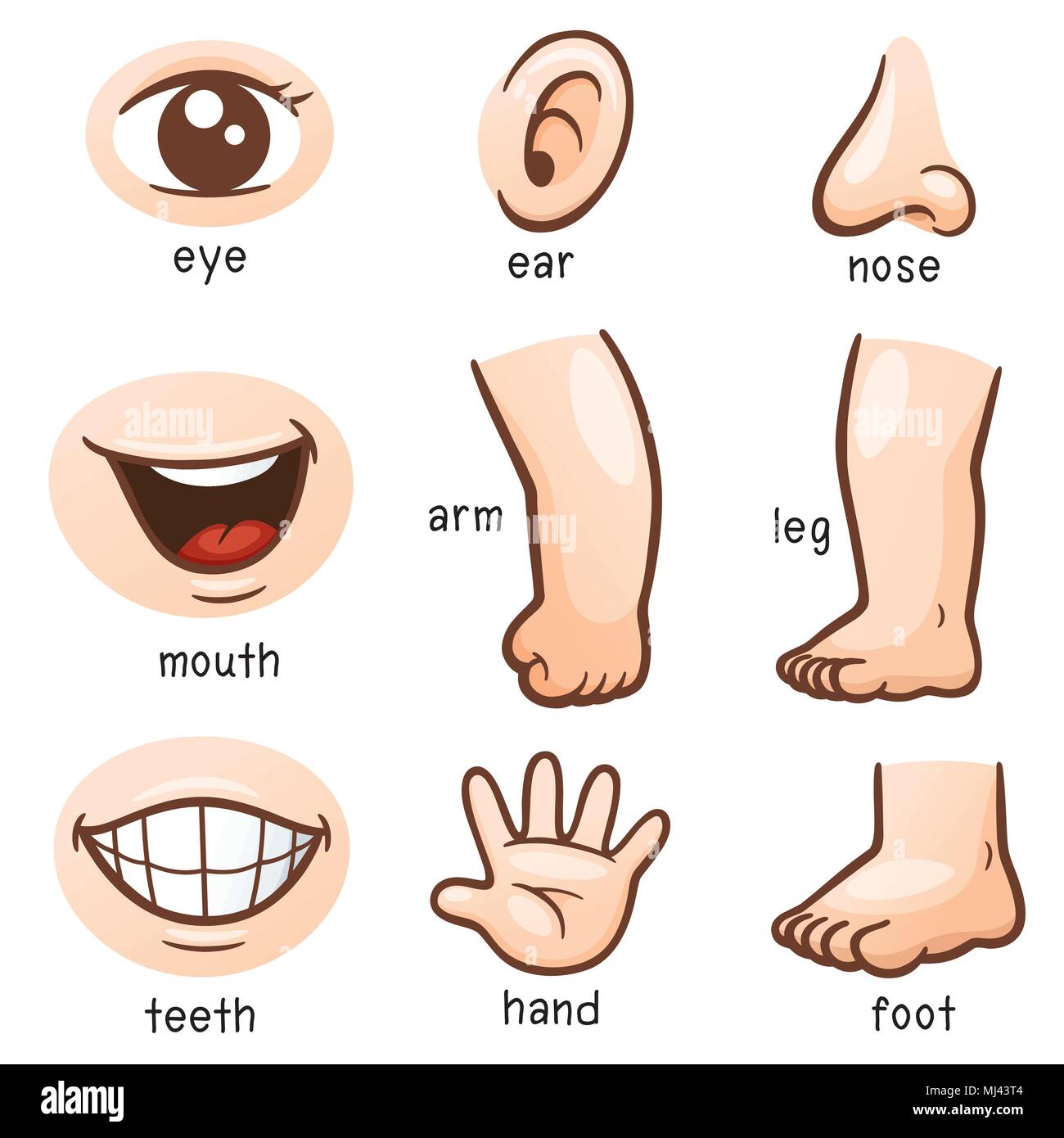
You’ve got about 37 trillion cells buzzing around inside you right now. Honestly, it’s a miracle we don’t just dissolve into a puddle of biological static. Most of us think about our body parts as separate departments—the heart does the pumping, the lungs do the breathing, and the stomach handles that late-night pizza. But that’s not really how it works. Your body is more like a chaotic, high-stakes jazz ensemble where every instrument is constantly reacting to the others.
If your big toe hurts, your gait changes. Your hip then overcompensates. Suddenly, your lower back is screaming at you.
It’s all connected.
Most people can name the basics. Heart, brain, liver, kidneys. But did you know you have an organ called the interstitium that scientists only recently started taking seriously? It’s a network of fluid-filled spaces in your connective tissue. For decades, we just thought it was "stuffing." Turns out, it might be the secret highway for how cancer spreads or how our immune system communicates. This is the reality of the human form; it's constantly being redefined by new research from places like Johns Hopkins and the Mayo Clinic.
The Systems You Forget to Mention
We usually categorize body parts into systems. The circulatory, the nervous, the skeletal. It makes sense for textbooks. But in the real world, these systems are so blurred it’s hard to tell where one ends and the other begins.
Take the gut-brain axis.
Your intestines are lined with more than 100 million nerve cells. It’s so dense that scientists call it the "second brain." When you get "butterflies" in your stomach, that’s not just a metaphor. It’s your enteric nervous system reacting to a flood of cortisol and adrenaline. You aren't just a brain driving a meat-suit; you're a feedback loop.
The Skeletal Scaffold
Your bones aren't just dry, white sticks. They are living tissue. They bleed when they break. They also act as a mineral bank. If your blood calcium gets too low, your body "withdraws" calcium from your bones to keep your heart beating. It's a brutal survival tactic. There are 206 bones in the average adult, though you’re born with about 270. They fuse as you grow. The smallest is the stapes in your middle ear—it's roughly the size of a grain of rice. Without it, the world would be silent.
Muscle and Movement
Muscles only pull; they never push. That’s a weird realization for most people. Every time you push a door open, you’re actually using muscles that are pulling on bones to create that outward leverage. We have over 600 muscles. The strongest based on weight? The masseter—your jaw muscle. It can close your teeth with a force of up to 200 pounds on the molars.
The Soft Organs and Their Hidden Grifting
The liver is basically the body’s chemist. It performs over 500 functions. It’s the only organ that can fully regenerate. You could cut away 75% of it and, given enough time and a lack of excessive tequila, it’ll grow back to its original size. It’s a tank.
Then you have the spleen.
Nobody talks about the spleen until it ruptures. It’s tucked under your ribcage on the left. Its job is to filter blood and manage white blood cells. You can live without it, but your immune system will definitely take a hit.
The Heart is a Mechanical Beast
It beats about 100,000 times a day. If you live to be 70, your heart will have beaten more than 2.5 billion times. It’s a pump made of specialized cardiac muscle that never gets tired—unlike your biceps, which give up after twenty minutes at the gym. The heart has its own electrical system. It doesn't even need the brain to tell it to beat; as long as it has oxygen, it can keep thumping even if it's disconnected from the body.
Sensory Organs: Your Windows to the Chaos
Your eyes are essentially extensions of your brain. The retina is literally brain tissue pushed out into the eye sockets during development. We process about 10 million bits of information per second through our vision, but the brain discards most of it so we don't go insane.
Then there’s the skin.
It’s your largest organ. It weighs about 8 pounds and covers 22 square feet. It’s not just a wrapper. It regulates temperature, manufactures Vitamin D, and keeps out the literal billions of microbes trying to eat you. We shed about 30,000 to 40,000 dead skin cells every minute. You are basically leaving a trail of yourself everywhere you go.
The Complexity of the Hand
Humans are unique because of the "precision grip." The way your thumb can touch every other finger is what allowed us to build civilizations. There are no muscles in your fingers. Read that again. All the muscles that move your fingers are located in your forearm and palm. They move the digits via long tendons, like a puppet master pulling strings.
Why This Knowledge Actually Matters
Understanding body parts and their functions isn't just for medical students. It changes how you treat yourself. When you realize that your kidneys filter half a cup of blood every single minute, you start to understand why hydration isn't just a "wellness" trend—it's a mechanical necessity.
We often ignore the "boring" parts until they break.
The lymphatic system is a great example. It’s a network of vessels that drains fluid from your tissues. It doesn't have a pump like the heart. It relies on your physical movement to circulate. If you sit still all day, your "trash collection" system gets sluggish. That’s why your ankles swell on long flights.
Common Misconceptions
- "We only use 10% of our brain." Totally false. We use 100% of it, just not all at the same time. If you used 100% at once, you’d be having a massive seizure.
- "Blood is blue inside the body." No. It's always red. It just looks blue through the skin because of how light wavelengths interact with your tissue.
- "Tongue maps." You don't taste sweet on the tip and bitter at the back. All parts of the tongue can sense all tastes.
Actionable Steps for Body Maintenance
You only get one of these machines. There are no trade-ins.
- Move for your Lymph: Since your lymphatic system doesn't have a pump, you need to be the pump. Even five minutes of jumping or walking helps clear out cellular waste.
- Protect the "Small" Organs: Your thyroid, located in your neck, controls your metabolism. If you feel "foggy" and tired, it’s often a hormonal issue there, not just "getting old." Get your levels checked.
- Hydrate for your Fascia: Fascia is the connective tissue wrapping all your body parts. It needs water to stay "slidey." If it dries out, you get stiff and prone to injury.
- Listen to the Gut: If your stomach is upset, your mood will follow. Feed your microbiome with fermented foods like kimchi or kefir to keep your "second brain" happy.
- Posture is Structural: Your head weighs about 10-12 pounds. For every inch you lean it forward (text neck), you double the pressure on your spine. Sit up. Your vertebrae will thank you.
The human body is an absurdly complex biological machine that survives despite our best efforts to ruin it with stress and bad diets. Pay attention to the subtle signals—the twinges, the fatigue, the weird skin spots. They are the only way your body parts can talk to you.
/i.s3.glbimg.com/v1/AUTH_08fbf48bc0524877943fe86e43087e7a/internal_photos/bs/2025/H/e/ewwgKCQCSopdUJUwy6DA/imagem-2025-04-27-114802986.png)


