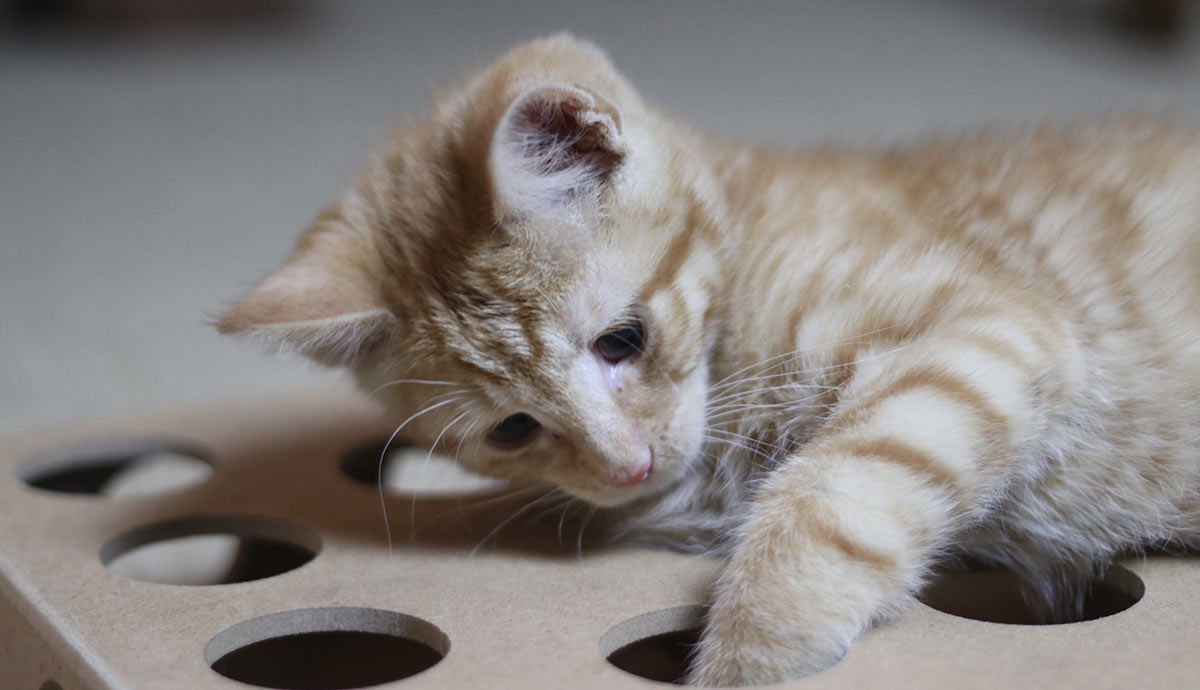
Twelve weeks is the big one. It’s that weird, frantic, and adorable middle ground where your 12 week old cat stops looking like a stumbling potato and starts looking like a miniature version of the predator they’ll eventually become. Most people think of three months as just another week in kittenhood, but biologically, this is a massive "graduation" phase. It’s usually when they leave their mom and siblings for good. They’re lanky. They’re incredibly fast. Honestly, they’re kinda chaotic.
If you’ve just brought home a kitten at this age, you’re likely noticing they have two modes: "Extreme Parkour" and "Dead to the World." There is no in-between. This is the stage where their coordination finally catches up with their confidence. Earlier on, they’d try to jump on the sofa and fail miserably. Now? They’re making that jump, and they’re probably knocking over your coffee in the process.
The Big Transition: Why 12 Weeks is the Gold Standard
Veterinarians and reputable breeders—think organizations like the American Feline Practitioners (AAFP)—almost always point to 12 weeks as the ideal time for a kitten to move to a new home. You’ll see some "backyard" sellers trying to push kittens out at 8 weeks. Don't fall for it. Those extra four weeks with their mother and littermates are where they learn how to be a cat.
Socialization is the secret sauce here. Between weeks 8 and 12, kittens learn "bite inhibition." If a kitten bites their brother too hard, the brother screams and stops playing. That is a lesson no human can teach as effectively as another cat. A 12 week old cat that stayed with its family is almost always better adjusted, less aggressive, and way less likely to treat your ankles like a chew toy.
Growing Pains and Weight Gain
By now, your kitten should weigh somewhere between 2.5 and 4 pounds. It's a rough estimate because a Maine Coon at 12 weeks is going to be a giant compared to a petite Siamese. A good rule of thumb is the "pound a month" rule.
They’re losing that round, belly-heavy kitten look. They start to get "leggy." This is also when the permanent eye color starts to settle in. Those blue eyes they were born with? They're likely turning green, gold, or amber right now. It’s a fun transformation to watch, honestly.
Health, Shots, and the Vet Gauntlet
This is a busy time for your kitten’s immune system. By 12 weeks, the "maternal antibodies" they got from their mom’s milk are wearing off. This leaves them vulnerable. You’ve got to step in with the science.
The core vaccine most vets prioritize is the FVRCP (Feline Viral Rhinotracheitis, Calicivirus, and Panleukopenia). Usually, they get a booster right around this 12-week mark.
- Rabies: Depending on where you live and your vet’s preference, this is often the age they get their first Rabies shot.
- FeLV: If your cat is going to be around other cats or potentially go outside, the Feline Leukemia vaccine is on the table.
- Deworming: Even if you don't see worms, they probably have them. It's gross, but it's true. Most kittens get a round of dewormer now.
Don't skip these. An upper respiratory infection in a 12 week old cat can go from "a few sneezes" to "emergency room visit" faster than you’d think. Their little bodies don't have much of a reserve.
Behavior: Why is My Cat Crazy?
The "zoomies" are real. At 12 weeks, your cat is basically a furry lightning bolt. Their brain is wired to hunt, but since they don't have mice to catch in your living room, they hunt your shadows, your shoelaces, and occasionally your face at 3:00 AM.
This is the peak of social play. They want to wrestle. If you don't have another cat, you are the other cat. But be careful. If you use your hands to play with them now, you are teaching them that human skin is a toy. That’s cute when they weigh 3 pounds. It’s a bloody nightmare when they’re a 13-pound adult with 2-inch claws. Use wand toys. Use feathers. Use anything that isn't your fingers.
The Sleep Schedule (Or Lack Thereof)
Expect them to sleep about 18 to 20 hours a day. It sounds like a lot, but they’re doing a ton of growing during those naps. Growth hormones in cats are primarily released during sleep. When they're awake, though, it’s 100% intensity.
Eating Like a Pro
Your 12 week old cat needs a lot of calories. Like, a lot. They need about three times the calories per pound of body weight compared to an adult cat.
- Kitten-Specific Food: Do not feed them adult food yet. They need the extra protein, fat, and minerals (like calcium and phosphorus) for bone growth.
- Frequency: Their stomachs are still small—about the size of a walnut. They do better with 3 or 4 small meals a day rather than one big one.
- Hydration: Cats have a low thirst drive. Wet food is your best friend here. It keeps them hydrated and prevents kidney issues down the line.
Some people worry about "overfeeding" a kitten. Honestly? It's pretty hard to do at 12 weeks. If they’re hungry, feed them. They’re building muscle and bone at a staggering rate.
Litter Box Mastery
By 12 weeks, they should be pros. If your 12 week old cat is having accidents, it’s usually one of three things: the box is too dirty (cats are divas), the sides are too high for them to climb over easily, or they have a urinary tract infection.
Make sure the box is in a quiet spot. Nobody wants to go to the bathroom next to a vibrating washing machine. If they’re "missing," try a shallower box or a different type of litter. Most kittens prefer the fine, sandy texture of clumping clay, even if it's a bit messier for you to clean up.
The "Teething" Phase
Yes, cats teethe. Around 12 weeks, those tiny, needle-sharp baby teeth start to loosen up to make room for the adult ones. You might even find a tiny tooth on the floor, though usually, they just swallow them while eating.
You’ll notice more chewing. They might gnaw on cardboard, your phone charger, or the corner of your coffee table. Give them kitten-safe chew toys. It soothes their gums. If their breath smells a little funky during this time, don't panic—it’s usually just the inflammation from the new teeth breaking through. If it smells like something died, though, see a vet.
Socializing Your Kitten to the World
The window for socialization starts closing around 12 to 14 weeks. You are right at the finish line. If you want a cat that doesn't hide when the doorbell rings, you need to put in the work now.
Expose them to everything. Gently. Carry them around the house while you vacuum. Let them hear the hairdryer. Have friends over to give them treats. If you plan on traveling with them, put them in their carrier and just sit in the car for 10 minutes without even starting the engine. Then, next time, drive around the block.
The goal isn't to scare them. It's to show them that "new stuff = safe stuff."
Handling and Grooming
Get them used to being touched. Touch their paws. Open their mouths. Look inside their ears. This makes your life (and your vet's life) so much easier later on. If you start clipping their claws now, they’ll think it’s just a normal part of life rather than an act of war.
Common 12-Week Hazards
Your house is a deathtrap. Sorry, but it is. A 12 week old cat can fit into gaps you didn't even know existed.
- The Recliner: These are kitten killers. Never close a recliner without knowing exactly where your kitten is.
- Strings and Tinsel: If they swallow it, it can cause a "linear foreign body" obstruction. This is a surgical emergency.
- Plants: Lilies are the big one. Even the pollen can kill a cat. Peace lilies, aloe, and many common houseplants are toxic. Check the ASPCA Poison Control list.
- Open Toilets: Small kittens can fall in and drown if they can't get grip on the porcelain to climb out. Keep the lid down.
Actionable Steps for Your Kitten’s Third Month
- Schedule the 12-week Vet Visit: Confirm they’re on track for FVRCP boosters and discuss the timing for spaying or neutering. Most vets recommend 4 to 6 months, but some do it earlier.
- Audit Your Toys: Throw away anything with small parts that can be chewed off and swallowed. Stick to sturdy wands and felt balls.
- Increase Vertical Space: Start providing "legal" places to climb. A small cat tree or a cleared-off shelf helps them satisfy that 12-week urge to climb without ruining your curtains.
- Introduce Grooming Tools: Buy a soft slicker brush. Even if they don't have much fur yet, getting them used to the sensation is a massive win for your future self.
- Microchip Check: If they aren't microchipped yet, do it at the next vet appointment. Collars can break or fall off, but a chip is forever.
- Switch Up Textures: Offer different types of kitten-safe food (pate, shreds, chunks) so they don't become "imprinted" on only one texture, which makes them picky eaters later.
At 12 weeks, your kitten is a work in progress. They are testing boundaries, figuring out their own strength, and bonding with you in a way that sets the tone for the next 15 to 20 years. It’s a lot of work, and you’ll probably have a few scratches on your hands, but this is the most formative month of their lives. Enjoy the chaos. It doesn't last long.



