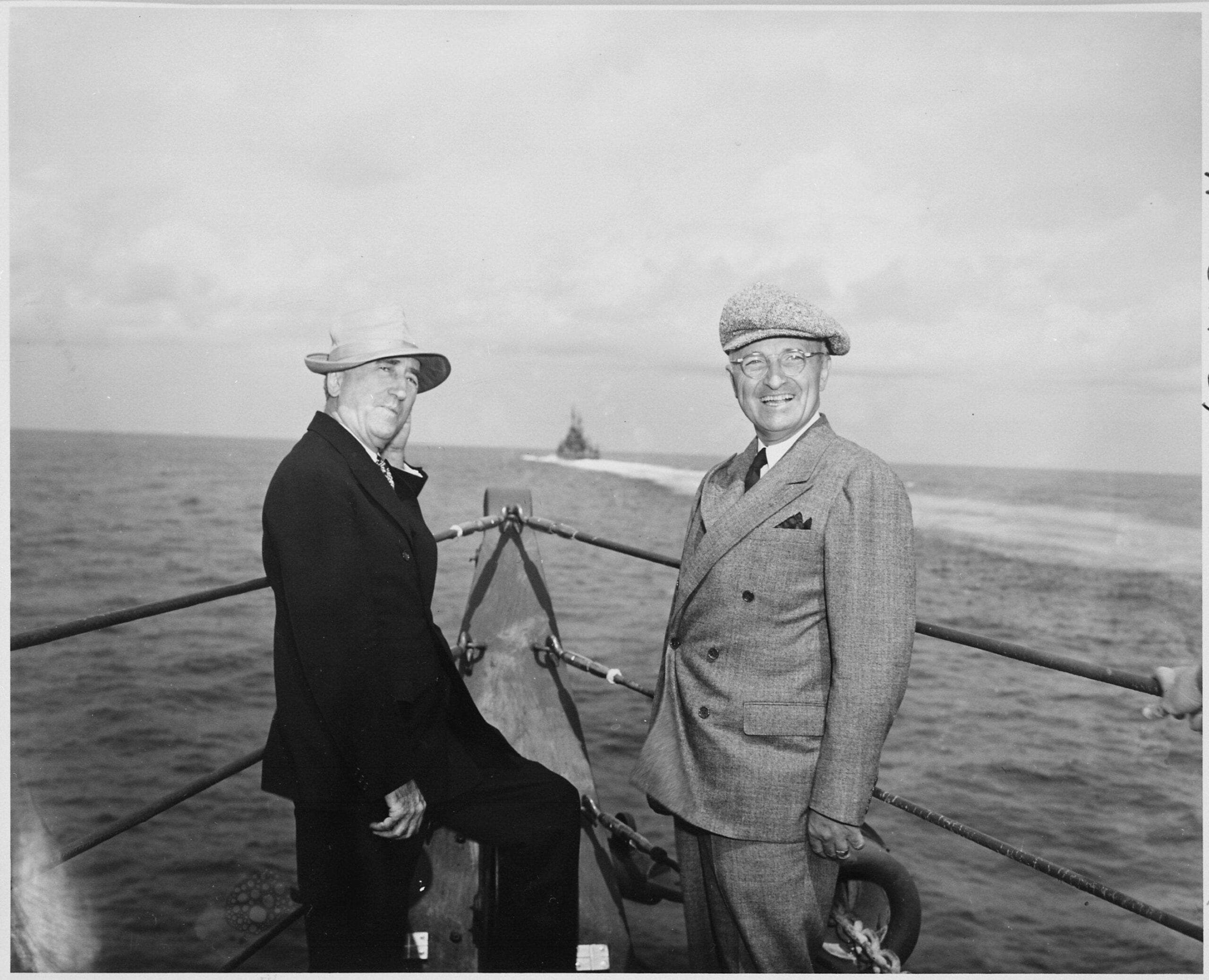
It was April 1952, and Harry Truman was in a corner. The Korean War was eating up resources. American soldiers needed ammunition, tanks, and trucks. But back home, a massive labor dispute was about to shut down the nation's steel mills. If the mills stopped, the war effort basically died.
Truman didn't wait for Congress. He didn't look for a specific law that said he could take over private property. He just issued Executive Order 10340. He told his Secretary of Commerce, Charles Sawyer, to seize the steel mills and keep them running under federal control. It was a massive gamble.
Most people think the President of the United States has nearly unlimited power during wartime. Truman certainly thought so. He believed the "inherent powers" of the presidency gave him the right to do whatever was necessary to protect the country. The steel companies disagreed. They sued immediately. What followed was Youngstown Sheet and Tube v Sawyer, perhaps the most important Supreme Court case you’ve never actually read. It didn't just settle a labor strike; it drew a line in the sand that every president since has had to respect.
The Night the Government Took the Mills
Imagine being a corporate executive at Youngstown Sheet and Tube or U.S. Steel. You’re prepping for a strike. Suddenly, the radio announces the government now owns your factories. Truman’s logic was simple, if a bit blunt: steel is essential for war, a strike hurts the war, therefore the strike is illegal.
He bypassed the Taft-Hartley Act. This is a crucial detail people often miss. Congress had actually given the President a tool to deal with strikes—an 80-day "cooling off" period. Truman hated Taft-Hartley. He called it a "slave labor bill." So, he ignored the law Congress wrote and made up his own solution.
This wasn't some minor administrative tiff. It was a constitutional crisis. The steel companies went to District Court Judge David A. Pine, who issued an injunction against the seizure. The case moved at lightning speed. Within weeks, it was in front of the Supreme Court.
Justice Jackson and the Three Boxes of Power
The Court ruled 6-3 against Truman. They told him to give the mills back. While Justice Hugo Black wrote the official opinion, the real "meat" of the case—the stuff lawyers still obsess over in 2026—came from Justice Robert Jackson.
Jackson didn't just say "Truman was wrong." He created a framework. He realized that presidential power isn't a fixed amount. It’s fluid. He broke it down into three categories that we still use to judge every executive order today.
First, there’s the peak of power. This is when the President acts with the express or implied authorization of Congress. If the President and Congress are on the same page, his authority is at its maximum. Basically, he’s carrying the weight of the whole federal sovereignty.
Second, there’s the "Zone of Twilight." This is the messy middle. It’s when Congress is silent. Maybe they didn't grant power, but they didn't forbid it either. In this zone, the President acts in a gray area where the outcome depends on the "imperatives of events" rather than legal logic.
Third, and this is where Truman crashed and burned, is when the President acts against the "expressed or implied will of Congress."
Because Congress had already provided the Taft-Hartley Act as a solution and Truman ignored it, Jackson argued the President’s power was at its "lowest ebb." To win here, Truman would have had to prove he had constitutional power that Congress couldn't take away. He couldn't.
Why the "Commander in Chief" Argument Failed
The government tried to argue that because Truman was the Commander in Chief, he could seize the mills. The Court basically laughed this out of the room.
Justice Jackson famously noted that the Commander in Chief clause makes the President the head of the Army and Navy, not the head of the entire country. You can't just say "war" and suddenly turn the Constitution into a suggestion. If the "war power" could be used to seize a domestic factory, what couldn't it be used for? It was a slippery slope the Court wasn't willing to step on.
The steel companies weren't exactly heroes here either. They were fighting for their bottom line. But in doing so, they forced a clarification of the separation of powers. Honestly, if Truman had won, the presidency would look more like a four-year elective dictatorship than what we have now.
Surprising Details About the Steel Seizure
- The Public Backlash: Initially, Truman thought the public would support him to "support the troops." He was wrong. People saw it as a massive overreach of "Big Government."
- The Chief Justice's Betrayal: Chief Justice Fred Vinson, a close friend of Truman, actually voted for the President. He wrote a stinging dissent arguing that the emergency justified the action.
- The Aftermath: Once the Court ruled and the mills were returned, the strike happened anyway. It lasted 53 days. The world didn't end. The military eventually got its steel. It turns out the "catastrophe" Truman feared was manageable through normal, legal means.
Youngstown in the Modern Era
You see the ghost of Youngstown Sheet and Tube v Sawyer everywhere now. When a president tries to cancel student loans by executive order, or when they try to build a border wall by reallocating funds Congress didn't approve, the courts pull out Jackson’s "three categories."
If you’re wondering why some executive orders get blocked by a random judge in Texas or Hawaii, it usually comes down to this: Is the President in Category 1 (with Congress), Category 2 (the Twilight Zone), or Category 3 (the Lowest Ebb)?
Most of the drama happens in Category 3. When a President tries to "work around" a Congress that says no, they are walking straight into the same trap Truman set for himself in 1952.
How to Apply the Youngstown Logic Today
If you are tracking government policy or worried about executive overreach, you don't need a law degree to spot a problem. Just ask three questions.
1. Did Congress already say no? Look at the history. If Congress debated a law and rejected it, or if there is an existing law that covers the situation (like Taft-Hartley did for Truman), the President is in Category 3. They will likely lose in court.
2. Is the "Emergency" Domestic or Foreign? The courts give the President a lot of leash on foreign soil. But the second that power touches a domestic business, a home, or a private citizen’s rights, the Youngstown limits kick in hard. The "Commander in Chief" title isn't a magic wand for domestic policy.
3. Is there a "Statutory Basis"? Always look for the "Whereas" clauses in an Executive Order. If the President can't point to a specific law passed by Congress that says "The President may do X," they are in the Zone of Twilight. That’s where things get risky and unpredictable.
Practical Steps for Staying Informed
Understanding the balance of power is more than just trivia. It’s how you predict which policies will actually stick and which are just political theater.
- Read the Executive Order citations: When a new order is signed, check the first few paragraphs. If it cites the "Constitution and the laws of the United States" generally, without specific statutes, it's a weak order.
- Watch Congressional "Silence": Sometimes Congress stays quiet on purpose to let the President take the heat for a decision. This pushes the action into Jackson’s "Zone of Twilight."
- Follow the Solicitor General: This is the government’s lawyer. Their arguments in modern cases often mirror the exact language used in the 1952 steel case. If they start talking about "inherent Article II powers," you know they're struggling to find a legal basis in Category 1.
The legacy of the steel mills isn't about industrial production. It's about the fact that even in a crisis, the President is still under the law, not above it. Truman learned that the hard way. Every president since has been looking for a way around it, but the "Lowest Ebb" remains a powerful check on the White House.