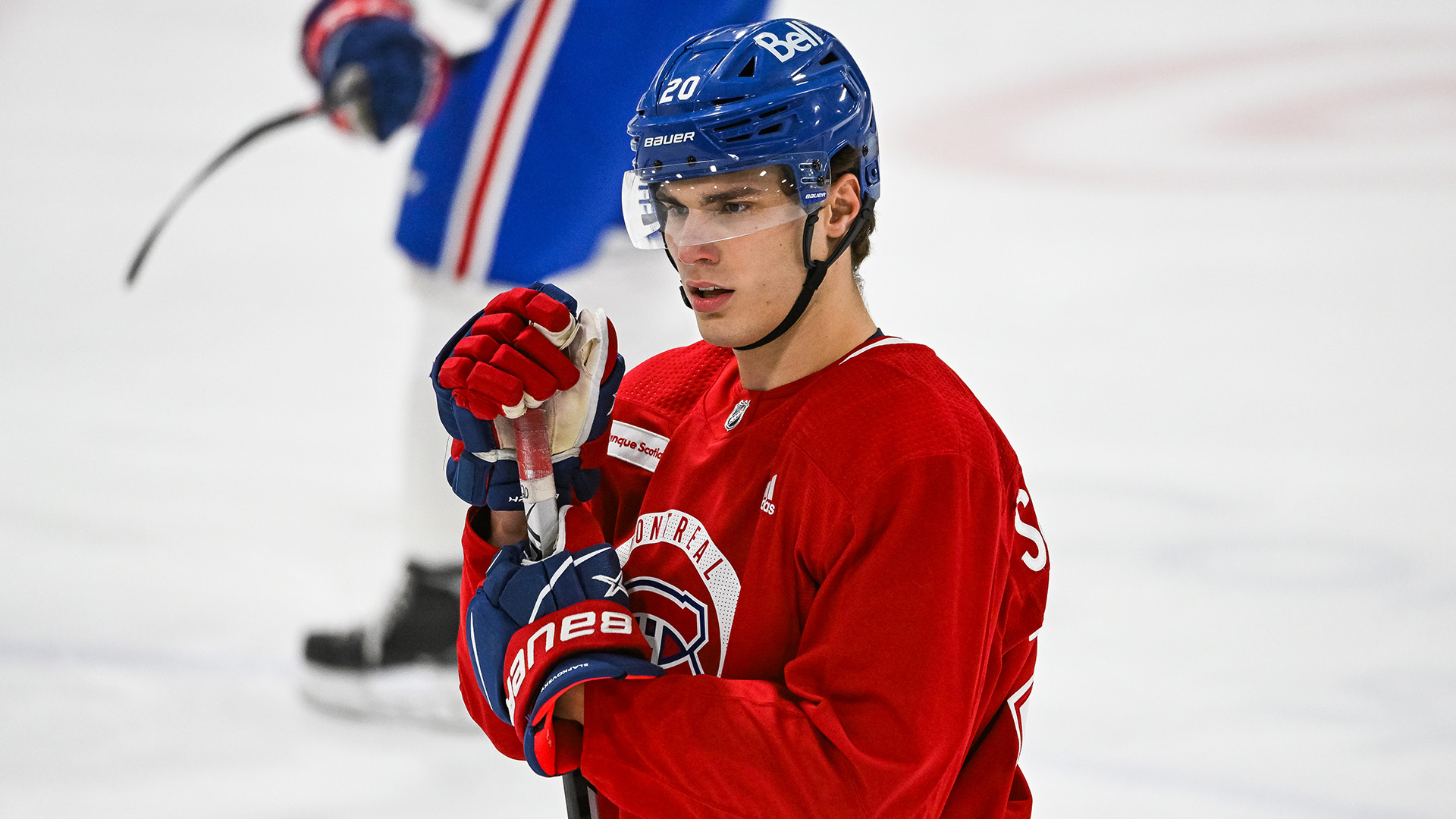
You’ve seen the kids. The ones with the visors still pristine, skating circles around guys who have been in the league since the Blackberry was a status symbol. There’s something almost offensive about an 18-year-old walking into a locker room and immediately becoming the best player on a professional team.
But it hasn't always been like this. Today, we look at youngest players in NHL history as a list of elite prodigies, but the reality of how these kids get into the league is a weird mix of wartime desperation, legal loopholes, and biological luck.
If you think Connor Bedard or Macklin Celebrini were young when they started, you’ve got to look back to the 1940s. That’s when things got truly bizarre.
The 16-Year-Old Who Shouldn't Have Been There
Honestly, the record for the youngest player ever to lace them up in the NHL will probably never be broken. Not because kids aren't good enough now, but because the lawyers won't allow it.
Armand "Bep" Guidolin is the name you need to know.
In 1942, the Boston Bruins were in a massive bind. World War II was in full swing, and their legendary "Kraut Line"—Milt Schmidt, Woody Dumart, and Bobby Bauer—had all ditched their jerseys to join the Royal Canadian Air Force. The Bruins were desperate for warm bodies.
They looked at a kid named Guidolin. He was 16 years and 11 months old.
Imagine a kid who hasn't even finished high school jumping onto the ice against grown men who were literal legends of the sport. He debuted on November 12, 1942, against the Toronto Maple Leafs. He wasn't just a gimmick, either; he played nine seasons in the league and later became a coach, famously leading the Bruins to the 1974 Finals.
The NHL Entry Draft and the 18-Year-Old "Wall"
Fast forward to 2026. The rules are much tighter now. Basically, you can't even smell the NHL ice unless you're 18 by September 15 of your draft year.
This creates some crazy scenarios where a kid born on September 16 has to wait an entire extra year to turn pro, while a kid born 24 hours earlier gets to start his career. It’s what scouts call the "Relative Age Effect," and it’s a massive deal for the youngest players in NHL rosters.
Take Matthew Schaefer, for instance.
In the current 2025-26 season, Schaefer has been the talk of the New York Islanders. He was the No. 1 pick in the 2025 draft and suited up for his debut at just 18 years and 34 days old.
He’s not alone this year. The 2025-26 opening night rosters featured a bunch of 18-year-olds:
- Michael Misa (San Jose Sharks)
- Brady Martin (Nashville Predators)
- Ben Kindel (Pittsburgh Penguins)
- Braeden Cootes (Vancouver Canucks)
Schaefer recently made headlines by becoming the youngest player in history to score an overtime goal in the regular season. He did it at 18 against the Utah Mammoth. That’s the kind of poise that usually takes a decade to build.
Why 18 is the New 22
Kinda wild, right? Twenty years ago, teams were terrified of "rushing" prospects. They’d keep a kid in the minors until his beard was fully grown. Now? If you’re a top-five pick and you aren’t in the lineup by October, people start asking if you’re a bust.
The game changed. It’s faster. It’s more about skill and "hockey IQ" than just being a 220-pound refrigerator on skates. These kids are coming out of development programs that are basically pro-level academies. By the time they hit 18, they’ve had specialized skating coaches, nutritionists, and video sessions for half a decade.
The All-Time "Young Gun" Honor Roll
If we look at the modern era—post-1967 expansion—the list of youngest players in NHL history to make an immediate impact is a Hall of Fame shortlist:
- Aleksander Barkov: Debuted at 18 years, 31 days. He scored in his first game.
- Nathan MacKinnon: Also 18 years, 31 days. He had two assists in his debut.
- Jordan Staal: 18 years, 32 days. He was a defensive monster from day one.
- Sidney Crosby: 18 years, 62 days. He had 102 points in his rookie year.
It’s not just about getting there; it’s about staying there. For every Bep Guidolin who plays ten years, there’s a Ross Johnstone. He debuted at 17 for the Leafs in 1943, played 42 games, and then... that was pretty much it for his NHL career.
The Underdog Hypothesis
There is some fascinating research on this. Studies on "Age effects in NHL draftees" suggest that the players who are the youngest in their draft class—those born in July, August, or early September—actually tend to have better long-term careers.
Why? Because they spent their entire childhood playing against kids who were almost a full year older and bigger than them. They had to be smarter. They had to be faster. They had to develop what researchers call "compensatory skills."
Basically, being the youngest kid on the team for ten years straight turns you into a machine.
What Most People Get Wrong About Early Success
We tend to think that if a kid starts at 18, he’s going to be a superstar forever. But the physical toll is real.
Guidolin was out of the league by 26. Part of that might have been his political activism (he was an early advocate for a players' union), but part of it was just the grind. When you start that young, your body is still technically growing while you’re getting hit by guys like Zdeno Chara (well, the 1940s equivalent).
How to Track the Next Generation
If you’re trying to spot the next youngest players in NHL lineups, keep an eye on the Ontario Hockey League (OHL) and the USDP (U.S. National Development Program). These are the factories.
When you see a player granted "Exceptional Status" in the OHL—meaning they can play at 15 instead of 16—that’s your neon sign. John Tavares, Connor McDavid, and Connor Bedard all had it.
Next Steps for Hockey Fans:
- Check your favorite team's prospect depth chart for anyone born between July and September; they often have the highest ceiling.
- Watch the World Junior Championships. It’s the only place you’ll see 18-year-old NHLers playing against people their own age, and the skill gap is usually hilarious.
- Follow the NHL "Opening Day Roster" announcements every October. That’s the only time teams are required to lock in their teenagers before the "9-game trial" period begins.