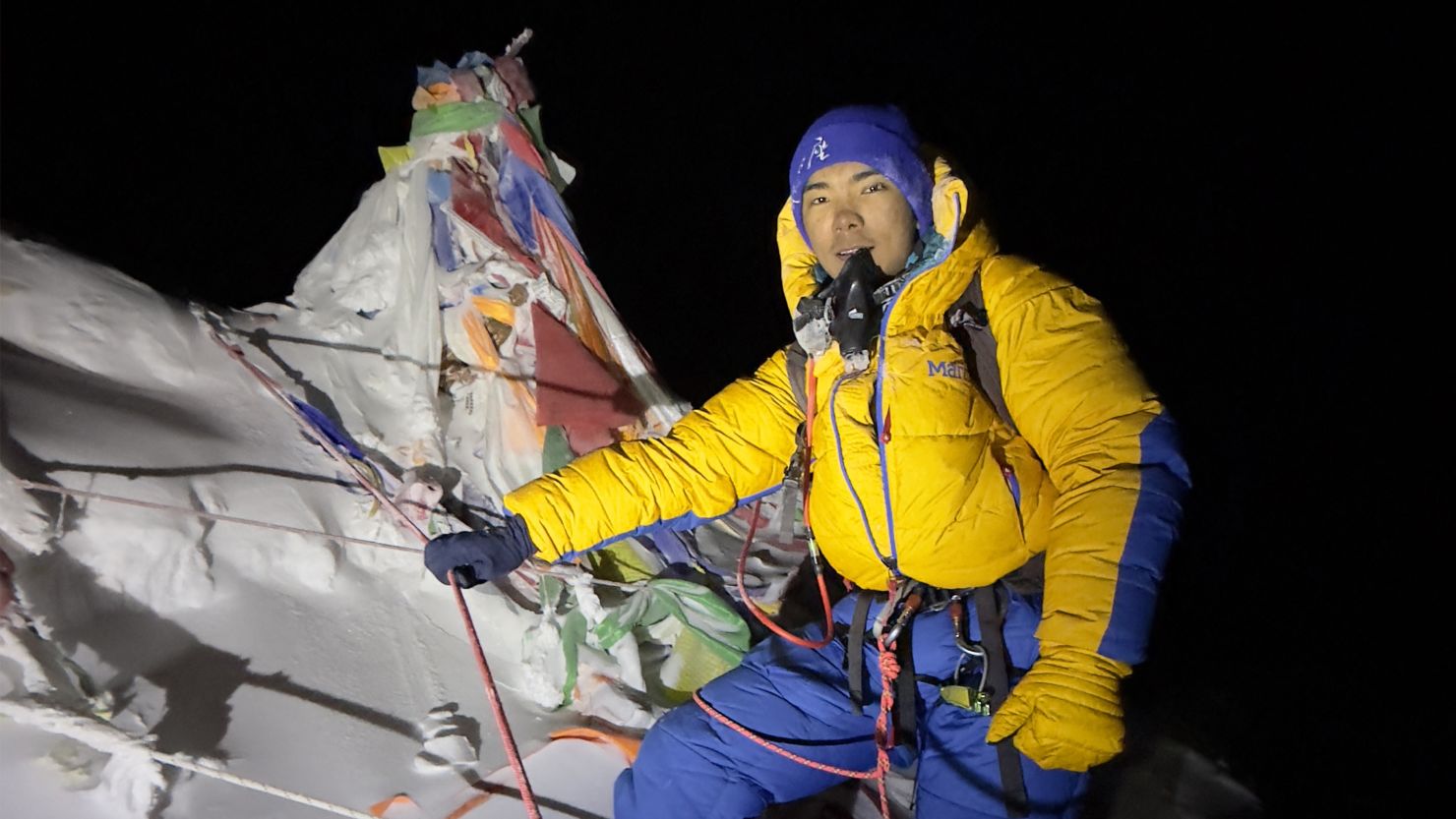
Imagine being 13 years old. Most kids that age are worried about algebra tests, awkward growth spurts, or maybe getting enough XP in whatever game is currently trending. But on May 22, 2010, Jordan Romero was standing at 29,032 feet. He was standing on the roof of the world.
He didn't just climb a hill. He became the youngest person to climb Mount Everest, a record that has stood for over 15 years and, honestly, probably isn't going anywhere.
The story isn't just about a kid with a death wish or a "stage dad" pushing him. It’s a weird, controversial, and deeply impressive look at what happens when human ambition hits its absolute limit. People still argue about whether it should have happened at all.
The Boy Who Saw a Mural
It started with a painting. Jordan was nine years old, walking through the hallway of his elementary school in Big Bear, California. He saw a mural of the Seven Summits—the highest peaks on each of the seven continents.
Most kids see a poster and forget it five minutes later. Jordan went home and told his dad, Paul Romero, a paramedic and adventure racer, that he wanted to climb them all.
He wasn't kidding.
By the time he turned his sights on Everest, he’d already checked off Kilimanjaro, Elbrus, and Aconcagua. He wasn't some amateur. He was a seasoned high-altitude climber trapped in the body of a middle schooler.
The Logistics of a 13-Year-Old on Everest
You can't just show up to Everest with a backpack and a dream. Especially not if you're a minor.
Nepal has rules. They’ve had them for a while. You have to be at least 16 to get a climbing permit from the south side. So, Jordan and his team—his dad and his stepmother, Karen Lundgren—had to get creative. They went to the north side in Tibet.
At the time, the Chinese authorities didn't have a strict age floor. They eventually changed that because of Jordan, but in 2010, the door was cracked open just enough.
Jordan reached the summit at 13 years, 10 months, and 10 days old.
He called his mom from a satellite phone. "Mom, I'm calling you from the top of the world," he said. It’s the kind of quote that sounds like a movie script, but it was real life.
Malavath Poorna: The Girl Who Proved a Point
While Jordan holds the overall record, we can’t talk about the youngest person to climb Mount Everest without mentioning Malavath Poorna.
In 2014, this 13-year-old girl from a small village in India did the exact same thing. She was only about a month older than Jordan was when he reached the peak.
Poorna’s story hits different because of where she came from. She wasn't the child of elite adventure racers. She was the daughter of agricultural laborers. She was part of a government program designed to show that underprivileged students could achieve anything.
She also climbed from the Tibetan side. She endured -35°C temperatures and the kind of physical strain that breaks grown men. When she reached the top on May 25, 2014, she proved that grit isn’t reserved for the wealthy or the Western.
Why These Records Are Effectively "Locked"
If you’re a 12-year-old reading this thinking you’re going to be the next record-breaker, I have some bad news.
The "Wild West" era of Everest age records is basically over. After Jordan and Poorna’s climbs, both Nepal and China tightened the screws.
- Nepal: Maintains a strict minimum age of 16.
- China (Tibet): Now requires climbers to be between 18 and 60.
There are occasional "exceptions" or ways people try to bypass these, but the major permit-issuing bodies are terrified of the PR nightmare that would come if a 12-year-old died in the Death Zone.
The Ethical Mess
Critics haven't exactly been quiet about this. When Jordan climbed, the mountaineering world was divided. Many experts, like David Hillebrandt of the British Mountaineering Council, argued that a 13-year-old’s brain and body aren't developed enough to understand the "true risk" of an 8,000-meter peak.
Is it inspiration? Or is it child endangerment?
There’s also the physiological argument. At those altitudes, your blood thickens, your brain swells, and your lungs can fill with fluid. Doing that to a growing skeleton is a massive gamble. Jordan’s father, Paul, took a lot of heat for it. But Jordan has always maintained that it was his choice. He wanted it more than anyone.
Lessons from the Roof of the World
So, what do we actually take away from the saga of the youngest person to climb Mount Everest?
It’s easy to look at these kids as "superhuman," but they were really just extremely well-prepared. Jordan spent years training in oxygen-deprivation tents. Poorna went through months of grueling physical conditioning in the mountains of Ladakh and Darjeeling.
The record isn't about being "the best"; it’s about a very specific intersection of opportunity, parental support, and legal loopholes that no longer exist.
Key Takeaways for Aspiring Climbers
- Preparation trumps ego. Neither Jordan nor Poorna just "winged it." They had professional-grade training and elite Sherpa support.
- The rules have changed. If you want to climb Everest today, you’re looking at a 16+ or 18+ age requirement depending on the route.
- Records aren't everything. Jordan went on to finish the Seven Summits by age 15, but he’s spent much of his adult life advocating for kids to find their own Everest—which usually doesn't involve literal mountains.
If you’re looking to get into high-altitude mountaineering, start small. Don't look at Everest first. Look at Kilimanjaro or Aconcagua. They offer the elevation experience without the extreme technical danger of the Khumbu Icefall or the political headache of Tibetan permits.
Get your fitness to a level where you can hike 10 miles with a 30-pound pack without feeling like your heart is going to explode. Only then should you even think about the big one.
The age record might be closed for business, but the mountain is still there. It doesn't care how old you are; it only cares if you're ready.
Next Steps for Your Own Expedition: Check the current permit regulations with the Nepal Mountaineering Association (NMA) or the China Tibet Mountaineering Association (CTMA) before booking any expedition. Regulations for 2026 have introduced stricter health screenings and required previous 6,000m+ summit experience for all climbers.