The Sound of the Morning Iron
Ask anyone who grew up outside city limits to describe the soundtrack of their childhood, and they will not mention music. They will mention air brakes.
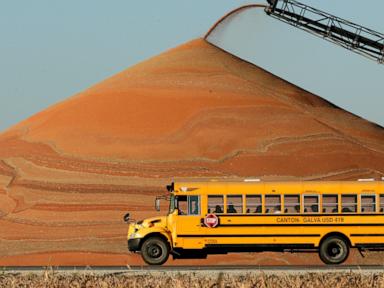
That sudden, sharp hissing gasp cutting through a freezing November dawn. The rhythmic squeak of heavy steel leaf springs taking the weight of a corrugated metal box painted a very specific, government-mandated shade of safety yellow. Also making news recently: The Anatomy of Deterrence Failure A Strategic Post Mortem of Ulchi Freedom Shield.
Before the first bell rang, before the chalk touched the slate or the glowing tablet booted up, education began on four dual-wheel assemblies.
My own memories of that ride taste like stale dust, damp vinyl seats, and the metallic tang of an ancient diesel heater coughing to life. For forty-five minutes every morning, twenty kids from scattered homesteads and gravel-road subdivisions were funneled into a low-ceilinged submarine of rolling anxiety and loose-leaf notebooks. It was a chaotic, loud, democratic equalizer. The kid whose father owned the tractor dealership sat three rows up from the kid whose mother worked two shifts at the poultry plant. On the bus, the hierarchy of the schoolyard dissolved into the shared rhythm of corrugated floor panels vibrating against the chassis. Further insights on this are covered by The Guardian.
We took it for granted. Everybody did.
A Quiet Revolution on Four Wheels
To understand the yellow school bus is to understand an accidental social engineering masterclass.
Long before it became a ubiquitous pop-culture symbol, the student transit system was an act of raw geographic defiance. In the early twentieth century, rural children simply did not go to secondary school because they could not reach it. Distance was a hard ceiling on human potential. Then came the motorized vehicle, transforming education from an urban luxury into a sprawling national grid.
Later, during the mid-century desegregation era, those same steel boxes became the literal vehicles of constitutional change. They rolled across invisible boundary lines, carrying integration down paved boulevards and dusty county roads alike. The school bus did not just transport bodies. It bridged neighborhoods that spent centuries pretending the other did not exist.
Yet today, that entire mechanism is shuddering under the weight of a modern economic crisis.
Consider what happens next: the yellow bus is quietly vanishing from the horizon.
The Bleeding Edge of an Empty Depot
Parked behind the county maintenance shed right now is a row of silent giants. Their yellow paint is beginning to chalk under the summer sun, tires slightly flat at the bottom, windshield wipers pointed skyward like tired arms.
They are missing something vital. Drivers.
To call it a shortage is to misunderstand the scale. It is a structural collapse. The modern labor market has effectively priced out the retired grandfathers, local farmers, and part-time caregivers who historically kept these routes alive. Driving a sixty-foot vehicle filled with seventy sugar-fueled children through rush-hour traffic for split-shift wages is a heavy ask. When the math stopped making sense for the workers, the wheels stopped turning.
School districts across the nation now face an impossible ledger. Do they double route times, forcing seven-year-olds to catch a bus at the unholy hour of five-thirty in the morning? Do they trim routes entirely, stranding families who rely on public infrastructure to get to work? Or do they transition to a patchwork of private carpools and gig-economy transit apps that strip away the safety, equity, and communal fabric of the traditional route?
Hypothetically, imagine a suburban mother named Sarah. She works a remote customer service job from her kitchen table. When her district canceled the neighborhood bus route due to staffing deficits, Sarah’s schedule fractured. She now spends ninety minutes every morning idling in a serpentine pickup line that chokes the school parking lot, burning gasoline and sanity. Across town, a single father working an hourly shift at the distribution center has to choose between losing his job or leaving his tenth-grader to walk four miles along a highway with no shoulder.
This is the hidden cost of a broken transit system. It ripples outward, touching employment rates, child development, and family stability in ways municipal spreadsheets rarely capture.
The Transition to Silence
Change is coming, wrapped in the quiet hum of lithium-ion batteries.
The diesel behemoths are slowly giving way to electric fleets. Proponents talk of zero emissions, cleaner air for children's lungs, and lower long-term maintenance costs. These are real, tangible victories. Standing next to an electric school bus while it idles is an uncanny experience. There is no roar, no choking exhaust plume, no vibration rattling your teeth. Just the faint, futuristic whir of electric cooling fans.
But a shiny new electric motor does not solve the human equation. You still need someone behind the wheel. You still need a human being willing to manage twenty rows of teenage drama, navigate black-ice intersections, and look a parent in the eye to promise their child will arrive safely.
Technology can change the fuel source, but it cannot replace the invisible pastoral care provided by a veteran driver who knows every kid's name, notices when a student is sitting alone in the back, and keeps an eye out for trouble before it starts.
The Road Ahead
We are standing at a peculiar crossroads in American infrastructure.
We have engineered cleaner vehicles, more efficient scheduling algorithms, and advanced GPS tracking apps for parents to monitor every mile. Yet the core of the system—the sacred contract that says a community will provide a safe, reliable bridge between a child's doorstep and the classroom door—is fraying at the edges.
The yellow school bus was never merely a logistical convenience. It was a promise written in lead-free paint and heavy-gauge steel. It declared that no matter where you were born, no matter how remote your dirt road or how modest your family's address, society would build a bridge to your future.
As the sun sets behind the county maintenance shed, casting long shadows across those rows of silent yellow roofs, the question is no longer whether we can afford to keep the wheels turning.
The question is whether we can afford the silence that replaces them.