A single, insignificant scratch. That is all it takes.
Your dog runs through the brush, chasing a ball or tracking a scent, and catches the edge of a sharp twig. It is a tiny nick on the shoulder, barely bleeding. You notice it, wipe it with a tissue, and think nothing more of it. In a world filled with everyday bumps and bruises, a minor scrape does not warrant a trip to the vet.
But out in the heavy, humid air, something is watching. Something is flying.
It looks like an ordinary blowfly, perhaps slightly larger, glinting with a metallic blue-green sheen and bearing three dark stripes down its back. It does not look like a monster. It does not buzz with a terrifying roar. Yet this insect carries a biological imperative that turns a simple scratch into a living nightmare. It is the New World screwworm fly, known scientifically as Cochliomyia hominivorax. The second half of that name literally translates to "man-eater." It is an apt description, though its targets are almost always our beloved pets and livestock.
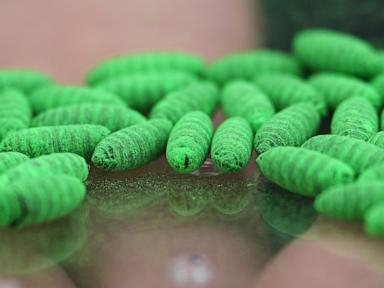
Unlike ordinary maggots, which perform a gruesome but necessary cleanup duty by consuming dead tissue, screwworm larvae hunger exclusively for the living. They eat their host from the inside out.
Let us look at a hypothetical scenario to understand how quickly the clock starts ticking. Consider a family dog named Cooper, a golden retriever with boundless energy and a thick coat. Cooper scratches his ear on a wire fence. The scratch is small, hidden beneath his fur. Within minutes, a female screwworm fly, drawn by the faint scent of fresh blood, lands on the wound. She is efficient. In less than ten minutes, she deposits a neat architectural row of up to four hundred eggs right at the edge of the break in the skin.
You are inside making dinner. Cooper is sleeping on the porch. The invasion has already begun.
Within twelve to twenty-four hours, those eggs hatch. The larvae do not crawl away. They burrow directly into the flesh, using specialized mouth hooks to rip and tear through healthy muscle, blood vessels, and nerves. They feed aggressively. As they grow, they release an enzyme that pocket-drills deeper into the animal, creating a cavernous wound beneath a tiny, deceptively normal opening on the surface.
This is where the true horror of the parasite lies: it hides in plain sight.
You might look at your pet and notice they are suddenly lethargic. Maybe they are obsessively licking a specific spot, or snapping at the air when you try to pet them. Cooper might start shaking his head violently. You part the fur, expecting a small scab. Instead, you smell it. It is a distinct, foul, sickening odor of decay mixed with something strangely sweet. The wound looks larger now, weeping a dark, blood-tinged fluid. If you look closely, the tissue inside seems to be moving.
It is a sight that haunts pet owners forever.
Historically, this parasite ravaged the American continents, costing billions of dollars in livestock losses and causing untold suffering to domestic animals. Through an extraordinary, decades-long scientific campaign using the sterile insect technique—where millions of laboratory-reared sterile male flies were released to disrupt the breeding cycle—the United States and much of Central America successfully pushed the screwworm back. A biological barrier was established in Panama to keep them from returning.
Yet, biological barriers are not ironclad walls.
International travel, global shipping, and changing climate patterns mean that the threat is never truly dead. A single infested animal transported across a border can reintroduce the pest to regions that have not seen it in generations. When it returns, it catches people entirely off guard because we have forgotten what to look for.
Protection requires a shift in how we look at our animals every single day.
When you live in or travel through areas where the screwworm is endemic, or where recent detections have occurred, passive pet ownership is no longer an option. Every scratch is an emergency until proven otherwise. If your animal undergoes a routine surgery, like a spay or neuter, the surgical incision is a neon sign for a female fly. Even a fresh tick bite or a patch of irritated skin from hot spots can serve as an entry point.
Prevention is tedious, but the alternative is devastating. You must inspect your animals daily, running your hands through their fur to check for bumps, moisture, or unusual tenderness. If you find a wound, it must be treated immediately with veterinary-approved topical antiseptics and fly repellents. Keep your pets indoors during the peak heat of the day when flies are most active. Clean every scrape, no matter how trivial it seems.
If the worst happens and you suspect an infestation, time is your only currency.
Do not attempt to squeeze the larvae out or apply home remedies you found on an internet forum. Screwworm larvae anchor themselves deeply into the tissue; pulling at them can cause them to rupture, releasing toxins directly into your pet's bloodstream and causing severe systemic shock. A veterinarian must carefully clean the wound, identify the larvae, and administer specific medications to kill the parasites safely while treating the secondary infections that inevitably follow. Furthermore, suspected cases must be reported to local agricultural or veterinary authorities immediately. It is a matter of public safety. Your report could be the early warning sign that saves thousands of other animals in your community.
It is easy to view nature as a distant, beautiful thing enjoyed from a safe distance. But nature is also driven by brutal, unyielding mechanisms of survival. The New World screwworm does not care about the bond between you and your pet. It does not care that Cooper is a member of your family. It only sees a warm-blooded host, an opportunity to perpetuate its own existence at the cost of another's life.
The next time your dog comes back from a run in the woods, do not just pour the kibble and sit down on the couch. Take five minutes. Run your fingers through their fur. Look closely at their skin. That small act of vigilance is the invisible shield standing between your companion and a terrifying enemy.