A World Made of Wind and Limestone
The ferry from Gotland across the Fårösund strait takes roughly eight minutes.
It feels longer.
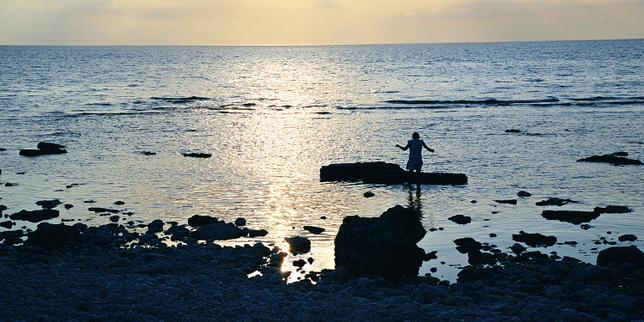
When you step off onto Fårö, the air changes. The salt stings a little sharper. The wind—a relentless, indifferent force sweeping off the Baltic Sea—screams through stunted pine trees bent permanently sideways like weeping statues. The earth here is white limestone, pale and scraped raw by glacial ages long forgotten.
It is silent. Spooky, even.
Decades ago, a Swedish filmmaker fleeing tax authorities and his own psychological torment made this desolate strip of land his sanctuary. Ingmar Bergman did not just live on Fårö; he let the island bleed directly into his celluloid. Films like Persona, Through a Glass Darkly, and Shame were born from this limestone bedrock. Today, pilgrims travel to the northernmost tip of Sweden seeking the ghost of a cinematic giant.
They expect a museum. What they find is an echo.
The Geography of Solitude
To understand why Bergman buried himself here, you have to stand at Digerhuvud.
Picture hundreds of monolithic rock formations, known as raukar, standing along the coast like ancient, forgotten sentinels. (To use a metaphor: imagine a graveyard designed by giants, weathered by thousands of years of freezing sea brine). The Baltic crashes against these jagged limestone pillars with rhythmic brutality.
There are no bright colors here. Even in midsummer, the island wears a wash of slate blue, bone white, and muted evergreen.
Bergman arrived in 1960 while scouting locations for Through a Glass Darkly. He had intended to film in Norway, but budget constraints forced him toward Gotland's northern neighbor. The moment his feet touched Fårö, he knew he was home. He built a house at Hammars, secluded behind a dense wall of trees, facing the open sea. He stayed for nearly forty years until his death in 2007.
Walking along the coast today, you realize something unsettling. The landscape isn't just a backdrop for his cinema; it was his co-writer. The bleakness of the island mirrored the internal topography of his characters—isolated, fractured, desperate for connection in a silent universe.
Following the Shadow
Finding Bergman's legacy on the island requires a quiet kind of detective work. There are no flashy neon signs, no theme parks, no grand monuments. The islanders, fiercely protective of their privacy and his memory, kept tourists at bay for decades.
Start at the Bergmancenter in the island's old schoolhouse. It offers context, sure—costumes, original scripts written in yellow legal pads with blue ink, rare photographs of the director sitting behind a massive Arriflex camera. But the true soul of his work isn't behind glass cases.
It is out on the dirt roads.
Take the gravel path down to Langhammars, where the raukar grow even taller. This is where Liv Ullmann and Bibi Andersson walked in Persona. Standing there, with the wind roaring in your ears, you instantly grasp the psychological weight of his cinema.
Persona explores the collapse of identity, where two women merge and fragment against an unforgiving shore. When you stand on that exact beach, the sea pounding against the stone, you feel a peculiar sensation. The barrier between reality and cinema thins out. You aren't just observing a location; you are inhabiting an emotional state.
The Quiet Resistance of the Island
Living on Fårö is hard. It always has been.
Before film enthusiasts began making the trek, the island was home to rugged fishermen and sheep farmers trying to eke out a living from thin soil and treacherous waters. Winters are long, dark, and punishing. The sun vanishes for months, leaving only a twilight dusk that lasts a few brief hours.
That darkness seeped into Bergman's bones.
In his autobiography, he wrote of his deep love for the light of Fårö, a peculiar, luminous radiance that occurs just after sunset in July. But he was equally possessed by its harshness. The island forced him to face his fears: death, faithlessness, the agony of miscommunication, the terror of silence.
Today, visitors often arrive expecting romantic artistic inspiration. Instead, they are confronted with their own thoughts. There are no distractions on Fårö. No bustling crowds, no glittering nightlife, few restaurants. Just the wind, the sea, and your own internal voice getting louder by the hour.
The Ghost at Hammars
Bergman's home at Hammars remains private, preserved largely as he left it. His study, with its simple wooden desk facing the ocean, still holds his books and notes. A private screening room nearby, where he watched movies every single afternoon at three o'clock sharp, sits in quiet waiting.
He was a man of absolute routine.
Wake at six. Work until noon. A light lunch. A walk along the beach. Movie at three. Dinner. Early to bed.
This strict discipline was his shield against the chaos of his inner life. Fårö provided the rigid structure he needed to turn his psychological agony into masterpiece after masterpiece.
When he died in July 2007, he was buried at the simple parish church in the center of the island. His grave is marked not by a massive marble monument, but by a modest wooden cross and a rough, unpolished piece of local stone. It sits surrounded by wild grass, resting under the same vast sky that framed his frames.
What Stays With You
As the ferry glides back toward Gotland, leaving Fårö behind, the quiet stays in your chest.
Most travel destinations offer an escape from reality. They promise sun, comfort, and forgetfulness. Fårö offers something entirely different: a confrontation with reality. It strips away the noise of modern life until all that remains is the wind, the stone, and the stark truth of human existence.
Bergman came to this island looking for a location. He ended up finding his mirror.
Standing on those pale shores, watching the gray waves beat against ancient stone, you realize that the search for Bergman's soul was never really about the filmmaker at all. It was about facing the quiet places within ourselves.