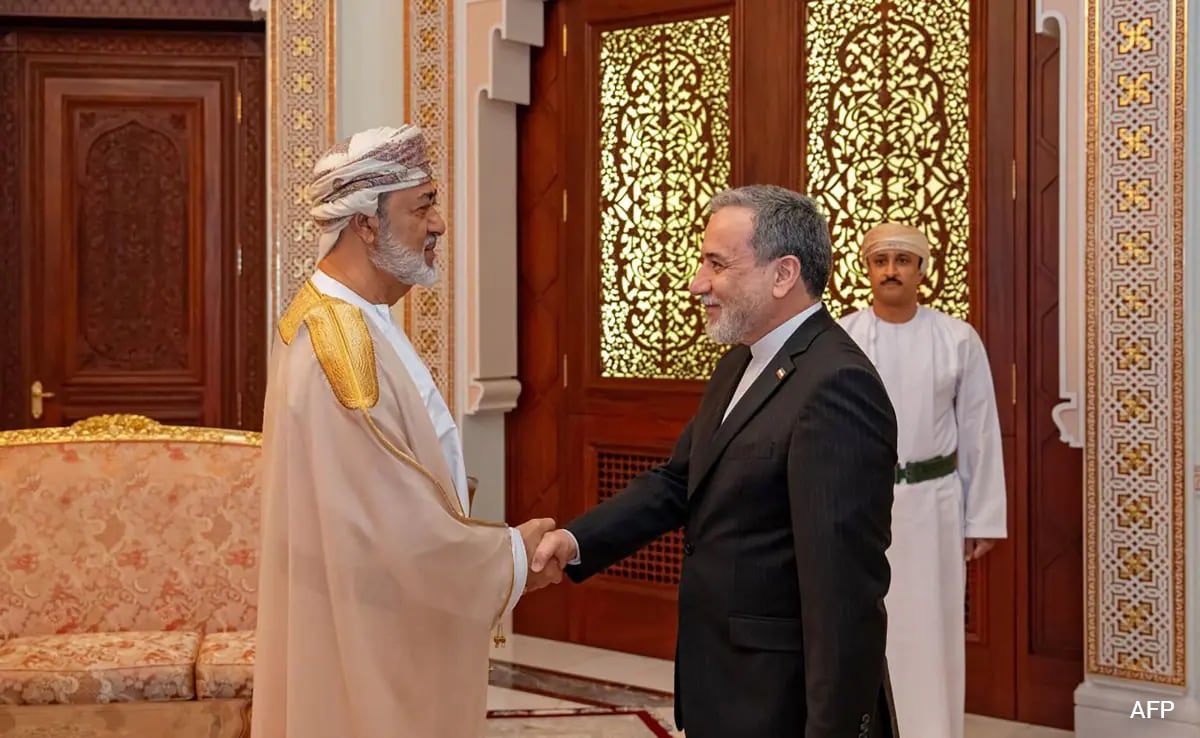
Washington is demanding an end to Muscat’s multi-decade balancing act. For forty years, the Sultanate of Oman has operated as the Middle East’s indispensable diplomatic pressure valve, keeping lines open to Tehran when the rest of the world walked away. The current US administration wants that valve shut. Driven by a renewed campaign of maximum pressure, the White House is pushing Oman to abandon its neutrality and actively align against Iran. It is a high-stakes gamble that misjudges how Muscat operates, why it values its ties to Tehran, and what happens when you corner a nation that prides itself on having no enemies.
The assumption driving this pressure campaign is simple. Washington believes that Oman’s economic vulnerabilities make it susceptible to diplomatic coercion. By leveraging trade, security guarantees, and investment promises, US officials are betting they can force Sultan Haitham bin Tariq to choose between Western financial alignment and historical regional ties.
This approach overlooks a fundamental reality. Oman’s neutrality is not a luxury or a diplomatic quirk. It is a core national survival strategy.
The Myth of the Neutral Middleman
Western analysts frequently describe Oman as the Switzerland of the Middle East. That description is flawed. Switzerland's neutrality is protected by geography and international consensus; Oman’s neutrality is practiced in one of the most volatile choke points on earth, directly across the Strait of Hormuz from an aggressive Islamic Republic.
Muscat does not maintain ties with Tehran out of ideological sympathy. The relationship is born of pure geographic necessity and historical memory. In the 1970s, it was the Iranian military—under the Shah—that helped the Omani monarchy crush the Marxist Dhofar Rebellion. That intervention saved the ruling dynasty. When the Iranian Revolution transformed the country in 1979, Muscat chose continuity over conflict. They realized that a permanent neighbor cannot be ignored, only managed.
The current Washington strategy treats this relationship as a transactional preference that can be bartered away. US diplomats have quieted their public statements but amplified their private warnings. The message delivered to Muscat is clear: the era of playing both sides is over. Washington wants explicit cooperation on enforcing shipping sanctions, a reduction in Omani-Iranian trade corridors, and an end to the quiet backchannel diplomacy that has defined Muscat’s foreign policy for a generation.
Financial Leverage and the Omani Balance Sheet
To understand how Washington expects to win this argument, look at the numbers. Oman is working through a major economic transition. The fiscal deficits that plagued the late Sultan Qaboos’s final years forced the country into a period of strict austerity. While higher oil prices and fiscal reforms under Sultan Haitham have stabilized the sovereign balance sheet, the country remains hungry for foreign direct investment to fuel its diversification plans.
Oman Economic Vulnerability Metrics
+-----------------------------------+-----------------------------------+
| Metric                            | Policy Implication                |
+-----------------------------------+-----------------------------------+
| Hydrocarbon Dependence            | ~70% of government revenue relies |
|                                   | on oil and gas, leaving budget    |
|                                   | exposed to global price shocks.   |
+-----------------------------------+-----------------------------------+
| Youth Unemployment                | Estimates hover near 15-20%,      |
|                                   | creating urgent pressure to       |
|                                   | generate private sector jobs.     |
+-----------------------------------+-----------------------------------+
| Western Security Ties             | Entire defense infrastructure is  |
|                                   | built on US and British hardware  |
|                                   | and intelligence sharing.         |
+-----------------------------------+-----------------------------------+
Washington believes this economic pressure point provides the perfect lever. The carrot is increased American investment, enhanced free trade benefits, and technology transfers. The stick is the implied threat of secondary sanctions on Omani firms that do business with Iranian entities, alongside a slowdown in defense cooperation.
This pressure manifests most clearly around the development of Omani ports like Duqm. Positioned outside the Persian Gulf on the Arabian Sea, Duqm is designed to bypass the volatile Strait of Hormuz. It is a massive logistics hub that Oman hopes will secure its economic future. Washington has made it known that the speed and volume of Western investment into Duqm depends heavily on Muscat’s willingness to freeze out Iranian commerce and maritime networks.
The Secret Weapon Washington is Risking
By forcing Oman to pick a side, the United States is risking one of its most valuable asset classes in the region: the backchannel.
When American citizens are detained in Iran, it is usually Omani planes that fly them out. When the Obama administration needed a secret location to negotiate the groundwork for what became the 2015 nuclear deal, they went to Muscat. When successive administrations needed to pass warnings to Tehran to prevent regional escalation, Omani diplomats carried the messages.
"A backchannel is only useful if both sides trust the courier. The moment Oman takes an explicit stance against Iran, its utility to Washington evaporates."
If the White House succeeds in forcing Oman to isolate Iran, the US loses its primary diplomatic circuit breaker. This occurs at a moment when regional tensions are at an all-time high. Without Oman acting as an intermediary, misunderstanding can slide into open conflict far more quickly. The administration appears willing to take that risk, operating under the assumption that a total economic blockade of Iran is more valuable than a diplomatic safety valve.
The Regional Consequences of Coercion
The pressure on Oman does not happen in a vacuum. It is part of a broader reordering of the Arabian Peninsula. Neighbors like the United Arab Emirates and Saudi Arabia have pursued their own complex, often contradictory tracks with Iran—simultaneously hedging through diplomacy while maintaining security partnerships with the West.
Yet Oman is being singled out because its ties to Iran are deep-seated and institutionalized. Unlike its wealthier neighbors, Muscat cannot afford to buy its way out of a regional crisis. If Oman capitulates to US demands, it faces immediate blowback from across the water. Tehran has multiple ways to make life difficult for Muscat, ranging from maritime harassment in the Strait of Hormuz to the quiet stoking of domestic dissent.
Sultan Haitham is playing a weak hand with remarkable skill. He has maintained his father's policy of quiet compliance where possible, paired with stubborn resistance when core national interests are threatened. He knows that if he gives in completely to the White House, Oman ceases to be an independent regional actor and becomes a vassal of Western security policy.
The Limits of Maximum Pressure
The fundamental flaw in the American strategy is the belief that every nation operates on a timeline dictated by election cycles. Oman thinks in terms of generations. They look across the Gulf and see a nation of 85 million people that will remain there long after the current US administration leaves office.
The White House wants a clear victory. They want signed agreements, public alignments, and an explicit rejection of Tehran. They are unlikely to get it. If pushed too hard, Oman will likely give the minimum amount of cooperation necessary to avoid sanctions while continuing its quiet, sub-surface engagement with Iran.
This policy of forcing an ally into a corner yields diminishing returns. By treating Oman's strategic neutrality as a problem to be solved rather than an asset to be utilized, Washington risks turning a steady, reliable partner into a resentful, defensive neighbor. The current strategy aims to isolate Iran, but its actual result may be the fractures it creates within the fragile coalition of American partners in the Middle East.