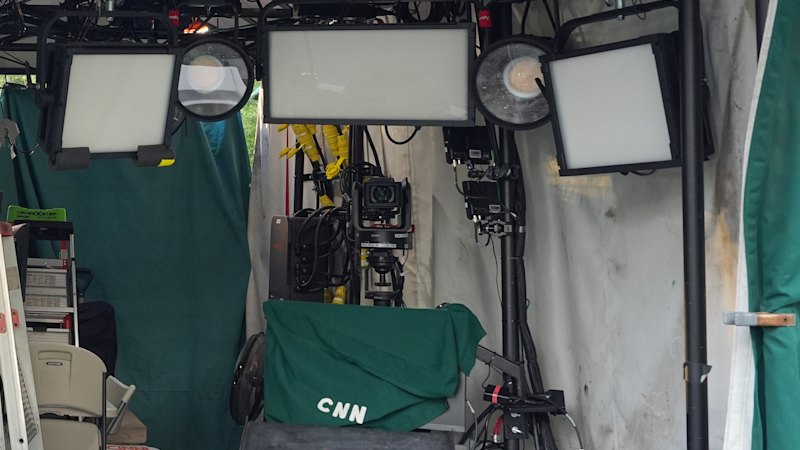
Major television networks took the extraordinary step of halting White House pool coverage following the administration's decision to bar several prominent media organizations from the presidential complex. ABC, CBS, NBC, Fox News, and CNN united in a rare joint front after reporters from CNN, MS NOW, and Politico had their press credentials revoked and physical access denied.
The resulting blackout left official events, including presidential travel to the United Nations General Assembly, without standard pooled television feeds. Instead of folding under pressure, the White House pivoted to its own digital streaming channel, bypassing traditional broadcast gatekeepers entirely. This confrontation represents a structural shift in how political power and the press negotiate visibility, moving past verbal sparring into physical exclusion and institutional boycott.
The Anatomy of the Pool Boycott
For decades, the White House television pool functioned as an operational necessity. A single network camera crew captured presidential movements on behalf of the entire industry, ensuring that the public received independent documentation of executive power. When the administration targeted specific outlets over coverage disputes, the remaining networks faced a stark choice. They could rotate replacement crews into the vacant slots and normalize the exclusions, or they could refuse to participate.
They chose refusal. By declining to backfill the pool rotation, the networks effectively severed the visual umbilical cord connecting the Oval Office to evening newscasts.
The administration framed the move as a routine adjustment of privileges rather than an infringement on constitutional protections. Vice President JD Vance defended the action by arguing that the barred organizations retained free speech rights even if they lost their physical workspaces inside government buildings.
Yet, treating press access as a discretionary perk rather than a public utility changes the baseline of accountability. When physical proximity to power depends on editorial approval, the dynamic shifts from oversight to compliance.
The Rise of Direct-to-Consumer Governance
Faced with a network blackout, the executive branch accelerated its bypass strategy. The deployment of dedicated streaming feeds directly to consumer devices points to a future where modern administrations no longer need traditional media intermediaries to reach the electorate.
This direct channel offers unedited, unmediated messaging. It also eliminates the friction of hostile questioning or instant fact-checking by reporters standing feet away from the podium.
For the networks, the financial and cultural calculus is perilous. Traditional broadcast ratings rely heavily on exclusive access to political drama. If the executive branch can successfully substitute network cameras with proprietary streams, the leverage shifts away from legacy media conglomerates. The boycott is as much a defense of commercial relevance as it is a defense of the First Amendment.
Litigation and the Courts
Alongside the broadcast blackout, legal battles moved swiftly into federal court. The excluded outlets filed lawsuits arguing that revoking access on the basis of critical reporting violates constitutional safeguards against viewpoint discrimination.
Judicial precedent has historically favored a measured approach to executive property rights, yet blanket viewpoint-based exclusions from designated public forums face high legal hurdles. Even as judges weigh injunctions and temporary access orders, the underlying tension remains unresolved. Court orders can force open physical doors, but they cannot compel an administration to cooperate with journalists it considers adversaries.
The standoff highlights an irreversible fracture. The institutional norms that once bound the executive branch and the Washington press corps have frayed past the point of casual repair. As both sides retreat into fortified positions—one armed with state-managed digital distribution, the other clinging to collective economic withholding—the traditional machinery of American political journalism enters an era of permanent friction.