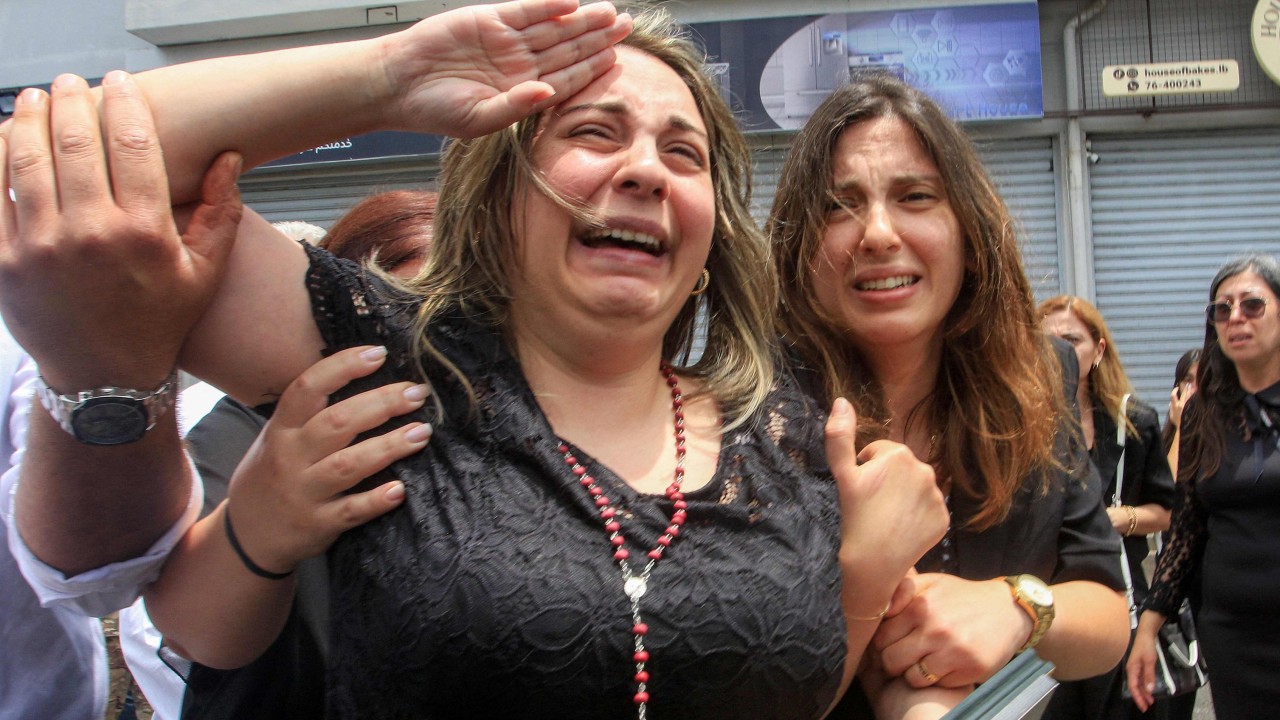
The sound of a refrigerator humming shouldn't feel like a threat. But in Tehran, when the midnight quiet settles over the concrete apartment blocks, every steady, mundane noise transforms into something sinister. A distant motorcycle backfiring makes a throat tighten. The sudden rumble of a heavy truck on the highway forces a pause, a bated breath, a collective holding of the chest until the sound fades into the smoggy night air.
This is not a story about drones, ballistic missiles, or geopolitical chessboards. It is a story about the grocery store. It is about the price of eggs, the sudden, sharp intake of breath when the phone vibrates, and the profound, bone-deep exhaustion of eighty-five million people who are tired of being the backdrop for someone else's war.
For decades, the tension between Iran and Israel was a shadow war. It was fought in the dark, through proxies, cyberattacks, and targeted assassinations in the neon-lit streets of the capital. It was terrifying, yes, but it was familiar. It was a background radiation that people learned to live with, a tax paid in anxiety.
Then the shadow evaporated.
When missiles began crossing the night sky in broad daylight, the abstract became immediate. The geopolitical became deeply, painfully personal. Today, the primary emotion dictating daily life across Iran is not fury. It is not ideological fervor. It is a paralyzing, suffocating weariness.
The Price of a Tomato
Consider a man we will call Maryam’s father. He is sixty-two, a retired schoolteacher who now drives a taxi to keep pace with an economy that liquefies beneath his feet. Every morning, he checks two things before he turns the key in the ignition: the news headlines and the black-market exchange rate of the Iranian rial against the US dollar.
They are the same metric.
When a politician in a faraway capital delivers a fiery speech, the rial plunges. When a drone strikes a warehouse, the price of cooking oil doubles by noon. The economic toll of perpetual conflict does not wait for the bombs to drop; it arrives in the supermarket aisles weeks in advance.
The mathematics of survival here are brutal. Inflation has long since ceased to be a percentage on a government spreadsheet; it is a monster that eats paychecks in real-time. Parents watch their adult children move back into cramped apartments because rent has become an impossible luxury. Meat is migrating off dinner tables, replaced by bread, potatoes, and quiet shame.
The true casualty of this endless friction is the future.
When tomorrow is entirely unpredictable, planning becomes an act of foolishness. How do you buy a house? How do you start a business? How do you look at your daughter and tell her to study for her exams when the university might be a bomb shelter by next semester? You don't. You live in a permanent, agonizing present tense.
The Double Bind of Modern Tehran
To walk through the bustling markets of Isfahan or the trendy cafes of northern Tehran is to witness a strange, psychological tightrope walk. On the surface, life looks normal. Teenagers laugh over iced lattes. Merchants shout over the din of traffic.
But look closer at the hands holding the coffee cups. They are shaking.
The civilian population finds itself trapped in a cruel double bind. On one side is a government that demands absolute ideological compliance, framing every hardship as a noble sacrifice in a grand cosmic struggle. On the other side is an international community that often views the entire nation through the lens of its leadership, flattening a rich, diverse, and deeply vibrant society into a monolith of hostility.
The average person on the street wants no part in this binary. They are caught in the crossfire of a rhetoric they did not write and decisions they cannot influence.
There is a specific kind of grief that comes from watching your country’s destiny be decided by forces entirely beyond your control. It breeds a profound sense of helplessness. People look at the news not to see if things will get worse, but how fast the descent will be. The collective mental health of a nation is fraying, worn thin by the constant, erratic oscillation between immediate panic and low-boiling dread.
The Generation of Broken Clocks
Step inside the mind of a twenty-two-year-old university student in Tabriz. She has lived her entire life under the shadow of sanctions, political unrest, and the looming threat of foreign intervention. She is hyper-educated, fluent in global culture through the magic of internet VPNs, and entirely devoid of illusion.
For her generation, the promise of the modern world is a window they can look through but never open.
They watch their peers across the globe build careers, travel, and experiment with life. Meanwhile, their own youth is consumed by a relentless holding pattern. They are the generation of broken clocks, frozen in time, waiting for a resolution that never arrives.
When foreign analysts talk about "deterrence" and "strategic equilibrium," they are talking about abstract concepts. They are not talking about the young pharmacy graduate who cannot find imported cancer medication for his mother because banking channels are blocked. They are not talking about the young couple who postponed their wedding for the third time because the currency crashed again over the weekend.
The stakes are not pieces on a map. They are the quiet, unchronicled heartbreaks of ordinary life.
The Anatomy of No Hope
A phrase echoes through the tea houses, the shared taxi rides, and the encrypted messaging apps of Iran right now: na-omidi. No hope.
It is not an angry exclamation. It is delivered with a flat, matter-of-fact resignation. It is the tone of someone who has watched the same tragic play repeated so many times that they have memorized the dialogue. They know the escalation cycle. They know the fiery speeches that follow. They know the inevitable economic squeeze that tightens like a vise around their necks.
But human beings are resilient to a fault. In the absence of a grand, sweeping hope for the future, people begin to cultivate tiny, fierce sanctuaries of meaning in the present.
They find it in poetry read aloud in private gardens. They find it in the stubborn solidarity of strangers sharing a taxi, complaining about the prices together, offering each other a mint or a commiserating nod. They find it in the determined pursuit of joy despite the architecture of fear surrounding them.
The world watches the skies above the Middle East, waiting for the next flash of light. But the real story is happening on the ground, in the dark, in the quiet apartments where families sit together around the glow of a television screen, watching the news ticker run. They are not asking who will win. They are only asking when they can finally sleep through the night without listening for the hum.
The traffic on Vali-e-Asr Street continues to crawl under the heavy gray sky. A street vendor stacks pomegranates into a perfect, bright crimson pyramid, his fingers rough and stained from the cold. He wipes his brow, looks up at the clouds for a long, silent moment, and then turns back to his scale, waiting for the next customer to arrive.