The metal shutter of the gelateria on Rome’s Via del Corso came down at 2:00 PM with a heavy, metallic clang. It was not the usual leisurely pause for a siesta. It was a retreat. Outside, the cobblestones felt hot enough to warp the rubber soles of cheap sneakers. The air did not move. It sat on the chest like a damp wool blanket, thick with the smell of scorched exhaust and baking stone.
By mid-afternoon, the thermometer outside the pharmacy near the Spanish Steps ticked upward to 39.5 degrees Celsius.
To a tourist holding a melting lemon granita, this is a ruined vacation. To the continent of Europe, it is a quiet, systemic crisis. For decades, summer in Europe was a cultural ideal exported to the world—a sun-drenched dream of open-air cafes, cool coastal breezes, and slow afternoons in centuries-old plazas. But that dream is suffocating under the weight of a meteorological phenomenon known as a heat dome.
This is not a standard heatwave. It is a trap.
The Glass Ceiling in the Sky
To understand why Europe is sweltering, you have to look up, far past the shimmering horizon. A heat dome occurs when a high-pressure system parks itself over a region, acting like a heavy glass lid on a pot. The hot air rises, hits this boundary of high pressure, and is forced back down. As it sinks, it compresses.
Compression breeds heat.
The trapped air becomes hotter and drier with every passing hour. Worse, the dome repels the cool Atlantic fronts that historically offered relief. The clouds vanish. The sun beats down directly on a landscape that has no defense mechanisms left.
Imagine a greenhouse with the vents welded shut.
In northern and western Europe, architecture is historically designed to keep heat in. The thick timber frames of German homes, the brick terraces of London, and the heavy stone walls of Parisian apartments were built to survive brutal winters. They lack cross-ventilation. They rarely feature air conditioning. When air conditioning is treated as a luxury rather than a utility, a building during a heat dome turns into a slow cooker.
A Tale of Two Cities
Consider Matteo. He is a hypothetical but entirely accurate composite of a pharmacy assistant in Madrid. He is thirty-two, healthy, and accustomed to warm summers. Yet, as the mercury nears 40 degrees, his day changes from uncomfortable to dangerous.
The heat does not hit everyone equally.
Matteo spends his afternoon delivering medication to elderly residents in apartments without elevators or climate control. In these upper-floor units, the air is stagnant. The walls have absorbed days of radiation, and they are now radiating that heat inward, even at midnight.
For the elderly, the human heart is the first line of defense against rising temperatures. To cool the body, the heart must pump faster, diverting blood to the skin to release heat. When the ambient temperature matches or exceeds body temperature, this mechanism fails. The heart pumps furiously, but there is nowhere for the heat to go.
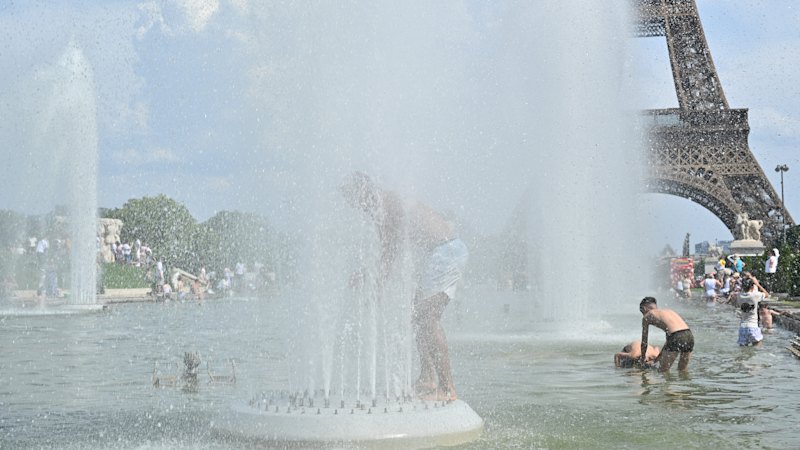
Now consider Clara, a tourist from Chicago visiting Florence. She expected warmth, but not the heavy, oppressive silence that blankets the city. The Uffizi Gallery becomes a refuge, not for the Renaissance art, but for the climate control. Outside, the fountains offer no relief; the water is warm, and the stone basins reflect the glare.
The infrastructure is buckling under the weight of thousands of individuals trying to escape the same invisible pressure.
Power grids across Italy and Spain are groaning. As millions of small, portable cooling units click on simultaneously, transformers overheat. In some neighborhoods, the power cuts out entirely. Suddenly, the thin line between discomfort and disaster vanishes. The fans stop spinning. The refrigerators begin to thaw.
The Invisible Toll
The true danger of a heat dome is that it leaves no immediate wreckage. There are no shattered windows like a hurricane, no charred hillsides like a wildfire. It is a silent disaster.
The damage accumulates in the background.
- Hospitalization Rates: Emergency rooms see a surge not just in heatstroke, but in kidney failure, stroke, and cardiovascular collapse.
- Agricultural Strain: Fields of wheat and vineyards dry out prematurely, the soil hardening into a cracked crust that cannot absorb water when rain finally returns.
- Economic Stagnation: Labor productivity drops sharply. Construction stops by noon. Delivery drivers slow down. The rhythm of commerce alters to survive.
People often ask why Europe cannot simply adapt, why it cannot install air conditioning on every wall. The answer lies in the heritage of the continent. Millions of buildings are protected historical landmarks. Drilling into a 400-year-old facade to mount a compressor is legally prohibited and structurally risky.
Furthermore, widespread air conditioning creates a vicious cycle. The heat extracted from inside a building is dumped directly into the narrow streets, exacerbating the urban heat island effect. The city becomes hotter because it is trying to cool itself down.
Shifting Currents
The historical context makes this shift terrifying. Europe’s climate was stabilized for millennia by the Jet Stream, a ribbon of fast-moving air high in the atmosphere that guided weather systems from west to east. But as the Arctic warms faster than the equator, the temperature difference that drives the Jet Stream weakens.
The ribbon sags. It develops deep loops.
When a high-pressure system gets caught in one of these sluggish loops, it stops moving. It stalls. That stall is what creates the dome. What used to be a three-day spell of hot weather now becomes a two-week siege.
Walking through a major European city during these peaks feels like navigating an abandoned film set. The locals know the rules: windows are shuttered at dawn, heavy curtains are drawn, and movement is restricted until dusk. The vibrant street life that defines European culture evaporates. The piazzas are empty, save for pigeons clustered in whatever sliver of shade a marble column can provide.
The Night Does Not Save Us
The most exhausting element of a heat dome is the lack of nocturnal cooling. In a normal summer cycle, the earth cools down after sunset. The temperature drops by fifteen degrees, allowing bodies and buildings to reset.
Under the dome, the night offers no sanctuary.
The concrete and asphalt of the city act as giant thermal batteries. They store the daytime energy and release it slowly throughout the night. At midnight, the air temperature in Paris or Frankfurt might still hover around 30 degrees. Sleep becomes elusive. Without deep, restorative sleep, the body’s ability to regulate stress and temperature the following day is compromised.
This is where the psychological toll begins. Irritability rises. Concentration drops. A collective exhaustion settles over the population, a shared realization that the climate we built our lives, our laws, and our architecture around is changing faster than we can adapt.
The metal shutter of the Roman gelateria remains down. On the pavement outside, a discarded map curls in the heat. The city waits, holding its breath, for a breeze that is not coming.