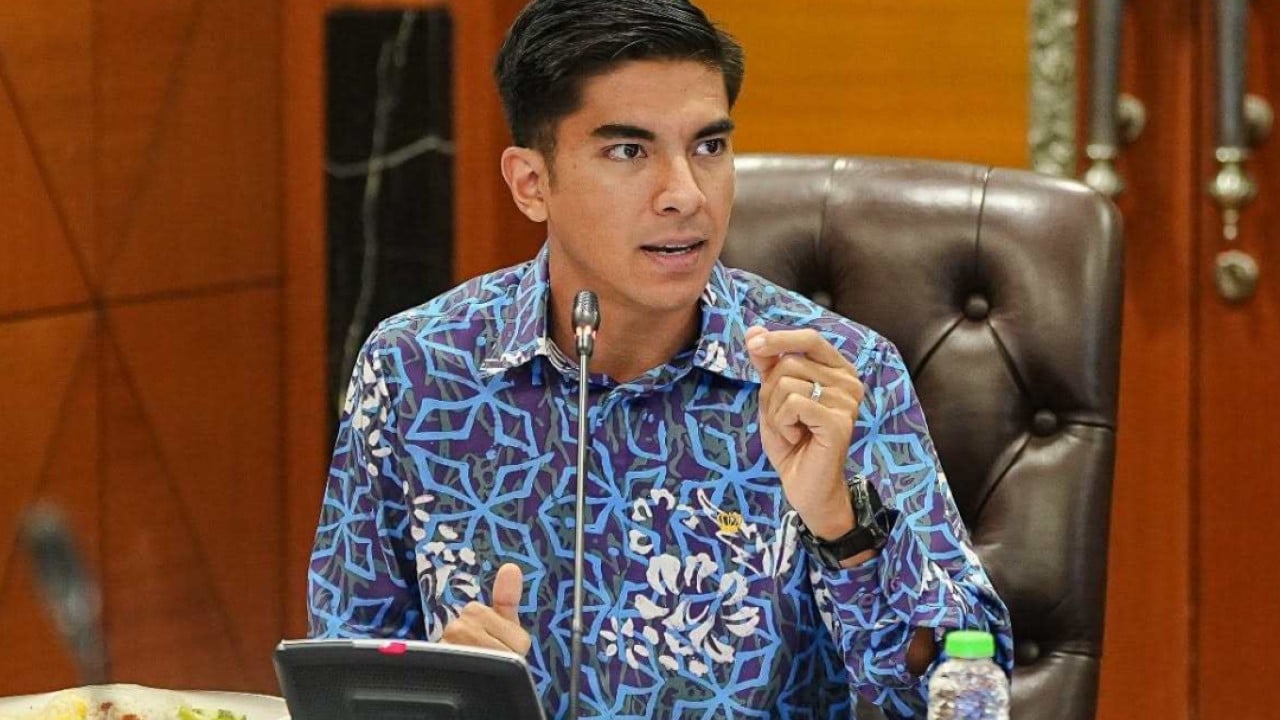
The air inside the Palace of Justice in Putrajaya carries a specific kind of cold. It is the chill of absolute stillness, the kind that settles into your bones when you are waiting for three people to decide whether the next seven years of your life will be spent behind iron bars.
Syed Saddiq Syed Abdul Rahman sat outside the dock, watching the judges. He is 33 years old now. A lifetime ago, at 25, he was the golden boy of Malaysian politics, the youngest cabinet minister in the nation's history, a charismatic debater who promised a cynical generation that things could be different. But for six years, that promise has been choked by a relentless legal chokehold.
A political career is built on momentum, but a trial is built on the agonizing slowing down of time. The allegations had been heavy: abetting criminal breach of trust involving RM1 million from his former party's youth wing, Armada, misappropriating RM120,000, and two counts of money laundering. In 2023, the High Court found him guilty, handing down a crushing sentence of seven years in prison, ten million ringgit in fines, and two strokes of the cane.
To understand the sheer terror of that moment, you have to look past the numbers. Think of the cane. In Malaysia, judicial whipping is not a disciplinary swat; it is an archaic, flesh-tearing trauma. For a young leader, the verdict was a professional and physical execution.
Then came the agonizing climb back up the legal mountain. The Court of Appeal had cleared his name entirely in 2025, calling the charges baseless. But the state pushed back, dragging the fight to the absolute peak of the system: the Federal Court.
The Knife Edge of a Split Bench
When the final hearing began, the courtroom transformed into a theater of pure tension. Court of Appeal President Datuk Seri Abu Bakar Jais did not deliver a single, unified voice from the bench. Instead, he instructed everyone to listen closely because each of the three judges would read their verdicts individually.
The room held its breath.
Justice Abu Bakar went first. The mood fractured instantly. While he agreed that the first charge of abetting criminal breach of trust could not stand, he turned sharply on the remaining counts. In his view, the RM120,000 raised during an election campaign was never clearly explained to donors as a personal reimbursement. He found the young politician guilty, proposing six months in jail and a stroke of the rotan.
The courtroom collective stomach dropped. The ghost of the prison cell rushed back into the room.
But then, Justice Che Mohd Ruzima Ghazali spoke. The pendulum swung violently back. He stated clearly that the High Court’s initial conviction was entirely unsafe. The prosecution, he noted, had failed to prove that the funds belonged to a corporate entity rather than a specific election campaign vehicle. The act of withdrawing money alone is not a crime; the law requires proof of dishonest intent.
One voice for conviction. One voice for freedom.
An impasse.
The entire six-year saga converged onto the shoulders of the third judge, Justice Collin Lawrence Sequerah. The silence in the hall was so dense you could hear the rustle of legal briefs. When Justice Sequerah began reading, he did not stretch the torment. He aligned with Justice Ruzima. The Court of Appeal’s acquittal would stand. The state’s final appeal was dismissed.
The majority ruled. The nightmare was over.
The Invisible Debt of the Innocent
Outside the courthouse, the tropical heat slapped against the glass doors. A small, spontaneous burst of applause echoed through the lobby. Syed Saddiq dropped to the floor, performing a sujud syukur—a prostration of intense gratitude—his forehead pressing against the cold tile.
Six years of being looked at differently. Six years of whispers in parliament, of sidelined political alliances, and of stepping down from the leadership of MUDA, the youth-centric party he birthed from hope.
Consider what happens to a person when they are forced to live in stasis. While his peers were building lives, launching initiatives, and governing, he was reviewing bank statements, sitting through dry depositions, and staring at the prospect of a ruined life.
There is a deep vulnerability in admitting how close you came to the edge. Before the appellate courts vindicated him, he was, in the eyes of the law and much of the public, a convicted man. Yet, through that darkness, human anchors held him in place.
His parents stood by him. His constituents in Muar re-elected him in 2022 even with the dark clouds of the trial hanging over his head. And then there was his fiancée, Bella Astillah. To choose to love and bind yourself to someone whose future might be measured in prison yards requires a rare, quiet ferocity.
The Freedom to Breathe
With the final gavel strike, the immediate future transformed from a terrifying question mark into a clean slate. Even the judges couldn't help but acknowledge the shift; Justice Abu Bakar noted with a dry warmth that the court was well aware of the respondent’s upcoming personal plans and hoped they could now proceed.
Politics can wait. The structural fights over constituency allocations, the shouting matches in the Dewan Rakyat, and the grand strategies to revive a fractured youth movement are secondary to the simple act of reclaiming a life.
Hours after walking out of the Palace of Justice, Syed Saddiq was spotted walking into the Malaysian Parliament. The stride was different. The weight was gone.
The true gravity of a legal battle is not found in the legal precedents it sets or the dry press releases issued by prosecutors. It is found in the quiet moments when a person realizes they no longer have to carry the terrifying weight of their own destruction. It is the moment the air stops feeling cold, and the future finally belongs to you again.


