The coffee in the Taipei cafe is always slightly too sweet, brewed with a heavy hand of condensed milk that coats the tongue long after the cup is empty. Outside, the morning rush hour hums with the familiar, frantic energy of twenty million people living beneath a sky that refuses to pick a side. Motorbikes weave through traffic like nervous system impulses, their exhausts buzzing against the damp asphalt.
It is a Tuesday. It is just another day.
Except down at the docks, and up in the quiet, sterile offices where maps are drawn and redrawn with trembling hands, the air tastes of iron.
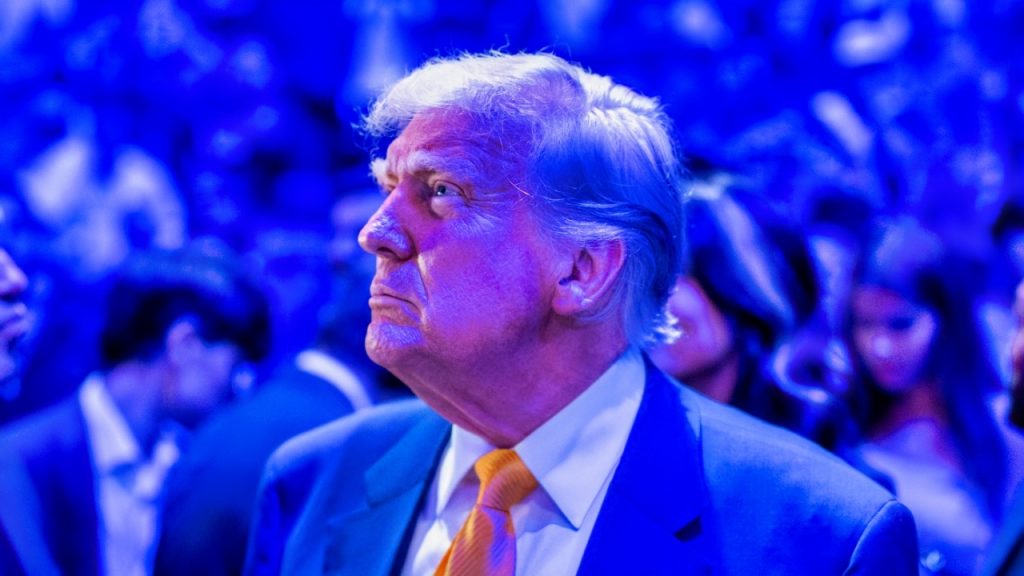
A few days ago, two men stood behind heavy oak doors half a world away, shaking hands in front of flashing cameras. A summit. A brief alignment of flashing teeth and heavy rhetoric. To the casual observer watching the evening news from a couch in Ohio or Frankfurt, it was just another diplomatic handshake—the kind that makes the stock market tick up a fraction before everyone forgets about it by dinner. But here, thousands of miles from the Washington pageantry, a senior official in Taipei looked at the television screen, took a slow sip of tea, and said the quiet part out loud: Arming Taiwan remains an essential pillar of regional survival.
Those words did not land like policy. They landed like lead.
To understand why a sentence about weapons feels so heavy here, you have to understand the geography of breathing room. The Taiwan Strait is barely a hundred miles wide at its narrowest point. On a clear morning, you can almost imagine seeing the other side. That narrow ribbon of blue water has served as a moat for generations, a watery buffer that allowed a bustling democracy to grow out of the concrete and neon.
People here do not talk about war with the casual bravado found on cable news panels. They talk about it the way farmers talk about the typhoon season. You check your shutters. You clear the drains. You hope the roof holds.
When foreign capitals debate whether to send missiles, radar systems, or artillery shells across the ocean, they tend to speak in cold, accounting-sheet language. Deterrence. Strategic asymmetry. The balance of power. They calculate GDP ratios and manufacturing output of semi-conductors as if human lives were merely data points on a spreadsheet.
(Note: When economists speak of a supply chain disruption here, they are usually talking about your next laptop or car battery. When we speak of it, we are talking about whether the lights stay on.)
Consider the perspective of a forty-year-old engineer named Lin, who spends his days designing microchips smaller than a grain of rice in the science parks of Hsinchu. Lin does not care about geopolitical theories. He cares about his daughter’s piano lessons, his aging mother’s blood pressure medication, and whether he will finish his current project before the weekend. Yet, Lin’s entire existence rests upon a knife-edge of deterrence. Every shipment of defensive capability that arrives at a Taiwanese port isn't just a piece of military hardware; it is a psychological anchor. It buys time. It whispers a simple message to anyone who might look across the water with hunger: Not today. Try tomorrow.
Diplomacy is an art of delicate fictions. We pretend that everyone at the table is playing the same game, following the same rules, bound by the same respect for borders written on old parchment. But history is littered with the bones of people who mistook a polite conversation for a permanent peace.
After the recent Trump-Xi summit, the commentary back and forth danced around the edges of the obvious. Grand strategies were parsed by pundits who have never heard an air-raid siren test echo off apartment blocks. They weighed the cost of weapons packages against the risk of escalation, as though escalation were a weather pattern we could simply wait out under an umbrella.
The Taipei official who made that sharp assessment after the summit understood something crucial: weakness invites the very catastrophe it tries to avoid.
It is a paradox older than Athens. If you wish for peace, you must prepare not just for war, but for the messy, unglamorous reality of being strong enough that nobody thinks they can swallow you whole in an afternoon.
Walking through the alleys of Dadaocheng in the late afternoon, past herbal medicine shops smelling of dried roots and ancient earth, the contrast is staggering. Old men play Chinese chess on plastic stools, shouting gentle insults at each other over the clack of wooden pieces. Young couples share bowls of beef noodle soup, laughing over illuminated smartphone screens. The city breathes. It loves. It argues. It creates.
None of them look like frontline soldiers. None of them want to be.
That is the true stakes of the debate over arms and alliances. It is not about glorifying conflict or fueling an arms race for its own sake. It is about protecting the right of ordinary people to live ordinary, messy, beautiful lives without having to look over their shoulders every time the wind changes direction.
The ships carrying steel and circuitry will keep crossing the Pacific. The politicians will keep issuing statements designed to soothe markets while hardening positions. And the people of this island will wake up tomorrow, make their coffee, open their shops, and look out over a blue strait that holds both their history and their future.
The water remains calm. For now. But the anchors are heavy, and everyone is holding their breath to see if they will hold.