The air inside Pauley Pavilion doesn't just hold the scent of floor wax and athletic tape. It carries the molecular remnants of a thousand shattered expectations. When a gymnast salutes the judges, she isn't just starting a routine. She is negotiating with a decade of muscle memory, a childhood spent in windowless warehouses, and the crushing gravity of a perfect 10.0 that exists only in the mind of a perfectionist.
For the UCLA Bruins, the 2024-2025 season isn't a rebuilding year. It is an exorcism.
To understand why this specific freshman class matters—why the names Sasha Levy, Nola Matthews, and Tiana Sumanasekera are spoken with a hushed, reverent urgency—you have to understand the peculiar trauma of the elite gymnastics pipeline. Most college athletes are rising toward their peak. Gymnasts, however, are often trying to reclaim a soul they traded to the Olympic gods before they were old enough to drive.
Elite gymnastics is a cold, clinical business. It is a world of national team camps and international flights where you are a set of data points: bone density, rotational velocity, landing precision. Then, you arrive at UCLA. You trade the sterile silence of the elite world for a roar that shakes the rafters. You trade the individual pursuit of a medal for the collective pursuit of a legacy.
The transition is more than a change of scenery. It is a psychological overhaul.
The Invisible Scars of Excellence
Consider the physical toll. By the time a top-tier recruit like Tiana Sumanasekera steps onto the blue mats in Westwood, her body has already performed more repetitions than most professional marathoners. These athletes arrive with "high-mileage" joints and a level of technical mastery that is both a gift and a curse. In the elite world, a wobble on the beam is a catastrophe that can end a four-year Olympic cycle. In college, that same wobble is a moment for a teammate to scream your name until their throat is raw, urging you back to center.
The Bruins are betting their championship hopes on the idea that these freshmen can unlearn the fear of failure.
Sumanasekera arrived as a decorated international competitor, a Pan American champion who moved with a deliberate, lethal grace. But elite success often breeds a kind of rigidness. The challenge for Head Coach Janelle McDonald isn't teaching these women how to flip; they could do that in their sleep. The challenge is teaching them how to breathe.
The shift in stakes is jarring. In the elite realm, you are a solo pilot in a storm. At UCLA, you are part of a choreographed chaos. The freshmen are discovering that their "elite roots" are the foundation, but the house they are building is entirely different. They are learning that a 9.95 in front of a home crowd feels heavier—and lighter—than a gold medal won in a quiet arena in another time zone.
The Geometry of the Comeback
Last season, the Bruins were a team of "almosts." They had the talent, but they lacked the depth to survive the grueling march toward the NCAA Championships. This year’s freshman class acts as a structural reinforcement. They are the steel beams inserted into a historic building to ensure it doesn't collapse under its own weight.
Nola Matthews brings a specialized kind of magic to the uneven bars. To the casual observer, the bars are a display of upper-body strength. To a physicist, they are a study in the conservation of angular momentum.
$$L = I \omega$$
When Matthews releases the high bar, she is manipulating her moment of inertia ($I$) to control her angular velocity ($\omega$). If she tucks too early, she over-rotates. If she opens too late, the floor becomes an enemy. Because she comes from the elite level, her "release moves" are more complex, her handstands more vertical, and her transitions more fluid than the average collegiate athlete. She provides the Bruins with a scoring ceiling that most teams simply cannot reach.
But the math of a championship isn't just found in the physics of the bars. It is found in the chemistry of the sidelines.
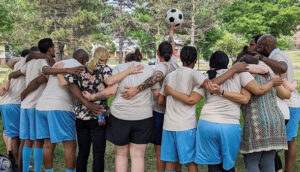
Watch the freshmen when they aren't competing. They are the first to grab a teammate’s grips, the first to offer a chalky high-five after a fall. This is the "Bruin Bubble." It is a deliberate culture designed to counteract the isolation of their previous lives. For Sasha Levy and her classmates, the team isn't just a support system; it’s a permission slip to enjoy the sport again.
The Ghost in the Gym
There is a specific kind of haunting that happens in gymnastics. You see it in the way an athlete looks at the vault—a stationary beast that has, at some point in their life, probably broken them. Every freshman on this roster carries a ghost. It might be the ghost of a missed Olympic trials, a lingering stress fracture, or the voice of a former coach who demanded nothing less than robotic consistency.
The brilliance of the current UCLA strategy is the acknowledgement of these ghosts. They aren't asking the freshmen to forget their elite pasts. They are asking them to use that hardness as a shield.
When the pressure mounts during a dual meet against a powerhouse like Oklahoma or Utah, these freshmen don't blink. Why would they? They have competed under the white-hot lights of World Championships. They have felt the eyes of the entire world on them. A Saturday afternoon in Los Angeles is, by comparison, a sanctuary.
This experience creates a trickle-down effect. When the sophomores and juniors see the freshmen attacking the floor exercise with a terrifying, professional intensity, the entire floor elevation rises. It’s a symbiotic relationship: the veterans teach the freshmen how to be "Bruins," and the freshmen remind the veterans what it looks like to be world-class.
The Mechanics of the Push
The push for a championship is often described in metaphors of warfare or marathons, but for this UCLA squad, it feels more like an intricate watch being assembled. Every piece must be calibrated.
- The Vault Revolution: For years, the Bruins struggled with "start values." If you don't perform a vault with a 10.0 difficulty, you are losing before you even land. The freshmen have brought the "Yurchenko double full" back into the conversation, giving the team the raw power needed to keep pace with the SEC giants.
- The Beam Anchor: The balance beam is 4 inches wide. It is a psychological torture chamber. The elite-trained freshmen possess a "lock-in" capability—a mental state where the crowd disappears and the beam becomes an infinite highway.
- The Floor Artistry: UCLA is known for floor routines that feel like Broadway shows. The freshmen are being tasked with maintaining this tradition while injecting a level of tumbling difficulty that borders on the impossible.
The Human Cost of the Perfect 10
We like to pretend that college sports are about education and "amateurism," but for these women, it is a high-stakes reclamation project. They are fighting for their identities.
One of the most profound moments in a freshman's journey occurs during the first home meet. They stand in the tunnel, the blue and gold lights strobing, the "8-clap" chant deafening. For a girl who spent her childhood in a private gym with three other people and a bucket of chalk, the noise is a shock.
It is the sound of being seen. Not as a score, not as a representative of a national federation, but as a person.
The invisible stakes are found in the quiet conversations in the training room. It’s the realization that they are allowed to be tired. They are allowed to have a "bad" day. Paradoxically, this freedom to be human is exactly what allows them to perform like superhumans. By removing the threat of perfection, the coaches have unlocked the ability to achieve it.
The Pivot Point
We are currently witnessing a shift in the landscape of the sport. The "elite-to-college" pipeline used to be a retirement home for gymnasts who were "done." Now, it is a laboratory for greatness.
The freshmen aren't just here to contribute scores; they are here to redefine what is possible in the NCAA. They are bringing skills that were once reserved for the Olympics and performing them with a smile that looks suspiciously like genuine joy.
But don't mistake that joy for a lack of edge. These women are competitors. They are hunters. They know exactly how much they have sacrificed to get here—the missed proms, the family dinners eaten in the backseat of a car, the surgeries, the tears. They didn't come to UCLA to just "participate." They came to win.
The championship push isn't a theory. It is a daily grind. It’s the extra set of conditioning when their lungs are screaming. It’s the video review of a toe-point that was 2 degrees off. It’s the freshmen leading the huddle, their voices steady, their eyes fixed on a trophy that represents more than a title.
It represents the moment they finally owned their own talent.
As the season progresses, the narratives will focus on the rankings and the regional seedings. People will talk about the "Bruin magic" and the legendary history of the program. But the real story is simpler and much more visceral. It is the story of three or four young women who decided that their best days weren't behind them at sixteen.
They are standing on the edge of the mat, toes gripping the carpet, lungs filled with that dusty Pauley Pavilion air. They aren't thinking about the gold medals in their childhood bedrooms. They are thinking about the person standing next to them.
The salute is given. The music starts. The ghost is gone.
There is only the flight.
Would you like me to analyze the specific technical upgrades this freshman class brings to the UCLA vault lineup compared to last season's national average?