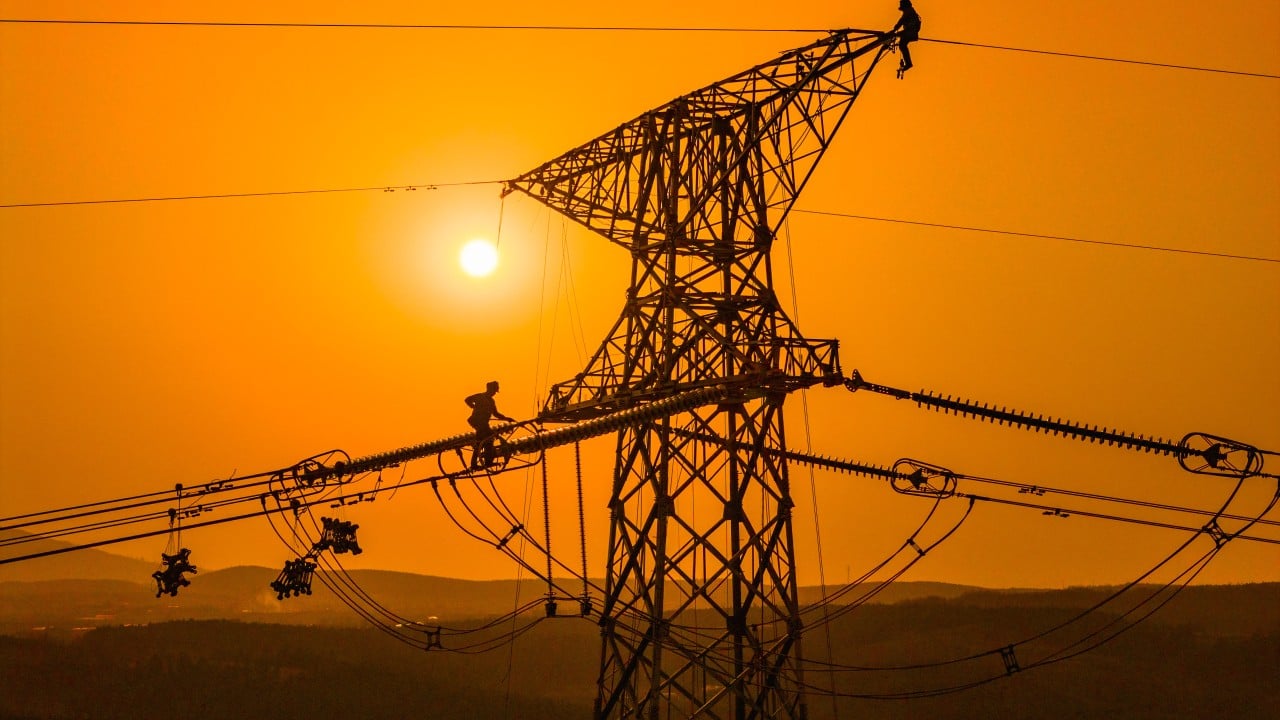
Western media loves a good "China is failing" narrative, and the current darling of energy reporting is the renewable curtailment myth. Turn on any financial news network or open any mainstream climate blog, and you will see the same hand-wringing headlines: China is building massive solar and wind farms in the Gobi desert, but they are throwing the power away. They call it "curtailment." They call it a crisis. They call it a multi-billion-dollar blunder.
They are completely wrong.
What the mainstream consensus views as an engineering failure is actually an aggressive, intentional features-not-bugs strategy. China is not accidentally wasting clean energy because they forgot how to build grid wires. They are overbuilding generation capacity at a scale the West cannot comprehend, intentionally accepting high waste rates to force an economic and industrial transformation.
I have spent fifteen years analyzing global infrastructure deployment, advising capital funds on energy transitions, and watching state-backed utilities execute long-range plays. I have seen Western grid operators choke their own renewable growth by demanding 100% efficiency before laying a single panel. China is doing the exact opposite. They are flooding the system.
Stop looking at curtailment as a leak in the bucket. It is the overflow of a dam that is about to power the next century of industrial dominance.
The Efficiency Trap Choking Western Grids
The lazy consensus relies on a simplistic premise: if a solar panel generates a kilowatt-hour of electricity, and that electricity does not immediately charge a battery or light up a home, it is a tragedy. This is the "Efficiency Trap." It is a philosophy born out of hyper-financialized Western markets where every single electron must be monetized instantly to satisfy quarterly shareholder reports.
Look at how the United States handles its grid. If a developer wants to build a wind farm in Texas or Wyoming, they must clear years of interconnection queues. The grid operators demand extensive studies to ensure the existing transmission lines can handle peak output without a single watt going to waste. The result? Projects languish for a decade. Costs skyrocket. The transition moves at a snail's pace because the system prioritizes perfect efficiency over sheer volume.
China’s State Grid Corporation operates under an entirely different mandate. They understand an immutable law of physics and economics: overbuilding generation is vastly cheaper than overbuilding transmission.
By building massive renewable hubs in Xinjiang, Inner Mongolia, and Gansu, China accepts that during peak sun and high winds, the local grid cannot absorb the power, and the ultra-high-voltage (UHV) direct current lines to Shanghai or Beijing are full. So, they shut off the turbines. They clip the solar inverters.
To a Western accountant, that looks like a loss. To an industrial strategist, it is the marginal cost of achieving absolute energy abundance. When you overbuild to the point where your waste capacity exceeds the total capacity of smaller nations, your baseline power costs drop to near zero for manufacturing industries located near the generation source.
Dismantling the Transmission Line Fallacy
The standard critique argues that China simply cannot build transmission lines fast enough to match its wind and solar boom. This argument falls apart under basic logistical scrutiny. China has deployed over thirty UHV DC transmission lines across its continent-sized landmass. The rest of the world combined has a fraction of that.
The issue is not that they cannot connect the desert to the coast; it is that trying to build a perfectly balanced grid is a fool's errand.
Consider the mechanics of a typical Western solution: building a localized grid with exact storage parity. For every megawatt of solar, you install a megawatt of lithium-iron-phosphate (LFP) or sodium-ion battery storage. It sounds elegant. It keeps the regulators happy.
It is also an economic disaster. The capital expenditure required to build a zero-waste grid based on battery storage kills the economic utility of the renewable energy itself. The Levelized Cost of Storage (LCOS) eats the savings of the Levelized Cost of Energy (LCOE).
China’s approach avoids this bottleneck. By allowing curtailment rates to float between 5% and 10% in western provinces, they avoid the astronomical costs of trying to capture the final, stubborn top tier of peak generation. They use the wasted energy as a economic signal to relocate heavy industry.
Instead of moving the electricity thousands of miles to the factories, China is moving the factories to the electricity.
Moving the Factories to the Fuel
We are seeing a massive migration of energy-intensive manufacturing inside China. Aluminum smelting, polysilicon production, and green hydrogen synthesis are moving directly to the western provinces where the grid is "overflowing."
Take polysilicon manufacturing—the very raw material needed to make solar panels. It requires immense amounts of steady, high-temperature electricity. By setting up manufacturing hubs in Xinjiang and Inner Mongolia, these facilities tap into a local grid saturated with cheap, curtailed wind and solar power. They are using cheap, "wasted" clean energy to manufacture the hardware that will capture more clean energy. It is a closed-loop industrial cycle that drives down production costs to levels no Western competitor can match.
Europe and North America are attempting to compete by passing massive subsidy packages like the Inflation Reduction Act. They are throwing tax credits at developers who are still trapped in the efficiency mindset. You cannot subsidize your way out of a broken structural philosophy. While Western developers spend five years litigating a transmission line route across state borders to avoid a 3% energy loss, China builds five gigawatts of solar, dumps 8% of the power, and uses the remaining 92% to manufacture cheap electric vehicles that underprice Detroit and Stuttgart.
The Dark Side of Abundance
This contrarian strategy is not without severe friction points. The downside of treating energy generation as a brute-force volume game is the immense financial strain it places on provincial power generation companies.
Local state-owned enterprises (SOEs) bear the cost of the clipped electrons. When a provincial grid forces a wind farm to curtail 12% of its output in a month, that project's internal rate of return drops. In a pure market economy, these companies would go bankrupt. In China, these losses are absorbed by state-backed banks or offset by coal-fired generation revenues within the same state conglomerates.
It is a messy, heavily subsidized shell game that distorts market pricing and creates friction between regional governments and the central apparatus in Beijing. If you are an independent power producer trying to operate in this environment without state backing, you will get crushed. The system is designed for massive, state-aligned actors who can absorb short-term asset underutilization in exchange for long-term supply chain dominance.
Furthermore, this strategy relies on keeping older, highly flexible coal plants online simply to act as spinning reserves when the wind drops completely. The irony is stark: to allow for massive, wasteful renewable overbuilding, China must maintain a massive fleet of coal infrastructure to act as a safety net.
The Wrong Questions Everyone Keeps Asking
Look at the standard inquiries from industry analysts and international bodies regarding China's energy infrastructure:
How can China eliminate renewable energy curtailment by 2030?
This question assumes elimination is the goal. If China eliminates curtailment, it means they have stopped overbuilding. It means they have throttled their installation rates to match the slow, bureaucratic pace of grid upgrades. Eliminating curtailment would be a sign of stagnation, not progress. The goal should be optimizing the waste, not eradicating it.
Isn't the lack of market-based pricing destroying the efficiency of their green transition?
Market-based pricing works wonders for consumer choice and marginal cost optimization. It is terrible for rapid, brute-force infrastructure mobilization. If China relied strictly on liberalized energy markets, no capital allocator would fund a 10-gigawatt solar array in a desert without a guaranteed power purchase agreement from a coastal city. The transition would stall out, exactly as it has in parts of the European Union.
The Actionable Pivot for Global Competitors
If you are an energy executive, an investor, or a policymaker outside of China, you must change your playbook immediately.
Stop waiting for China’s renewable grid to collapse under the weight of its own inefficiency. It isn't going to happen. Stop tracking curtailment metrics as a sign of weakness. Instead, use those metrics to track where the cheapest industrial manufacturing hubs of the next decade are being formed.
- Abandon the 100% Utilization Target: If you are developing industrial projects, design your systems to tolerate excess capacity. Build localized, behind-the-meter industrial processes that can ramp up when power is free and shut down when it is tight.
- Invest in Low-Capex Off-Grid Industrial Load: Do not wait for grid connections. Build wind and solar assets dedicated entirely to local, flexible industrial processes like green ammonia production or data processing, where the energy waste matters less than the speed of deployment.
- Price in the Asset Overflow: Assume your competitors in Asia are paying next to nothing for their baseline industrial power because they are feeding off the excess of an overbuilt system. If your business model requires high-cost, perfectly stable grid power to compete on a commodity product, your business model is already dead.
The global energy transition is not an engineering exam where the person with the highest efficiency score wins. It is an industrial war of attrition. The winner is the side that builds the most hardware, creates the deepest supply chains, and learns to weaponize waste.
Stop measuring the water spilled over the top of the dam. Start looking at the size of the flood coming down the valley.