The war is shifting deeper into industrial heartlands and economic symbols. Overnight airstrikes by Moscow hammered Ukraine's largest steel plant, while Kyiv launched a sweeping drone offensive straight into the Moscow region, setting a major retail logistics facility ablaze.
This isn't just about frontline trenches anymore. Both nations are systematically trying to choke each other's economic lifelines.
The Blow to Ukraine's Industrial Core
In Kryvyi Rih—President Volodymyr Zelenskyy's hometown—Russian missiles targeted the massive ArcelorMittal steel complex. The human toll was immediate, with at least two people killed and fourteen others injured.
The structural damage cuts even deeper. Key production units within the power generation and blast furnace sectors took direct hits, forcing a partial halt to manufacturing operations. Steel has long served as a backbone for the Ukrainian economy. Striking this facility sends a clear signal that Moscow intends to systematically degrade Ukraine's heavy industrial capacity, making post-war economic recovery exponentially harder.
At the same time, the capital faced its own barrage. A Sunday morning missile strike on Kyiv sparked fires across multiple districts, injuring residents and testing an already stretched air defense network.
Kyiv Retaliates Against the Russian Heartland
Ukraine isn't just absorbing blows. Kyiv has ramped up its strategy of bringing the economic reality of the war directly to Russian citizens.
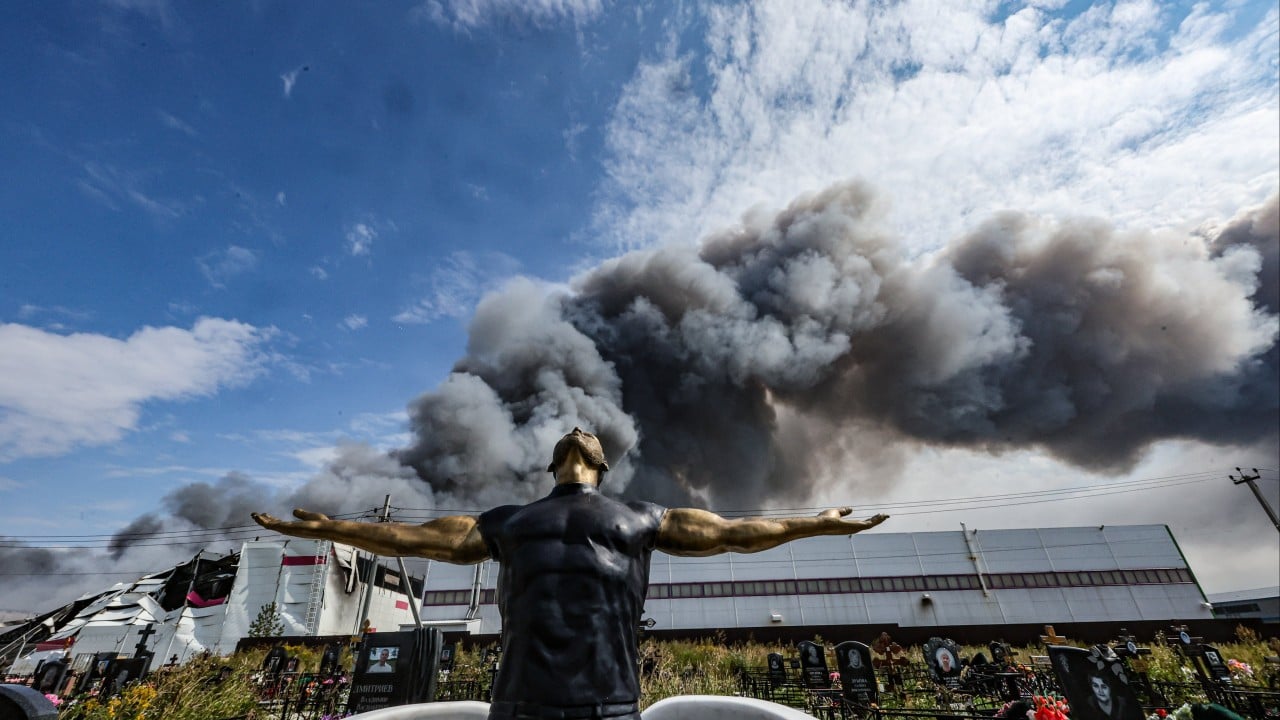
A heavy drone wave hit the Moscow region, resulting in structural damage and civilian casualties, including an 83-year-old man killed in the onslaught. More importantly for the Russian economy, the drone strikes ignited a massive warehouse operated by Wildberries, Russia's leading e-commerce giant.
By targeting distribution hubs, logistics parks, and energy infrastructure like oil refineries, Ukraine aims to puncture the illusion of normalcy inside major Russian urban centers. Disrupting supply chains and retail networks forces Moscow to divert valuable air defense assets away from the front lines to protect domestic commercial hubs.
The Regional Spillover Risk
The escalation is no longer contained within the borders of the combatants. During the latest exchange, Romania—a NATO member state—scrambled an F-18 fighter on an air-policing mission after a drone breached its airspace. NATO officials indicated the drone likely originated from the Russian attacks, entering via neighboring Moldova.
When air defense systems over NATO territory are forced to engage stray hardware, the margin for error shrinks dramatically. With Black Sea commercial shipping already caught in the crossfire and grain export hubs repeatedly targeted, the economic shockwaves continue to ripple outward across global commodities markets.
Expect more infrastructure targeting as both sides double down on economic attrition. The conflict has evolved into a grinding test of endurance where industrial output and logistical resilience matter just as much as troop movements on the ground.