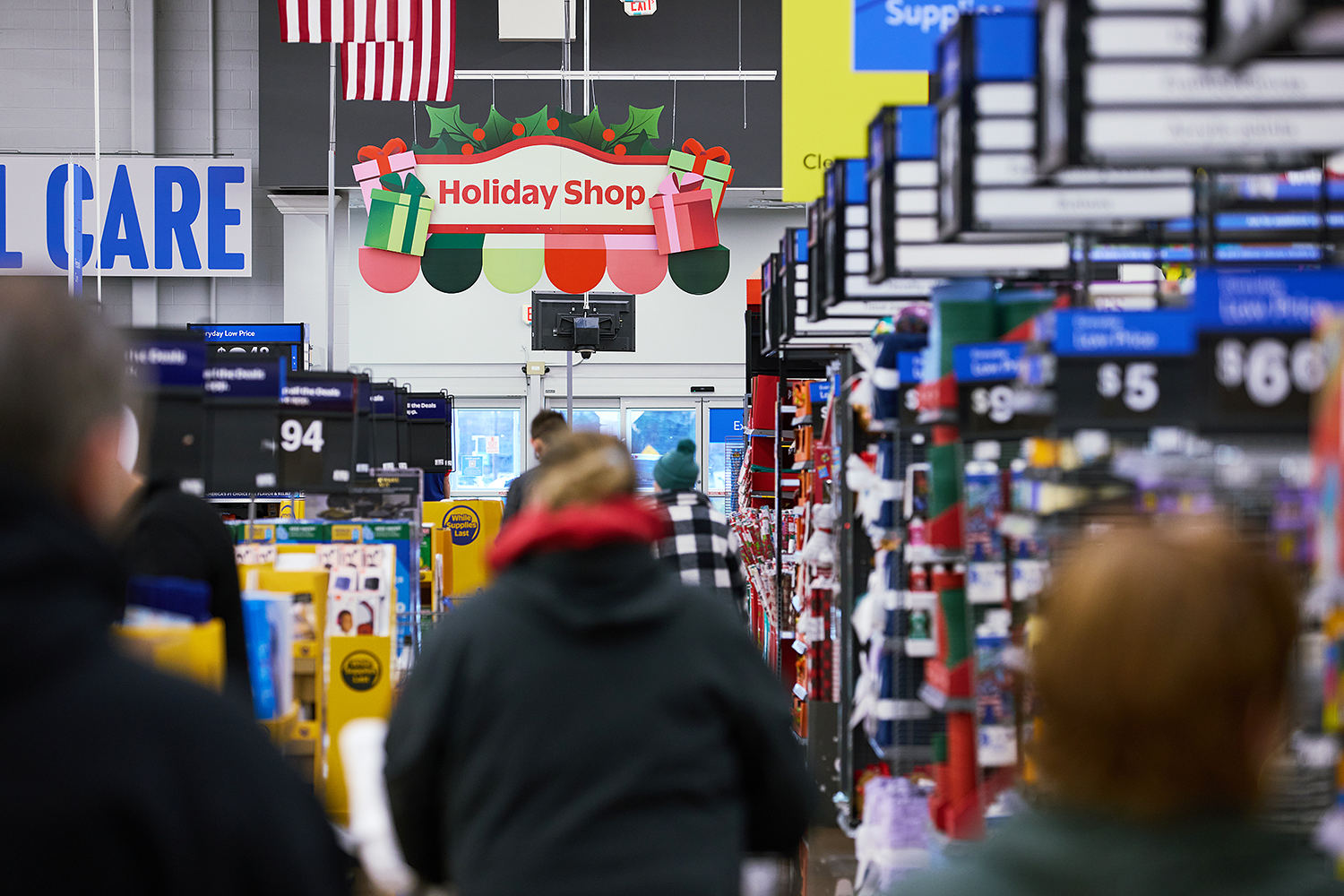
Walmart is capturing market share from inflation-weary shoppers ahead of the holidays by aggressively expanding its private-label assortment, holding the line on entry-level grocery prices, and using its massive supply chain scale to absorb margin pressure that smaller competitors cannot survive. Rather than relying on traditional seasonal discounting, the retail giant is weaponizing everyday low pricing to pull high-income households away from specialty grocers and department stores, turning macroeconomic anxiety into a structural advantage during the most critical retail quarter of the year.
Wall Street loves a clean narrative. When consumer price indices stay stubbornly elevated and credit card balances hit record highs, the conventional wisdom dictates that retail suffers across the board. Shoppers pull back. Discretionary spending evaporates. Holiday forecasts get slashed.
That narrative misses what actually happens inside the fluorescent aisles of Bentonville’s empire when household budgets tighten. Inflation does not kill retail volume; it concentrates it. When a family making $120,000 a year suddenly notices their weekly grocery bill has jumped thirty percent over three years, they do not stop buying gifts for their kids or ingredients for Thanksgiving dinner. They simply stop shopping at places that charge a premium for aesthetics. They drive past the boutique grocer, skip the mid-tier department store, and park in front of a Walmart Supercenter.
This phenomenon—known in the industry as the trade-down effect—is the engine driving Walmart’s holiday playbook. While competitors spent the autumn scrambling to protect their gross margins by passing supplier price hikes directly onto consumers, Walmart did the opposite. It leaned into the squeeze.
The Mechanics of the Trade-Down Machine
To understand why Walmart thrives when consumers hurt, you have to look at its revenue mix. Unlike Target, Kohl’s, or Macy’s, which rely heavily on discretionary categories like apparel, home decor, and seasonal impulse buys, roughly sixty percent of Walmart’s U.S. revenue comes from groceries and everyday consumables.
Groceries are non-negotiable. People have to eat regardless of what the Federal Reserve does with interest rates. By keeping milk, eggs, bread, and pantry staples priced at razor-thin margins—often using them as loss leaders to guarantee foot traffic—Walmart ensures that shoppers are already inside the building or browsing the app every single week.
Once a shopper is in the ecosystem for bananas and paper towels, the friction of buying a television, a winter coat, or a Lego set drops to near zero. Competitors have to spend millions in customer acquisition costs just to get a holiday shopper through the door once. Walmart gets them four times a month just to restock the refrigerator.
Consider a hypothetical example of a suburban household earning $110,000 annually. Under normal economic conditions, that family might buy organic produce at a regional specialty chain, household cleaners at a pharmacy, and holiday gifts at a mall department store. When mortgage rates, auto insurance premiums, and utility bills eat an extra $600 out of their monthly cash flow, those three separate shopping trips become a luxury they can no longer justify. Consolidating all three into a single Walmart pickup order saves them time and cuts their total outlay by fifteen to twenty percent. Once that habit forms in October, it rarely breaks in December.
Private Labels as a Margin Shield
Selling cheap groceries is a great way to build traffic, but it is a terrible way to make money if you are only selling national brands. Companies like Procter & Gamble, PepsiCo, and Kraft Heinz spent the post-pandemic years pushing aggressive price increases onto retailers, banking on brand loyalty to keep consumers paying more.
Walmart’s response was quiet, methodical, and devastating to traditional consumer packaged goods giants. It poured capital into its private-label portfolio.
Brands like Great Value, Equate, and the newly launched Bettergoods line are no longer treated as cheap, generic alternatives relegated to the bottom shelf. Walmart has redesigned the packaging, improved the ingredient profiles, and placed them at eye level right next to the national brands. Bettergoods, in particular, targets the exact demographic trading down from Whole Foods and Trader Joe’s—offering plant-based items, antibiotic-free meats, and culinary-inspired snacks, most priced under five dollars.
The financial math behind private labels explains why Walmart can afford to look generous to inflation-weary shoppers while still keeping shareholders happy. When Walmart sells a box of national-brand cereal, the manufacturer captures the bulk of the profit margin, leaving the retailer with scraps. When Walmart sells a box of Great Value cereal, it controls the manufacturing contracts, the packaging, and the distribution. Even though the retail price on the shelf is twenty-five percent lower for the shopper, Walmart’s gross margin on that private-label box is significantly higher.
During the holiday season, this dynamic expands beyond the pantry. Walmart’s proprietary toy brands, apparel lines like Free Assembly and Scoop, and private-label electronics allow the company to hit aggressive price points—like sub-$20 gifts and heavily discounted 4K televisions—without taking the catastrophic margin hits that force smaller retailers into bankruptcy.
Inventory Discipline and the Ghost of 2022
Experienced retail analysts have short memories if they forget what happened to Walmart just a few years ago. In 2022, supply chain bottlenecks cleared all at once, leaving Walmart drowning in billions of dollars of excess inventory. Warehouses were bursting with patio furniture, apparel, and electronics that nobody wanted because inflation had suddenly shifted spending toward food and fuel. Walmart had to slash prices to clear the bloat, hammering its quarterly profits and sending its stock tumbling.
That bruising experience reshaped how Bentonville buys merchandise for the holidays.
Going into the current holiday cycle, Walmart’s inventory management operates with surgical precision. Rather than making massive, speculative bets on discretionary trends six months in advance, buyers have kept inventory growth tightly aligned with actual unit sales. They leaned heavily into rollbacks—temporary price cuts funded largely by suppliers desperate to move volume—rather than panic-driven clearance markdowns in January.
Supply chain automation has quietly supercharged this discipline. Walmart has spent billions retrofitting its regional distribution centers with high-speed automated storage and retrieval systems. Fewer human touches per pallet mean lower fulfillment costs. More importantly, predictive algorithms now route inventory to specific zip codes based on localized economic stress indicators. A store in an affluent suburb sees a heavier allocation of Bettergoods gourmet items and high-end electronics, while a store in a lower-income rural county gets stocked to the rafters with bulk-pack staples and sub-$15 holiday gifts.
The Hidden Weapon of Digital Convenience
For decades, Walmart’s biggest vulnerability was the in-store experience. Long checkout lines, cluttered aisles, and understaffed departments drove higher-income shoppers straight into the arms of Target and Amazon.
Inflation gave those affluent shoppers a reason to give Walmart another look, and Walmart’s omnichannel infrastructure gave them a reason to stay.
By turning its 4,600+ U.S. stores into localized fulfillment hubs, Walmart solved the last-mile delivery problem that bleeds other retailers dry. Roughly ninety percent of the American population lives within ten miles of a Walmart store. When an inflation-weary parent orders groceries and holiday gifts through the Walmart app, a store associate picks those items off the local shelves and loads them into the customer’s trunk curbside—for free.
This eliminates the shipping fees that eat into small-basket e-commerce orders and bypasses the need for expensive, dedicated e-commerce warehouses. Furthermore, the Walmart+ membership program has quietly become a sticky retention tool. By bundling free delivery, fuel discounts at thousands of gas stations, and streaming perks for roughly half the price of Amazon Prime, Walmart locked in cost-conscious households long before the holiday shopping rush officially began.
The ancillary revenue streams flowing out of this digital traffic are what truly separate Walmart from legacy brick-and-mortar peers. Walmart Connect, the company’s retail media network, charges suppliers billions of dollars to place sponsored ads directly in front of shoppers searching the app. When a consumer searches for "holiday baking supplies" or "kids bikes," brands pay a premium to appear at the top of the screen. That high-margin advertising revenue directly subsidizes lower prices on the physical shelves. It is a self-reinforcing flywheel that smaller regional grocers and traditional department stores simply cannot replicate.
The Cracks in the Fortress
No retail strategy is bulletproof, and treating Walmart as invincible ignores real structural pressures sitting just beneath the surface.
First, there is a hard mathematical limit to how much margin a retailer can squeeze out of grocery-heavy sales. Even with private labels and advertising revenue providing a cushion, shifting the sales mix away from high-margin apparel and home goods toward low-margin food puts constant downward pressure on overall profitability. If inflation cools too slowly, low-income shoppers—Walmart’s core historical base—risk running out of discretionary cash entirely, leaving them buying only bare essentials.
Second, shrink—the retail industry’s polite term for theft, damage, and administrative error—remains a persistent drag. Locking toothbrushes, socks, and laundry detergent behind plexiglass cases protects inventory, but it ruins the shopping experience. Friction at the shelf kills impulse buying. Every time a customer has to press a call button and wait five minutes for an employee to unlock a $12 bottle of body wash, the likelihood of that customer abandoning their basket or switching to an online competitor goes up.
Third, the vendor relationship tightrope is fraying. Major consumer goods manufacturers are growing increasingly resentful of Walmart demanding price rollbacks while simultaneously pushing its own private-label knockoffs at lower prices. Some suppliers have begun shifting their marketing dollars and innovative product launches toward club stores like Costco or regional chains where they have more pricing power. If national brands pull back their promotional funding, Walmart will have to shoulder more of the discounting burden itself.
What Competitors Are Getting Wrong
While Walmart leans into value, much of the broader retail sector remains trapped in a cycle of denial.
Mid-tier department stores and specialty retailers continue to rely on promotional whiplash—inflating base prices so they can advertise massive "40% Off" sales during Black Friday and Cyber Monday. Modern consumers, armed with price-tracking apps and exhausted by years of shrinkflation, see right through artificial discounting. They do not want a coupon for an overpriced sweater; they want a transparent, low price on things they actually need.
Target, Walmart’s closest rival, has been forced to slash prices on thousands of everyday items just to stop the bleeding in foot traffic. Yet Target lacks Walmart’s sheer grocery scale and supplier leverage, meaning every price cut hits Target’s bottom line much harder. Meanwhile, dollar stores—long considered recession-proof—have stumbled badly, hampered by messy stores, supply chain snags, and consumers realizing that smaller package sizes at a dollar store often cost more per ounce than bulk items at a Walmart Supercenter.
The Structural Shift Outlasting the Holidays
Wall Street analysts spend endless hours obsessing over holiday retail forecasts, trying to guess whether December sales will grow by three percent or four percent. That focus misses the forest for the trees.
The real story of this holiday season is not about how much money Americans spend; it is about where that money permanently settles. Economic downturns and inflationary cycles act as permanent accelerants in retail. When Sears and JCPenney lost foot traffic during past recessions, those shoppers never came back. When Amazon trained consumers to expect two-day shipping during the 2010s, traditional brick-and-mortar stores never recovered their lost market share.
Inflation fatigue has pushed millions of middle- and upper-income households across Walmart’s threshold over the past twenty-four months. They came for cheap eggs and discounted paper towels. They stayed because the produce was fresh, the private-label snacks were surprisingly good, the app worked, and the total at the register was fifty dollars lower than what they were used to paying.
By the time inflation eventually cools and interest rates normalize, those shoppers will not suddenly decide they miss paying thirty percent more for the exact same box of cereal somewhere else. Walmart is not just winning the holiday quarter; it is rewriting the baseline expectations of the American consumer, one grocery cart at a time.