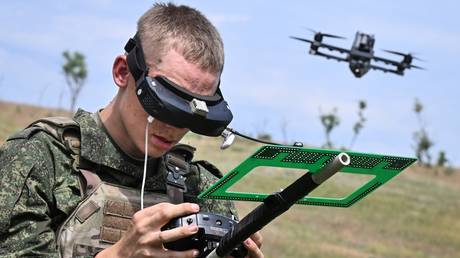
Education technology has a graveyard of silver bullets stretching back to the radio, the overhead projector, and the CD-ROM. Every generation introduces a new apparatus promising to abolish the four-walled classroom, democratize advanced instruction, and rescue attention spans frayed by modern stimuli. Today, that savior complex has settled on the concept of spatial computing and immersive environments. Startups and legacy software vendors insist that strapping a plastic visor to a student's face constitutes a revolution in blended learning.
They are missing the point entirely. You might also find this similar story useful: The Cost of the Scroll We Never Chose to Pay.
The architecture of immersive education is built on sand. While promotional videos feature students walking alongside digital dinosaurs or collaborating in pristine 3D laboratories, the daily operational reality involves hardware failures, motion sickness, prohibitive procurement budgets, and software that mimics a standard web browser rendered in uncomfortable stereoscopic 3D.
The Economics of Immersive Decay
School districts operating on razor-thin margins face a brutal financial reality when evaluating virtual reality deployments. A single consumer-grade headset requires periodic battery replacement, fragile lens maintenance, and recurring device management licensing fees. When multiplied across a standard cohort of thirty students, the upfront capital expenditure dwarfs the cost of traditional computing hardware by an order of magnitude. As discussed in detailed articles by Ars Technica, the results are notable.
Maintenance overhead compounds the initial financial blow. Educational hardware lives a punishing existence. Equipment is dropped on linoleum floors, stored incorrectly in unventilated lockers, and subjected to unpredictable student handling. A cracked lens or a failing internal sensor transforms an expensive instructional asset into electronic waste.
Software licensing models amplify these budgetary strains. Institutional pricing structures for multi-user spatial environments often mirror enterprise software costs, charging per seat on an annual subscription basis. When funding cycles shift or federal grants expire, districts find themselves tethered to recurring expenses they cannot sustain, forcing abrupt cancellations of pilot programs.
Cognitive Friction Behind the Lens
Proponents of spatial learning often overlook the biological toll of prolonged stereoscopic viewing. Human vision relies on accommodation and convergence, natural coordination mechanisms where the eyes focus and turn inward simultaneously. Standard virtual reality displays project images at a fixed focal distance while presenting stereoscopic cues that trick the brain into perceiving depth, creating a sensory conflict known as the vergence-accommodation mismatch.
This mismatch induces fatigue, nausea, and disorientation within surprisingly short windows of time. For a twenty-minute technology demonstration at a trade conference, the discomfort is negligible. For a standard academic period lasting fifty minutes, the physical strain becomes counterproductive to information retention.
Cognitive load theory offers another useful lens here. Instructional design must minimize extraneous cognitive load—the mental effort required to process poorly designed interfaces or confusing navigational mechanics. When a student spends ten minutes trying to grab a virtual pipette using an unfamiliar controller layout, the working memory capacity dedicated to the actual chemistry lesson is severely compromised.
Beyond the Gimmick
Despite these structural hurdles, spatial computing retains genuine utility if divorced from utopian marketing narratives. The value proposition does not lie in replacing physical presence or recreating standard lectures inside a digital auditorium. That approach merely substitutes a heavy piece of plastic for a textbook.
Real utility emerges in scenarios where physical simulation provides safety advantages or economic feasibility that traditional methods cannot match. Consider hazardous materials handling in vocational training, complex spatial geometry visualization, or collaborative historical site reconstruction. In these instances, the digital environment functions as a specialized laboratory tool rather than a comprehensive replacement for human instruction.
Institutions succeeding with spatial deployments typically avoid enterprise-wide mandates. They rely on targeted, supplemental interventions. A physics department might utilize a targeted simulation once a semester to demonstrate orbital mechanics, rather than attempting to conduct an entire physics curriculum inside a headset.
The Structural Correction Required
For immersive education to move past its current plateau, foundational changes must occur across hardware manufacturing, software design, and pedagogical integration.
Hardware must become lighter, cheaper, and fundamentally more durable. The reliance on standalone headsets with heavy front-loaded battery packs must yield to tethered architectures or lightweight glasses that integrate naturally with prescription lenses.
Software developers must abandon the impulse to build proprietary, walled gardens. Interoperability standards are desperately needed to allow instructional assets to move freely across different hardware platforms without requiring custom porting or redundant licensing fees.
Pedagogical integration requires institutional patience. Technology cannot cure systemic funding deficits, overcrowded classrooms, or burnt-out educators. Treating spatial computing as an administrative shortcut ignores the hard, unglamorous work of classroom instruction. Sustainable educational reform happens when tools serve human educators rather than demanding that educators serve the tools.
The current wave of spatial hype will inevitably recede as initial budgets run dry and pilot programs face hard outcome reviews. What remains afterward will depend entirely on whether the industry is willing to trade magical thinking for rigorous operational discipline.