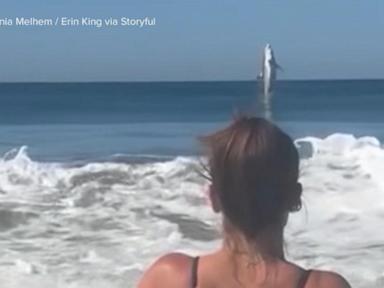
A great white shark launched out of the surf right behind a beachgoer at Marina State Beach, and half the internet immediately screamed fake. Honestly, I don't blame people for squinting at the clip. When a dark predator rockets skyward behind someone posing for a shoreline photo on a calm October afternoon, your brain goes straight to CGI or clever editing.
Except this one held up. Beachgoer Erin King captured the moment on October 17, 2026, after helping a group of women take selfies and trading photos in return. Local reporting and California State Parks officials backed up the sighting using footage from a nearby Surfline camera that recorded the ocean in the same window. Officials posted notices and issued a temporary shark advisory along the beach, right on cue for California's autumn spike in shark activity. For another look, check out: this related article.
Viral shark clips usually trigger two lazy reactions. One crowd insists every dramatic breach is a hoax. The other crowd acts like a shark leaping near shore means the ocean has turned into a minefield. Both miss what's actually going on in Monterey Bay.
Why a Great White Breach at Marina Beach Looks So Surreal
Watch enough viral wildlife videos and you start spotting red flags everywhere. A vertical pop out of relatively gentle surf doesn't look like the classic South African seal-ambush jump people picture from nature documentaries. That mismatch is why skeptics piled into comment threads arguing over angles, reflections, and whether the clip had been faked. Further analysis on this matter has been provided by The New York Times.
Corroboration from a fixed beach camera changes the conversation. Surf cameras run continuously on the coast, giving observers an independent look at the water without the framing tricks of a smartphone lens. When state parks officials review that kind of video and put up advisory notices, you're dealing with real coastal wildlife rather than a digital parlor trick.
Marina State Beach sits along Monterey Bay, an area known for steep underwater topography, strong currents, and deep water not far offshore. Deep water close to a beach gives large marine animals plenty of vertical room to move, maneuver, and clear the surface even when the waves breaking on the sand look deceptively tame.
Why Sharks Breach and Why Autumn Brings Them Closer
People often assume a breaching shark is mid-attack on a swimmer or surfer. That's almost never true. Biologists and marine researchers point to several practical reasons sharks launch out of the water, including bursts of speed during hunting or maneuvering, shedding external parasites or irritation, and sudden behavioral shifts in deeper water.
Timing matters just as much as geography. Along California, late summer through fall—often nicknamed "Sharktober" by locals and ocean advocates—lines up with seasonal shifts in coastal temperatures, prey movement, and shark distribution. Groups like Shark Stewards have long highlighted September through November as a peak stretch for spotting larger white sharks along parts of the California coast.
Here's the nuance most headlines gloss over: more sightings don't automatically mean more attacks. Better cameras, drone footage from surfers and photographers, and faster social sharing mean moments that once went unnoticed get broadcast to millions of people within hours.
- Better eyes on the water: Surf cams, drones, and smartphones catch brief surface activity that used to pass with only a couple of witnesses.
- Seasonal movement: Autumn ocean conditions and marine mammal movements bring white sharks into closer range of central and southern California beaches.
- Long-term conservation context: Despite dramatic viral clips, great white sharks still face broader pressures worldwide—such as commercial and recreational bycatch, habitat stress, and warming waters—even as regional protections and marine recovery shape local encounters.
What Beachgoers and Surfers Actually Get Wrong
The biggest mistake I see after a viral sighting is panic swinging into overconfidence. Some people swear off the beach for months after seeing one clip. Others treat a breaching shark like a harmless puppy because "nobody got bitten." Both stances are sloppy.
A 10-to-14-foot-plus predator moving fast near shore deserves respect, plain and simple. You don't need to treat the ocean like a monster movie to take a temporary shark advisory seriously. At the same time, sensationalizing a brief photobomb as a sign of aggressive hunting distorts how these animals behave.
Data from coastal agencies and shark researchers consistently shows that unprovoked bites on humans remain rare compared to the sheer number of swimmers, paddlers, and surfers entering California's waters every year. Still, rare doesn't mean impossible, and autumn is simply not the season to ignore local warnings or paddle out alone at dusk in murky water.
Practical Steps Before Your Next California Beach Day
If you're heading to Marina State Beach or anywhere else along the California coast during peak fall shark season, a few habits keep you smarter and safer without ruining your day:
- Check official notices first: Look at California State Parks updates and local lifeguard advisories before getting in the water.
- Watch the water and wildlife: Avoid swimming or paddling near sea lion concentrations, schooling fish, or bird diving activity where predators may be foraging.
- Skip low-visibility sessions: Murky water, dawn, and dusk reduce visibility for everyone in the lineup.
- Stay with a group: Surfing or swimming with others is basic ocean sense in strong currents and cold coastal water.
- Respect space if you spot a shark: Don't crowd the animal with drones, boats, or jet skis—give it room and alert lifeguards or park staff.
The Guardian coverage of the Marina State Beach breach
Great white shark leaps out of water at Marina State Beach
This short video captures the viral breach off Marina State Beach that sparked online debate and state park advisories.