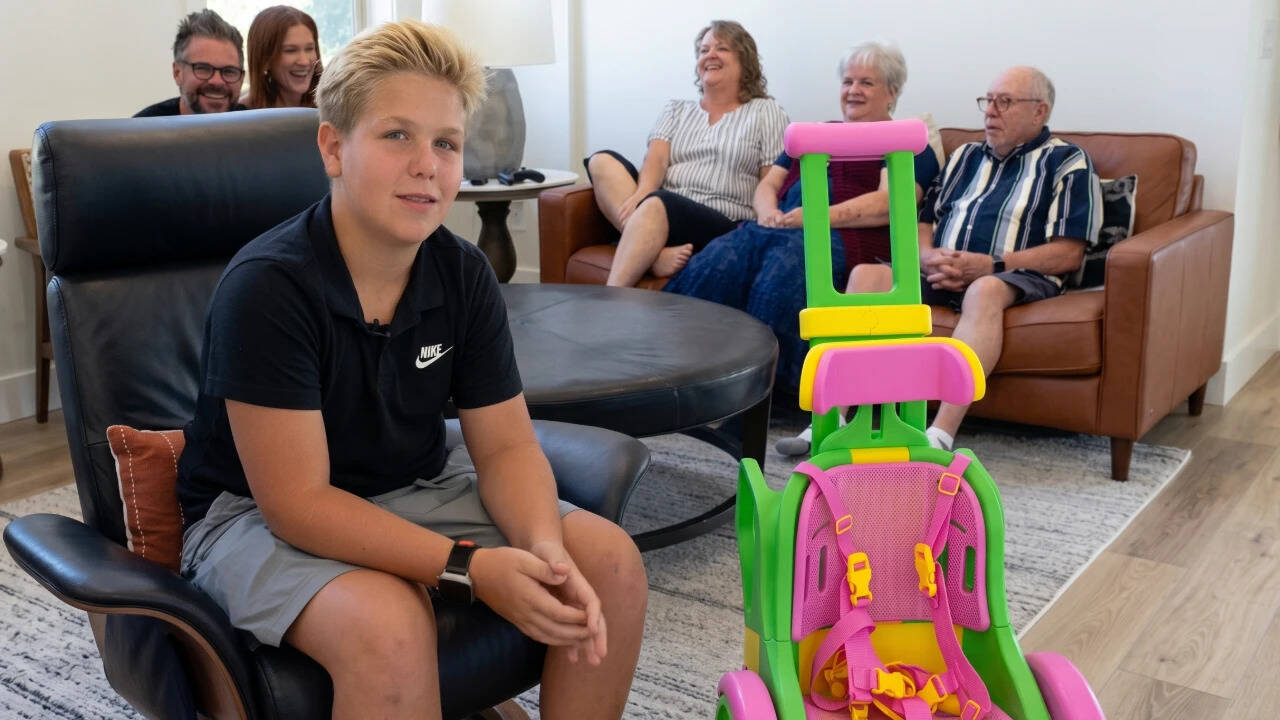
The internet collectively lost its mind over a teenager named Zac Waters spending 300 hours 3D-printing a custom wheelchair for a 21-month-old toddler. The headlines write themselves. Prodigy. Compassion. The unstoppable triumph of human ingenuity over corporate bureaucracy. Social media feeds flooded with applause.
It makes for a heartwarming viral video. It also exposes a deeply broken, catastrophic failure of our medical and assistive technology infrastructure.
Stop celebrating children doing the state's job. When a thirteen-year-old has to spend hundreds of hours playing amateur biomedical engineer in a bedroom to get a mobility device for a toddler, nobody is winning. We are watching a systematic abdication of clinical responsibility wrapped in the shiny packaging of feel-good clickbait.
The Lazy Consensus of Garage Innovation
The dominant narrative relies on a tired trope: scrappy, unregulated youth beats out cold, heartless institutional structures using cheap desktop hardware.
I have watched venture capital and media outlets romanticize this DIY ethos for a decade. The assumption is simple. If a kid with a home printer can engineer a wheelchair, then big medical device manufacturers are just gouging consumers, and traditional healthcare channels are bloated dinosaurs ripe for disruption by hobbyists.
That logic collapses the moment you look at actual physiology, material science, and regulatory safety.
A 21-month-old child is not a static object. Toddlers are dynamic, rapidly growing, neurologically developing organisms. Their skeletal alignment, skin integrity, postural support, and muscle tone require precise clinical intervention. Handing a toddler a device printed on a consumer-grade hobbyist machine using filament that degrades under UV light or stress is not a triumph. It is a liability lawsuit waiting to happen.
Why Consumer 3D Printing Fails Clinical Reality
Let us talk about the hard physics that the heartwarming profiles conveniently omit.
Most desktop 3D printers rely on fused deposition modeling, laying down plastic layer by layer. This creates microscopic gaps between layers. Those gaps trap moisture, bacteria, and bodily fluids. For a toddler who lacks full continence or fine motor control, a porous plastic device becomes an active biological hazard within weeks.
Clinical-grade pediatric mobility equipment goes through rigorous biocompatibility testing, ISO standards compliance, crash safety assessments, and ergonomic evaluations performed by physical therapists.
When a thirteen-year-old downloads an open-source CAD file, tweaks it in a bedroom, and prints it out, none of those safeguards exist. We are trading long-term spinal health and infection control for a viral dopamine hit on LinkedIn.
I have seen companies blow millions on custom rapid-prototyping initiatives that ignored regulatory clearance pathways, only to watch liability insurance underwriters shut them down overnight. Good intentions do not override biomechanical physics.
The Real Scandal Is Insurance, Not Lack of Kid Geneniuses
The reason this story went viral points directly to the real villain in this narrative, and it is not a lack of teenage inventors.
The American and global pediatric durable medical equipment market is an administrative labyrinth designed to deny coverage. Insurance companies routinely delay, deny, or downscale mobility aids for infants under two years old under the absurd pretext that toddlers "grow too fast" or "aren't ready for independent mobility."
Pediatric mobility specialists know the truth. Early mobility is foundational for cognitive, social, and spatial development. Denying a 21-month-old a proper wheelchair stunts their cognitive mapping and social integration.
Instead of demanding systemic reform of commercial insurance reimbursement codes or forcing the medical device industry to invest in rapid-customization pipelines, we turn the failure into a heartwarming charity case. We praise the resilience of a child volunteer stepping in because the multi-trillion-dollar healthcare apparatus refuses to fund proper pediatric equipment.
It is grotesque. We are outsourcing basic human rights to middle school science projects.
What Real Innovation Looks Like
If you want to fix pediatric mobility, look at what parametric design and clinical automation are doing behind the scenes without requiring a teenager to burn through 300 hours of free labor.
Advanced engineering firms are utilizing automated algorithmic modeling. Clinicians input patient measurements into certified software, and the system generates an anatomically optimized, antimicrobial, clinically compliant support structure ready for selective laser sintering using medical-grade nylon.
That takes hours of professional validation, not weeks of guesswork. It meets FDA and CE standards. It accounts for growth vectors and pressure distribution maps.
That is how you solve a problem at scale. You do not solve it by waiting for a charitable kid with an Ender 3 printer to rescue a family from insurance purgatory.
The Cost of Romanticizing Desperation
We need to stop conflating systemic failure with wholesome community spirit.
Every time we share a story about a kid saving the day with a 3D printer, we let the healthcare payer off the hook. We signal to policymakers that the system is self-healing, that communities will always step up, and that structural reform is unnecessary because teenagers will just pick up the slack.
They won't. And more importantly, they shouldn't have to.
Let Zac Waters focus on algebra and actual education. Let the medical device sector and insurance cartels do the heavy lifting they are legally and financially obligated to perform.
Stop cheering for the dystopia. Demand a system that doesn't require a middle schooler to fix it.