Nature does not care about political ideology. It does not look at your bank account, and it certainly does not care if you own a luxury yacht or a state-subsidized apartment.
On June 24, a massive earthquake ripped through the Caribbean coast of Venezuela. In a matter of agonizing seconds, the coastal town of Caraballeda became a graveyard. The disaster flattened concrete public housing towers and high-end coastal properties alike. The official death toll has surged past 3,500 people.
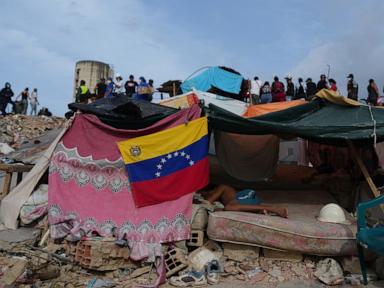
Now, roughly 17,000 survivors are sleeping in makeshift tents, private parking lots, and public parks. They share the same brutal reality. They are homeless. The disaster has laid bare the deep fractures in Venezuela's infrastructure and the ultimate failure of its state-mandated social integration.
A Shared Coastline Destroyed in Seconds
For years, Caraballeda stood as a strange visual experiment in forced economic mixing. Along the same winding coastal street, wealthy yacht owners lived a stone's throw away from hundreds of working-class families crammed into massive public housing blocks. On one side, people towed Jet Skis and accessed private marinas. On the other, public transit riders walked home to high-rises built under Hugo Chávez’s signature "Grand Housing Mission."
Then the earth moved.
The June 24 earthquake struck during a holiday, catching thousands of residents resting at home. The structural collapse was absolute. Tall public housing blocks folded completely, trapping whole families under layers of pancaked concrete. Luxury residences adjacent to the local yacht club suffered the same sudden destruction.
Carlos Ortega, a local resident, spent over a week digging through the concrete chunks that buried his family. His relatives were assigned to 12 apartments in the Caraballeda public towers over a decade ago after surviving a catastrophic mudslide. Only one of his siblings made it out alive. His son, who worked at a nearby convenience store during the quake, remains missing.
A few yards away from Ortega, rescue teams stood on the debris of an upscale property. They were handed cookies on a plastic tray while the wife of a military general waited for news of her buried husband and children. The rich and the poor shared the same paradise. Now they are trapped in the exact same wreckage.
The Trap of Property Without Deeds
While the earthquake was a natural event, the scale of the ongoing humanitarian crisis is entirely man-made. Working-class survivors face a unique, terrifying bureaucratic nightmare. They do not actually own their homes.
The socialist administration, currently led by acting President Delcy Rodríguez following the removal of Nicolás Maduro earlier this year, has long used housing as a tool for political control. Under the Grand Housing Mission, the state handed out hundreds of thousands of apartments to low-income families. But the government intentionally withheld the property deeds.
Without a physical deed, you own nothing. Experts from the Venezuela Observatory at Colombia’s Universidad del Rosario point out that this was a deliberate feature of Chavismo. If you hold the keys but the state holds the title, your shelter depends entirely on your political loyalty. If you protest or vote the wrong way, the government can legally evict you.
This systemic lack of legal ownership leaves thousands of earthquake survivors uniquely vulnerable. They cannot claim insurance. They cannot sell their land to rebuild. They are entirely dependent on a state apparatus that has been widely criticized for its sluggish, chaotic rescue response.
Broken Infrastructure and Broken Promises
The destruction is not isolated to Caraballeda. Satellite data analyzed by Microsoft's AI for Good Lab reveals that in Catia La Mar, a coastal city just to the west, at least 10,000 structures were severely damaged or ruined. That is roughly one-third of the entire city.
Infrastructure across Venezuela had already been crumbling for more than a decade due to economic collapse, corruption, and a lack of basic maintenance. When the earthquake hit, building codes were non-existent or ignored. The heavy concrete used to build the public housing towers became a weapon when the foundations failed.
Working-class citizens who scraped together money outside of government programs face total ruin too. Caryudedi González, a 44-year-old resident, bought her own home independently when she was just 21. Following the quake, half of her house slid directly down a steep ravine. She is still hoping it can be repaired because, as she puts it, building something of your own in Venezuela requires a lifetime of crushing labor.
What Happens Next for Survivors
If you are looking at this crisis from the outside, it is easy to see it as just another tragedy in a long line of Venezuelan hardships. But for the 17,000 people living in the dirt right now, the immediate steps forward are a matter of survival.
If you want to understand where the crisis goes from here, keep your eyes on these key areas.
- The Struggle for Secure Temporary Shelter: The current tent cities are a breeding ground for disease. Displaced residents need immediate access to clean water and sanitation to prevent outbreaks in La Guaira state.
- The Demand for Legal Regularization: Human rights organizations must pressure the transitional government to grant immediate property rights and land recognition to survivors, ensuring they are not forced into political compliance just to get a roof back over their heads.
- Independent Engineering Assessments: International aid groups need to bypass state bureaucracy to evaluate which remaining structures are actually safe to inhabit before residents move back into fractured buildings.
The acting government has refused to provide an official timeline for long-term housing recovery. True social integration cannot be forced by building a public housing block next to a yacht club, especially when those blocks are built like houses of cards. Until real property ownership and structural safety replace political theater, the ruins of Caraballeda will remain a stark reminder of state neglect.


