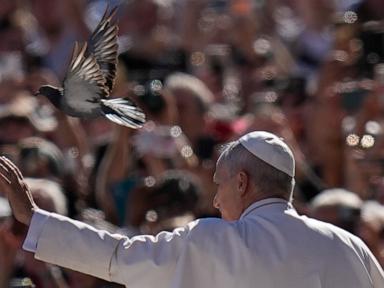
The rain over Paris does not fall; it drifts, a fine silver mist that blurs the grand Haussmann facades into charcoal sketches. Beneath that cold autumn drizzle, inside a sleek, bulletproof glass vehicle idling on the tarmac of Orly Airport, an elderly man in white wool adjusts his spectacles.
He is eighty-two. His lungs are frail, his knees betray him on stone steps, and his schedule is a relentless architecture of handshakes, protocol, and solemn declarations. Yet Pope Benedict XVI is not visiting France merely to inspect cathedrals or sip espresso in the shadow of the Eiffel Tower. He has crossed the border into a nation that has spent centuries institutionalizing a very specific, fiercely guarded form of silence.
France invented laïcité.
To the outside world, laïcité is translated as secularism. But translation strips away the iron bone of it. In the French political lexicon, laïcité is a doctrine of radical public neutrality—a strict, uncompromising wall built to keep religion entirely out of the corridors of statecraft, public schooling, and official civic life. It is the legal mechanism by which the Republic declared that God has no vote in parliament.
For decades, this wall has been absolute. Walk into a French classroom, and you will find no crucifixes. Attend a state function, and you will hear no prayers. The French intellectual tradition, forged in the fires of the Revolution, maintains that freedom from religion is the supreme prerequisite for freedom of thought.
So when the head of the Roman Catholic Church touched down in Paris, it felt less like a diplomatic state visit and more like a tectonic plate shifting beneath the feet of the Enlightenment.
Imagine standing on the steps of the Élysée Palace, watching the dignitaries wait. The air smells of damp wool and exhaust fumes. President Nicolas Sarkozy stands ready to welcome his guest, but the tension in the courtyard is palpable. Sarkozy had previously spoken of a "positive laïcité"—a controversial notion that religion should not be banished from the public square, but rather engaged in dialogue. To orthodox republicans, this was heresy. To the Vatican, it was a long-overdue invitation to breathe.
What happens next is not a theological shouting match. It is a quiet, devastatingly articulate argument about what human beings are actually for.
When Benedict steps to the podium at the Collège des Bernardins—a stunningly vaulted 13th-century monastery turned intellectual hub—he does not talk about dogma, canon law, or papal infallibility. Instead, he speaks of monks.
He takes his audience back to the early Middle Ages, to the collapse of the Roman Empire, to a world of absolute chaos where barbarian hordes trampled ancient libraries and the pillars of civilization cracked in real-time. In that apocalyptic darkness, Christian monks did something profoundly counter-cultural. They sat down in quiet cells and copied manuscripts. They preserved Cicero, Virgil, Plato, and Aristotle. They did not do it to convert anyone. They did it because they believed that the word, the text, and the human intellect mattered. They sought quaerere Deum—to seek God—and in doing so, they inadvertently saved secular culture.
It is a brilliant, disarming rhetorical jujitsu. The Pope is telling the secular elite of France: Your cherished rationalism, your love of literature, your reverence for the intellect? We kept the lights on for you when the world went dark.
He pauses. The historic stone vault swallows the sound.
Then he pivots to the crisis gnawing at the heart of modern Europe. We have built magnificent machines, he notes. We have mastered economies, coded algorithms, split atoms, and mapped genomes. We have constructed a technological powerhouse of unprecedented wealth and efficiency.
And yet, we are starving.
Consider the modern citizen living in a gleaming Parisian banlieue or a high-rise apartment in La Défense. They have access to the sum total of human knowledge via a glowing rectangle in their pocket. They have legal rights, social safety nets, and absolute autonomy.
Yet suicide rates climb. Loneliness is an epidemic disguised as connectivity. People drift through hyper-secularized lives feeling profoundly, terrifyingly disposable.
This is the invisible stake of the Pope's journey. Benedict argues that when a society excises the transcendent, when it reduces human dignity to a mere byproduct of utility or legal contract, it inadvertently opens the door to a chilling utilitarianism. If a human life has no sacred anchor—if we are merely biological accidents shaped by random evolutionary pressures—then what protects the weak, the unborn, the elderly, and the inconvenient when they become economically burdensome?
The silence in the room deepens. These are not abstract theological puzzles for seminary libraries. These are the exact questions haunting bioethics committees across the continent, where debates over euthanasia and genetic engineering press hard against the boundaries of human value.
France listens because it must. Despite its fiercely secular identity, France remains a nation haunted by church spires. Its identity is stitched into stone cathedrals that dominate every medieval village square, even if those pews now sit half-empty on Sunday mornings. The cathedral is still the skyline. The bell still tolls for the dead.
When Benedict appeals for a "respect for the dignity of every human life," he is not just reciting a standard religious talking point. He is issuing a warning flare. He is suggesting that secularism, left entirely to its own devices, risks eating its own children. Without a foundational belief that human beings possess an intrinsic, God-given worth that no government can grant and no dictator can revoke, rights become mere privileges granted by the state—and privileges can always be revoked by the state.
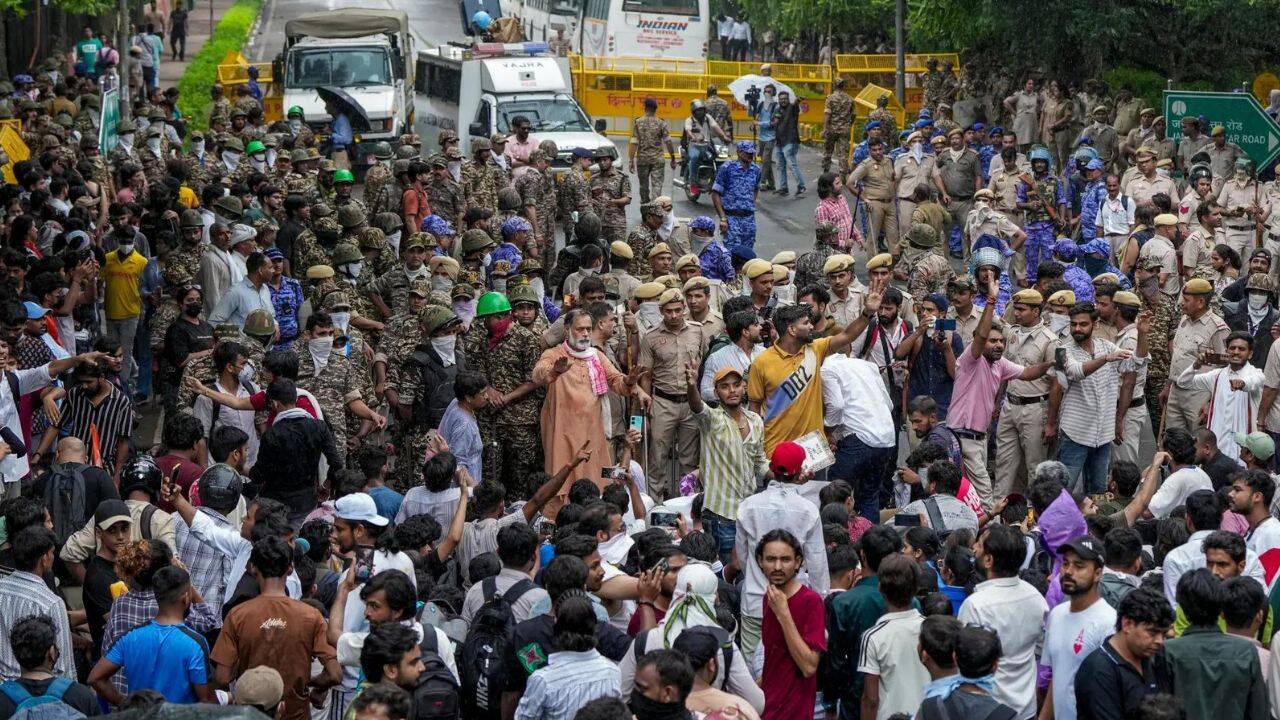
Critics, of course, lined the streets outside. Thousands marched with banners protesting the Vatican's stances on contraception, homosexuality, and the ordination of women. They chanted slogans of bodily autonomy and absolute secular freedom. For them, the papal visit was an unwelcome intrusion of a patriarchal relic into a progressive society that had fought too hard for its emancipation to look backward.
That friction is the engine of the story. It is the eternal tension between the city of man and the city of God, rubbing against each other in the cold Parisian rain.
Yet, as the motorcade winds its way past Notre-Dame—its scarred stone still bearing the memory of centuries—something curious happens in the public discourse. The shouting softens into actual listening.
You see it in the op-eds of Le Monde. You see it in the furrowed brows of philosophers sipping espresso in Saint-Germain-des-Prés. They realize that Benedict is not demanding a return to theocratic rule. He is asking a far more difficult question: Can a secular society sustain its own moral gravity once the historical memory of the sacred fades away?
It is the equivalent of a man pointing out that you are running out of air while standing at the bottom of the ocean. You might hate the man pointing it out. You might wish he would swim away. But you cannot ignore the burning in your chest.
History is rarely changed by shouting matches. It is shifted by moments of profound, unsettling articulation—moments when someone speaks the unspoken anxiety of an entire civilization out loud.
Pope Benedict XVI boarded his Alitalia flight back to Rome a few days later, leaving behind a city that remained just as secular, just as fiercely independent, and just as proud of its revolutionary heritage as it was before he arrived.
The legal walls of laïcité did not crumble. The republic did not bow the knee to Rome.
But something shifted in the quiet spaces underneath. The debate over what it means to be human—to be vulnerable, to be broken, to possess a worth that no government can manufacture—was dragged out of the ecclesiastical shadows and forced back into the blinding daylight of the public square.
And in that light, the old man in white wool left behind an echo that no amount of political machinery could ever quite silence.