The air inside a summit room always smells of the same things: expensive wool, cold mineral water, and the quiet panic of people who realize they cannot buy their way out of physics.
Outside the armored glass, a city hums under the weight of security cordons, motorcades, and the strange, electric tension that precedes a diplomatic collision. Inside, the menu is irrelevant. The silverware is irrelevant. What matters is the quiet geometry of the seating arrangement. Who sits across from whom. Whose shoulders are turned slightly toward the door. And, most importantly, who holds the keys to the invisible architecture running beneath the modern world.
We are watching a slow-motion collision between two tectonic plates, and the friction is measured in watts, microchips, and lines of unwritten code.
Consider what happens when a president travels across an ocean. The cameras catch the handshake on the tarmac, the polite tilt of the head, the translator leaning in close with an earpiece humming. But history is rarely written under the glare of press strobes. It is written in the margins, on the sidelines, in windowless holding rooms where officials trade atomic-level concessions while the world looks the other way.
Right now, those officials are weighing an unusual proposition. On the docket, sitting quietly beneath the heavy diplomatic portfolio of an impending state visit between leaders of the world's two largest superpowers, is a meeting of a different weight entirely.
Artificial intelligence bosses.
Think about the absurdity of that phrase. "AI bosses." Twenty years ago, the phrase would have belonged in a cheap paperback about rogue mainframes. Today, it describes mortals who control clusters of processors larger than small towns, entities whose software decisions ripple through financial markets, military logistics, and the cultural bloodstream of billions before breakfast. These are not diplomats. They are engineers turned emperors of efficiency, summoned to the periphery of a geopolitical summit because the governments that built the modern state realize, with a sudden and chilling clarity, that they no longer fully control the tools they spawned.
To understand why this matters, you have to step away from the podiums and look at the silicon.
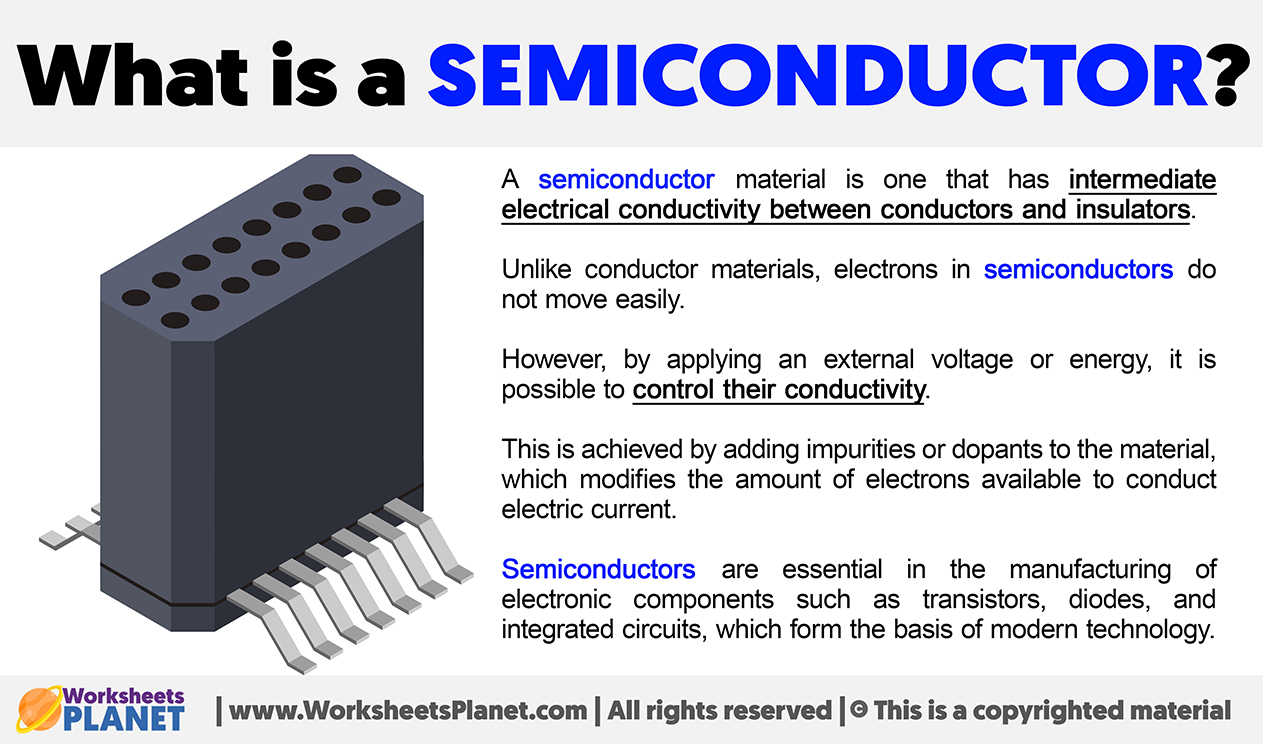
Every modern intelligence model requires energy. Not metaphorical energy, but electrons—surging through copper, cooling in towers of liquid, burning through coal and gas and nuclear fission at a rate that is quietly straining national grids. When a government talks about trade sanctions, export controls, and silicon chokepoints, it sounds abstract. It sounds like spreadsheets and trade tariffs.
It is not. It is a modern blockade.
Imagine trying to build a cathedral, but the only people who know how to carve stone are locked behind a wall, and you control the quarry. That is the US-China tech race in miniature. The United States has spent the last several years tightening the screws on high-end processor exports, trying to starve foreign competitors of the specialized hardware required to train frontier models. China, facing a wall of silicon restrictions, has poured billions into domestic alternatives, re-engineering supply chains, and racing to find architectural workarounds.
Both sides are running toward a cliff. One side is terrified of losing its lead; the other is terrified of never catching up.
And so, the executives are called to the sidelines.
Why the sidelines? Because diplomacy has always operated on two tracks: the public theater and the private market. The leaders of state can sign treaties limiting warheads or lowering tariffs on soybeans, but they cannot code a neural network. They cannot optimize a transformer architecture or negotiate the global supply of extreme ultraviolet lithography machines. They need the people who can.
When government officials weigh a summit of tech leaders during a presidential visit, they are looking for a safety valve. They are looking for a way to draw a red line in a domain where lines change every ninety days.
Let us be honest about the discomfort here. There is something deeply unsettling about unelected architects of digital infrastructure sitting knee-to-knee with heads of state to hash out the rules of the coming century. These are companies built on the ethos of moving fast and breaking things, colliding with nation-states whose entire evolutionary history is rooted in moving slowly and preserving themselves.
The tech executives want market access, predictability, and protection for their intellectual property. They want to know whether their hardware will be seized or their software banned next Tuesday. The officials want leverage, national security guarantees, and a guarantee that the algorithmic infrastructure running their critical services will not have a backdoor engineered in a Shenzhen or Silicon Valley boardroom.
It is a high-stakes poker game played with chips that weigh millions of tons of carbon and trillions of dollars in market capitalization.
We have seen this script before, of course. History rhymes with itself through heavy machinery. In the nineteenth century, it was steel and rail barons whispering into the ears of monarchs and presidents. In the twentieth, it was oil titans and aerospace magnates mapping out the geography of the Cold War. Every great technological leap creates a new class of sovereign actors—people who answer to shareholders and boardrooms while wielding power that rivals traditional sovereignty.
The difference now is the velocity.
Railroads took decades to span a continent. Oil fields took years to develop. But a frontier AI model can be scaled across global cloud infrastructure in a matter of hours, doubling its capability while the ink on a regulatory bill is still drying. The lawmakers are drafting laws for horses while the tech sector is already flying supersonic jets.
This is why the whispers of a sideline meeting between officials and AI leaders carry such immense gravity. It is an admission of limitation. It is the state acknowledging that the boundary between national sovereignty and corporate capability has dissolved into a grey blur.
If the meeting happens, do not expect a joint communiqué filled with soaring rhetoric. Expect carefully worded corporate press releases. Expect stock tickers to twitch. Expect engineers in labs from Beijing to the Bay Area to keep typing, heads down, entirely aware that the rules of their universe are being negotiated a few floors above them by people who only half-understand what a parameter is.
The real narrative of our era is not the rivalry between two flags. It is the race to see whether human institutions can build a cage strong enough to hold the digital intelligence they are currently summoning into existence.
The door of the summit room swings open. The flashbulbs pop for the politicians, but keep your eyes on the quiet ones following close behind, carrying notebooks filled with equations instead of policy papers.
They are the ones writing the next chapter. And the ink is conductive.