The floor was covered in broken glass, old receipts, and the ghosts of bad decisions. When Lynne and Michael Savino first walked through the heavy doors of the old People's State Bank in Detroit, they didn't see a $1.3 million real estate listing. They saw a derelict limestone box that had spent a decade bleeding out in West Corktown.
Built in 1925, the building had lived multiple lives. First came the quiet clink of coin rolls and teller stamps. Then came the collapse, followed by a frantic second act as an after-hours club where underground DJs spun records until dawn. By the time scrappers finished stripping the copper pipes and ripping out the radiators, the structure was little more than a hollowed-out molar in the jaw of a bruised city.
Most people look at ruins and see an ending. The Savinos sold their house in Detroit's Green Acres neighborhood, handed over $66,000 for the abandoned bank and a neighboring bar, and decided to build a life inside a vault.
Consider what happens when you strip away the drywall of modern suburban comfort. You are left with absolute exposure.
In May 2014, long before the space resembled a home, they moved in. There was no kitchen. There was no laundry. There was not even a working shower for the first month. Lynne placed her bed right in the middle of a gritty construction zone, surrounded by raw plywood and industrial dust. When night fell, she listened to the hum of traffic on Michigan Avenue. When morning broke, the sun poured through the grand half-round windows at the top of the room, turning the cavernous emptiness into a cathedral of light.
Survival required logistics and barter. For weeks, Lynne traded home-cooked meals and bottles of wine with friends in exchange for access to their washing machines and hot water heaters. Michael, a cement contractor, spent his days off wrestling with structural realities while Lynne took on the microscopic, tedious agony of restoration.
Take the front entrance, for instance. A heavy copper vestibule had miraculously survived decades of neglect because an illegal club owner had painted over it white. Armed with tiny nut picks, Lynne spent hours meticulously scraping away the paint flecks by hand, uncovering a gleaming metal welcome mat worth a small fortune. That vestibule became a metaphor for the entire property. Underneath the graffiti, the neglect, and the scars of a hollowed-out economy, the architecture was just waiting to breathe again.
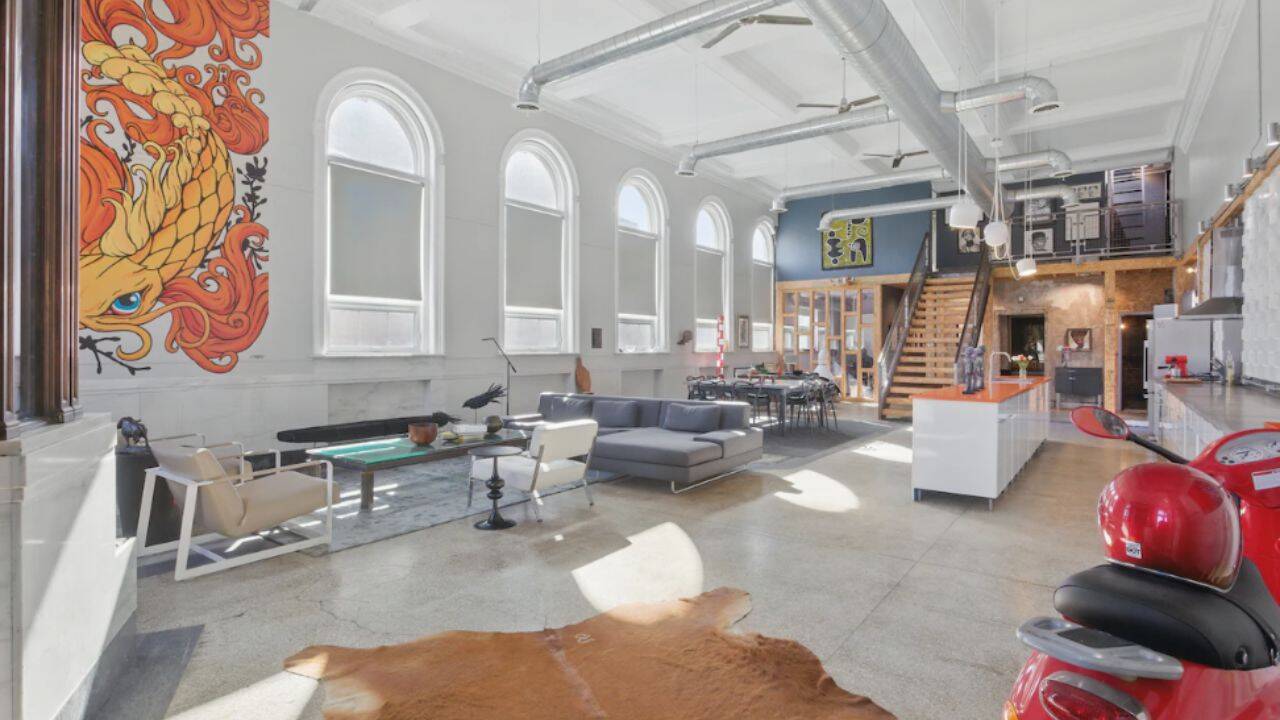
The transformation was slow, stubborn, and deeply personal. They laid out the upstairs loft by taping strips of newspaper to the floor to visualize where the walls would go. They converted the old basement vault into a subterranean wine cellar, storing bottles where bags of cash once rested. They installed a twenty-foot kitchen island and invited local artists like Phybr to paint a sprawling, vibrant koi fish mural across the interior walls.
Thirteen years after picking up the keys, the 3,000-square-foot bank stands as a monument to stubborn human vision. Original marble windowsills still bear the faint, etched signatures of partygoers from decades past. The basement walls still retain flickers of spray paint from the building's underground days.
Now, the building sits on the market with a price tag of $1.3 million. Real estate columns talk about square footage, comps in the Southwest district, and the explosive rebound of Corktown. They measure the success in numbers, percentages, and market valuations.
They miss the point entirely.
The true value of the old bank isn't found in the custom kitchen or the converted security doors. It lives in the memory of cold mornings without a shower, the smell of fresh mortar mixed with old dust, and the radical act of believing that a forgotten shell of a building could hold a home.
The heavy steel doors are gone. But the shelter remains.
Bank converted to home goes up for sale in Michigan
This video provides a visual walkthrough of the unique architectural layout and industrial conversion process of a repurposed commercial building in Michigan.
http://googleusercontent.com/youtube_content/1