The gravel underfoot is dry, baking under a June sun that makes the surrounding suburban perimeter look bleached, almost skeletal. Imagine a young couple standing at the edge of this cleared, undeveloped patch of dirt in Brampton. Let us call them Marcus and Elena. They are real in every sense that matters—mirroring thousands of people across Ontario who spent their weekends checking real estate listings, tracking interest rate cuts, and waiting for a promise made three years ago to materialize into brick and mortar.
They were promised a number. It was a massive, reassuring number: 1.5 million. Recently making news in related news: The Geopolitical Gambit Behind India and Mongolia Strategic Alignment.
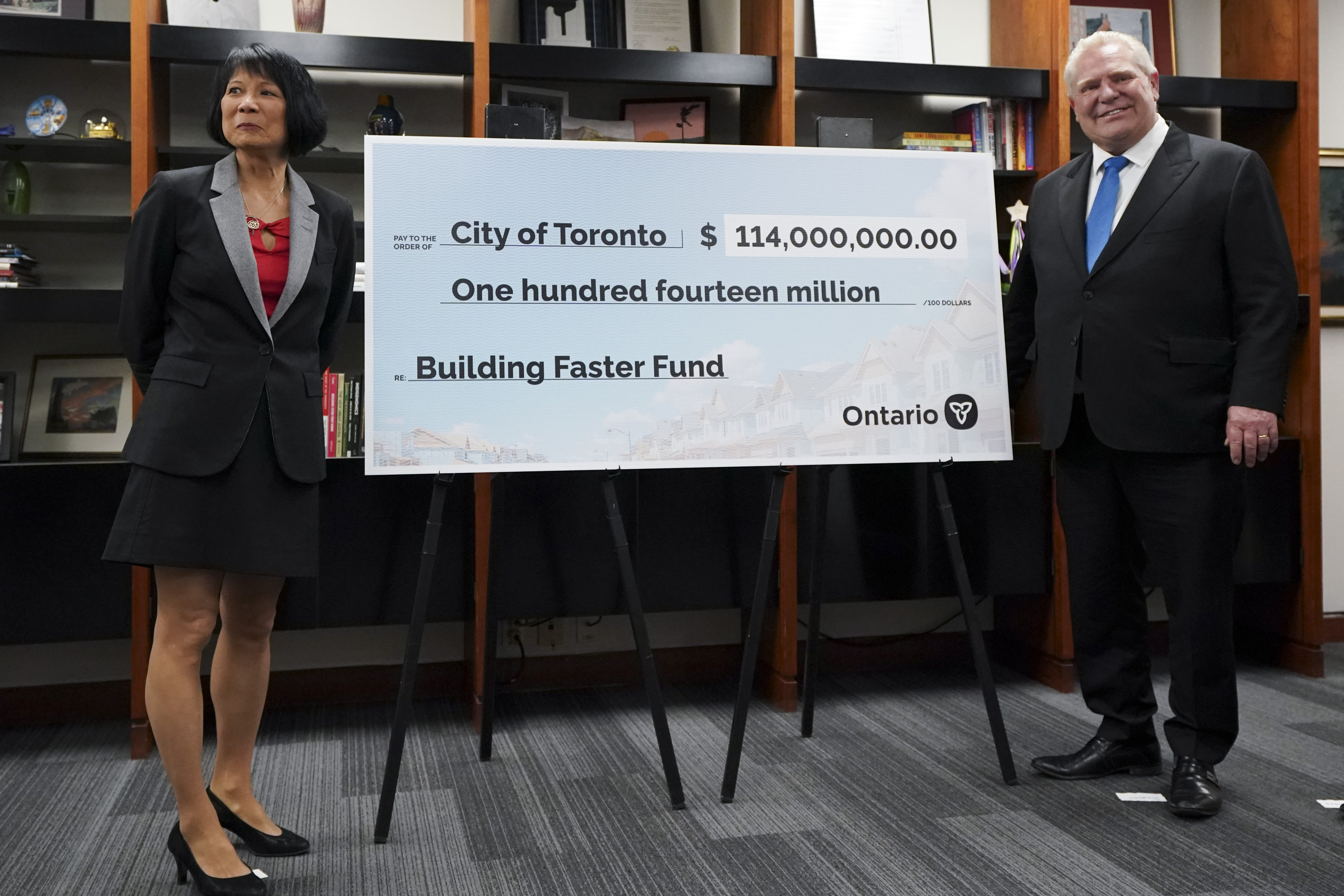
That was the Doug Ford government’s signature pledge, a grand design to build 1.5 million homes across the province by 2031 to rescue a generation priced out of their own lives. To make it happen, the Queen’s Park administration set up a public, digital housing tracker. It was a high-profile scoreboard. If a city hit its target, provincial ministers would arrive with giant, oversized novelty checks funded by the Building Faster Fund, smiling for cameras against backdrops of yellow excavators.
But if you look at that digital tracker today, the screen is frozen. The data stops at 2024. Additional insights regarding the matter are explored by The Guardian.
Behind the glass walls of provincial ministries, the machinery of accountability has gone quiet. When journalists ask whether the tracker will ever be updated again, the government stays mum. The silence is heavy, and it smells of a political retreat.
Moving the Goalposts
To understand why the numbers went dark, you have to look at what constitutes a home in Ontario these days.
When the market began to stall under the weight of high construction costs, the government did not adjust its strategy. It adjusted its vocabulary. The definition of a "new home" began to stretch. Suddenly, a long-term care bed was a home. A student dorm room was a home. A basement apartment or a garden suite pinned to the back of an existing house counted toward that glorious 1.5 million total.
Consider what happens next when even the altered definitions cannot save the narrative. In 2024, despite counting student beds and institutional mattresses, the province still managed to hit only 80 percent of its 125,000-home target for the year.
For 2026, the math dictates the province needs to see 175,000 new housing starts to stay on pace. But the provincial budget tells a radically different story. Instead of scaling up, the government’s internal projections for 2026 housing starts were quietly revised downward from an already low 74,800 units to just 64,800.
A math problem emerges that no amount of political staging can solve. Forty-two percent of the current year has already ticked away on the calendar, yet Ontario has achieved just 15 percent of its annual housing target. The gap between political rhetoric and the physical reality of shovels in the dirt has become a canyon.
The New Vocabulary of Failure
Politicians rarely admit defeat; they change the adjectives. Finance Minister Peter Bethlenfalvy recently shifted the language, reassessing the 1.5 million target as a "soft target." Municipal Affairs and Housing Minister Rob Flack noted that he does not wake up thinking about the 2031 target anymore, choosing instead to focus on the immediate two to three months ahead.
But for people like Marcus and Elena, the target is not soft. It is the literal roof over their heads.
The political defense has been a rotating carousel of blame. First, the blame was laid squarely at the feet of the Bank of Canada. High interest rates were freezing the developers. The Premier promised that once rates dropped, new developments would sprout like mushrooms across the Greater Toronto Area.
The rates dropped. The mushrooms never grew.
Next, the blame shifted down the ladder to municipal bureaucracies. The towns and cities were moving too slowly with permits; development charges were too high. Yet, even as the federal and provincial governments stepped in with initiatives like Bill C-26 to inject $1.7 billion into cutting development fees and expanding HST rebates, the actual construction sector remains paralyzed.
The real problem lies elsewhere. Private developers are facing a historic inventory of unsold units, particularly in the Toronto condominium market, where pre-construction sales dropped to multi-decade lows. Builders are not starting new projects because the economics do not work for them, leaving the province holding a scoreboard it no longer wishes to display.
The Cost of Cold Stats
It is easy to get lost in the sea of percentages, housing starts, and municipal allocations. But the real cost is measured in the quiet, desperate calculations happening at kitchen tables across the province. It is the realization that the life milestones previous generations took for granted—a spare bedroom, a small yard, a place to build equity—are being systematically erased.
The opposition parties have noticed the silence. NDP Leader Marit Stiles pointed out that the lack of data is an admission of policy failure, noting that Ontario is further behind now than it was eight years ago. Liberal MPP Adil Shamji suggested the delay is a calculated move to evade accountability until the public eye moves elsewhere.
Meanwhile, the government continues to hand out checks to cities based on past data, keeping the actual, current trajectory hidden from view. The frozen tracker is a symptom of a deeper malaise: a system that prefers the optics of success to the difficult, transparent work of fixing a broken market.
The gravel lot in Brampton remains empty. The sun goes down, casting long shadows across a landscape that was supposed to be filled with the sounds of hammers and saws. Until the numbers return to the screen, the only thing being built in Ontario is doubt.
For a deeper look into the current state of real estate across the province, you can watch this analysis of How Ontario Homes Are Changing in 2026, which provides direct context on changing buyer preferences and shifting values in this challenging economic market.