Everyone is looking at the wrong fire.
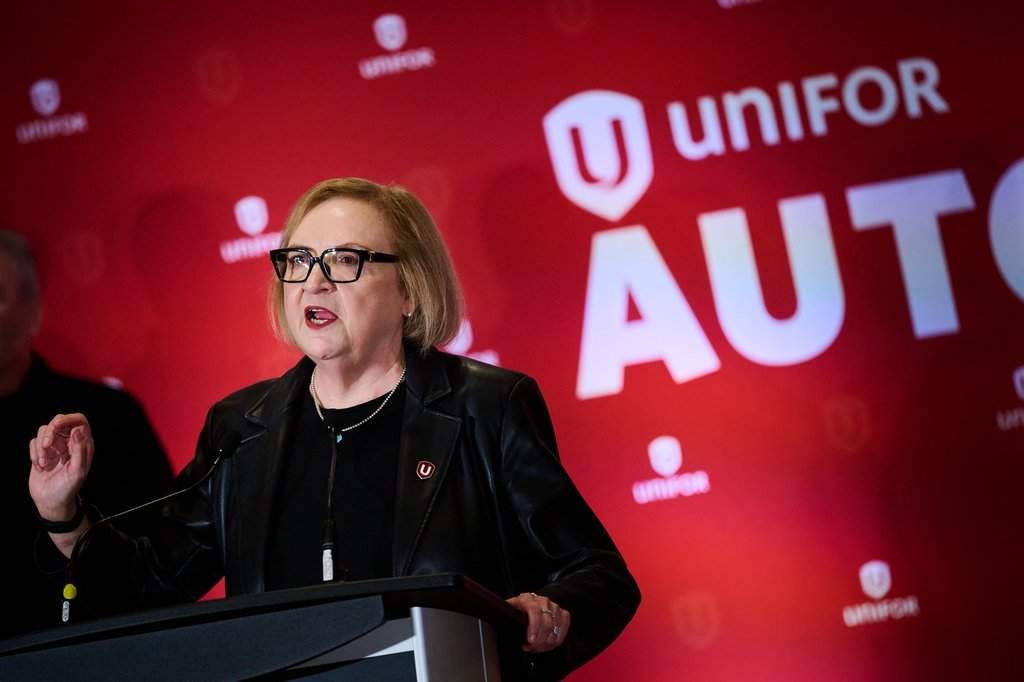
When Unifor sounds the alarm that Stellantis might have quietly offloaded its Brampton Assembly Plant, the press rushes to print the same tired script. Big bad automaker betrays loyal Canadian workers. Broken promises. Corporate secrecy. The usual theater.
Stop falling for the distraction.
Whether Stellantis sold the dirt under Brampton yesterday or plans to padlock the gates tomorrow is entirely beside the point. The real story isn’t a sneaky real estate transaction in Ontario. The real story is that the entire financial math behind North American vehicle assembly has broken down, and both union leadership and legacy executives are pretending they can negotiate their way out of basic economics.
I’ve spent twenty years watching North American manufacturing footprints shrink while press releases promised "historic investments." I’ve sat in boardrooms where executives burned hundreds of millions of dollars retooling legacy plants just to appease political optics, knowing full well the unit economics would never clear a ten percent hurdle rate. Brampton isn't an isolated betrayal. It is a symptom of a structural collapse that nobody in Windsor, Detroit, or Auburn Hills wants to admit out loud.
The Lazy Consensus Around Brampton
The mainstream coverage of Unifor’s suspicion relies on a simple, comforting moral framework. In 2023, Stellantis agreed to retool Brampton for next-generation electric and hybrid vehicles—specifically the next-gen Jeep Compass. Now, delays have piled up, rumors of a property sale are swirling, and Unifor is demanding transparency.
The press treats this as a breach of contract story. They frame it as a question of corporate honesty.
That framing misses the entire chessboard.
Automakers do not spend billions of dollars retooling a three-million-square-foot facility out of charity, nor do they abandon one out of spite. They move capital based on cold, brutal return on invested capital. Right now, the math for building compact and mid-size crossovers in high-cost jurisdictions like Ontario is upside down.
Look at the actual mechanics of a legacy assembly plant:
- Fixed Overhead: A facility like Brampton carries massive legacy maintenance, property tax, and energy costs before a single weld is struck.
- Labor Arbitrage: Even with government subsidies softening the blow, total compensation packages under recent collective bargaining agreements widened the cost-per-vehicle gap against Mexican assembly plants by thousands of dollars.
- Platform Cannibalization: Stellantis is drowning in inventory across North America, slashing shifts in Detroit and Toledo while trying to figure out why American buyers rejected $50,000 Jeeps.
When a company faces existential margin compression, a collective bargaining promise written during the peak of post-pandemic auto profits isn't worth the paper it's printed on. Unifor knows this. Stellantis knows this. The only people acting shocked are the journalists transcribing the press releases.
Why Asking "Did Stellantis Sell Brampton?" Is the Wrong Question
If you are searching for whether Stellantis actually sold the Brampton facility, you are asking the wrong question. Even if Stellantis still holds the deed today, the plant's fate as a high-volume, high-margin anchor of Canadian manufacturing is already compromised.
The better question is: Why would any automaker build low-margin mass-market crossovers in Ontario in 2026?
Let’s look at the numbers without the political spin.
Historically, North American assembly plants survived on high-margin trucks and full-size SUVs. Ford’s Dearborn Truck Plant, GM’s Arlington Assembly, and Stellantis’s Sterling Heights facility print money because a $75,000 pickup truck carries enough gross margin to absorb union wages, complex logistics, and regulatory compliance.
Brampton doesn't build $75,000 trucks. For decades, it built the Chrysler 300, Dodge Charger, and Dodge Challenger—aging platforms whose tooling had been paid off twenty years ago. Those cars were pure cash cows because depreciation costs were virtually zero.
Once Stellantis killed the L-platform muscle cars at the end of 2023, Brampton lost its economic shield. Retooling that plant for a global compact SUV like the Jeep Compass meant suddenly loading billions of dollars in fresh capital depreciation onto a vehicle segment where consumers are intensely price-sensitive.
Imagine a scenario where Stellantis sinks $1.5 billion into Brampton to build a compact Jeep. To break even on that capital expenditure while paying Tier-1 Canadian wages, they have to price the vehicle thousands of dollars higher than a rival crossover built in Toluca, Mexico, or Alabama. Consumers don't care where the weld happened. They care about the monthly payment. If the payment is $80 higher, the car sits on the dealer lot for 140 days until Stellantis is forced to slap $6,000 in cash rebates on the hood, wiping out every dime of profit.
That isn't corporate malice. That is grade-school arithmetic.
The Subsidy Trap Nobody Talks About
Both the Canadian federal government and the Ontario provincial government threw billions of taxpayer dollars at Stellantis and Volkswagen to secure battery plants and retooling commitments. Politicians cut ribbons. Union bosses declared victory.
Here is the dirty secret of automotive subsidies: Subsidies cover capital expenditure, not operating losses.
Governments love writing checks for shiny new robots, bricks, and mortar because it makes for great television. They do not subsidize the ongoing hourly cost of assembling a vehicle over a ten-year product lifecycle.
When market conditions shift—like EV adoption stalling out across North America or interest rates crushing auto loan affordability—those government grants become golden handcuffs. The automaker is trapped in a facility where the upfront cost was discounted, but every single vehicle rolling off the line loses money.
Stellantis CEO leadership—both during Carlos Tavares’s ruthless cost-cutting era and in the messy aftermath of his exit—realized that North American capacity was bloated. You cannot shrink your way to greatness, as the old Detroit saying goes, but you certainly cannot bleed cash on every unit just to keep a legacy footprint intact.
Dismantling the Common Myths Around the Brampton Rumors
Whenever rumors of a plant sale hit the wire, the same three myths dominate the conversation. Let’s clear the deck.
Myth 1: A plant sale means immediate, total liquidation
When automakers sell real estate while keeping operations alive, it is almost always a sale-leaseback transaction. Companies routinely sell industrial properties to real estate investment trusts (REITs) or private equity infrastructure funds to unlock trapped equity on their balance sheet, then lease the building back for ten or twenty years.
If Stellantis sold the Brampton land, it doesn't automatically mean bulldozers are arriving Monday morning. It means the company needed cash liquidity and wanted the real estate off its balance sheet. However, for a union, a sale-leaseback is still a flashing red light. Once an automaker becomes a tenant instead of an owner, its long-term exit costs drop dramatically.
Myth 2: Collective bargaining agreements guarantee plant survival
Unions negotiate investment commitments, not market demand. Every auto contract in North America contains force majeure and market-condition escape hatches. If consumer demand for a specific vehicle evaporates, no union contract can force an automaker to build cars nobody will buy. We saw this at GM’s Lordstown plant in Ohio, and we saw it at Ford’s Oakville complex when they pivoted away from three-row EVs. Contract language buys time; it never buys immunity.
Myth 3: Bringing back gas models will save the plant
A popular counter-argument is that Stellantis simply bet too hard on electric vehicles and just needs to pivot Brampton back to internal combustion engines. That ignores the supply chain reality. You cannot flip a switch on a modern assembly line. Stamping dies, paint shop configurations, battery-tray marriage stations, and supplier tooling take 24 to 36 months to re-engineer. Pivoting a plant mid-retool doesn't save money; it doubles the capital burn.
What Unifor Should Actually Do (And Why They Won't)
If I were advising Unifor’s leadership right now, I would tell them to stop holding press conferences demanding transparency on real estate deeds. Transparency doesn't pay mortgages.
The union’s leverage peaks before the concrete is poured, not after the market turns sour. Right now, Unifor needs to radically shift its strategy from defensive confrontation to ruthless commercial realism.
- Audit the Unit Economics, Not Just the Deed: Demand open-book verification of the landed cost-per-vehicle at Brampton versus Stellantis’s Mexican and U.S. plants. If the cost gap is $2,500 per vehicle, screaming at management won't close it. Identify where the friction actually lives—energy rates, logistics bottlenecks, or work-rule inefficiencies—and attack those specific line items.
- Tie Wage Tiers to Margin Realities: Legacy unions hate two-tier wage structures, and for good reason—they divide the shop floor. But pretending a compact crossover plant can support the exact same labor cost structure as a full-size truck plant is economic suicide. Flexible profit-sharing tied to plant-level productivity keeps doors open when fixed base wages force them shut.
- Force Product Allocation Diversity: Never let a plant rely on a single global platform. Brampton died the first time because it was tied entirely to aging rear-wheel-drive sedans. If Brampton survives, it needs flexible multi-energy architecture capable of running hybrids and gas crossovers down the exact same line without a six-month shutdown.
Of course, there is a massive downside to this approach, and any honest insider will admit it. If a union concedes on fixed labor costs or work rules to save a plant, it sets a precedent that every other automaker in the region will immediately exploit during the next bargaining cycle. Ford and GM would demand the exact same concessions in Oakville, Oshawa, and Ingersoll within forty-eight hours.
That is the trap Unifor is caught in. Protect the wage standard across the sector and risk losing Brampton entirely, or bend the rules to save Brampton and watch the entire Canadian auto wage floor collapse.
The Brutal Reality of North American Auto Manufacturing
The North American auto industry is going through a violent correction that was delayed by pandemic supply shortages and artificially low interest rates. For four years, automakers convinced themselves they had permanent pricing power. They raised average transaction prices past $48,000, loaded vehicles with expensive tech nobody asked for, and signed record labor contracts assuming the gravy train would never stop.
The gravy train derailed.
Consumers are tapped out. Subprime auto delinquencies are at multi-decade highs. Chinese automakers are eating European and South American market share alive, starving legacy giants like Stellantis of the global profits they used to rely on to subsidize North American restructuring.
Look at Stellantis’s broader footprint. They aren't picking on Ontario. They have slashed shifts in Michigan, delayed battery plants across Europe, and watched their North American market share bleed out to Toyota, Honda, and Hyundai—companies that overwhelmingly build their North American vehicles in non-union plants across the American South where energy is cheap, land is abundant, and operational flexibility is absolute.
When Unifor points a finger at Stellantis over Brampton, they are pointing at the symptom while ignoring the disease. A company fighting for its financial life does not care about optics, political goodwill, or historical loyalty to a manufacturing town. It cares about survival.
Brampton isn't being dismantled in secret because Stellantis executives are villains. It’s in jeopardy because the numbers no longer work, and nobody at the bargaining table has the courage to say it first.