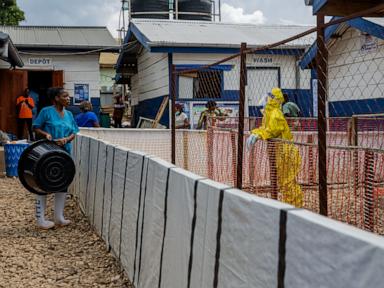
Red dust clings to the soles of your boots long before you reach the clinic gate. In eastern and central Congo, the air smells of woodsmoke, damp earth, and the sharp tang of chlorine misted over threshold mats. You see the numbers on a clipboard first—case counts, contact tracing ratios, fatality percentages—and if you are not careful, those tidy columns trick you into believing the danger ends the moment a patient either walks out or is sealed inside a body bag.
It doesn't.
When Ebola flares in the Democratic Republic of the Congo, the virus attacks blood vessels, organs, and trust all at once. Yet the deepest wounds often linger after the fever breaks, sitting quietly inside kitchens, courtyards, and sleepless rooms where nobody thinks to take a temperature. Grief, stripped of its ordinary rituals, turns heavy and strange. Families are asked to do the hardest thing human beings can be asked to do when someone they love dies: step back, keep distance, let strangers in white suits handle the final farewell.
I have stood in dusty compounds where the quiet after a funeral felt unnatural, almost like a held breath. Neighbors who usually brought pots of cassava leaves or sang through the night stood ten paces away, waving a hand instead of embracing a mother whose youngest child had just been taken to an isolation ward. Anyone who has watched a tight-knit community fracture under fear knows how quickly sorrow curdles into isolation.
When Mourning Is Interrupted
To understand why the mental health toll rises alongside every Ebola flare-up, picture a hypothetical family in North Kivu—let's call the mother Chantal and her twelve-year-old son, Elie. This family is a composite invented to illustrate real patterns documented by public health workers and psychologists across Congolese outbreaks, not a report on a specific real household.
In Chantal's neighborhood, washing a loved one's body, dressing them in clean cloth, and gathering kin to weep side by side are not mere customs. They are how the living help one another carry an unbearable weight. During an Ebola outbreak, bodily fluids of someone who has died carry high viral loads, making traditional burial practices one of the sharpest sparks for onward transmission. Safe and dignified burials—teams trained to bury bodies safely while honoring family wishes where possible—save lives.
Still, knowing a rule is not the same as living inside it.
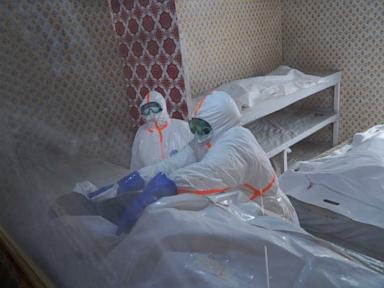
When Elie's aunt dies at a treatment center, Chantal is told she cannot touch her sister's face or hold her hand one last time. Later, when Elie develops a high fever and vomiting, an ambulance with flashing lights pulls up outside their compound. Responders in full personal protective equipment—goggles, masks, double gloves, hoods that hiss with every breath—step out. To an adult who has heard radio broadcasts, those suits signal protection. To a frightened child or a grieving elder, a faceless white figure arriving in the night can feel like an invasion.
Consider what happens next: Elie recovers after weeks of intensive care and monoclonal antibody treatment, walking out of the ward alive. Relief floods Chantal's chest. Then they walk home, and the neighbors cross the street. Some worry that even a survivor carries lingering risk; others whisper blame, accusing the family of bringing trouble to the street. Survivor stigma hits with a cruelty all its own. You survive a terrifying illness, only to find your own community treats you like a ghost.
The Invisible Aftershocks in the Mind
Public health briefings naturally prioritize containment: isolating suspected cases, tracing contacts over a twenty-one-day incubation window, vaccinating rings of exposed people. Those steps are essential. Without them, chains of transmission keep running.
But the human nervous system does not run on a twenty-one-day epidemiological clock.
Think of grief as a river that normally carves a wide, shared channel through a village—everyone rowing together, everyone knowing the bends. An outbreak dumps boulders across that channel. Mourners cannot gather as they normally would, cannot lean on elders in the usual way, and often carry a quiet, corrosive guilt: Did I bring it home from the market? Did I wait too long to seek care? Why am I breathing when they are not?
Over weeks and months, that unprocessed sorrow can harden into persistent anxiety, intrusive memories, depression, or numbness. Some people stop sleeping, jumping at the sound of a motorbikes' engine outside because sirens and white vans have rewired their sense of safety. Others withdraw into silence, eating less, speaking less, tending gardens with hollow eyes. Children who lost a parent or spent weeks in isolation may cling fiercely to caregivers or lash out in ways adults struggle to decode.
Even frontline health workers and burial team members carry heavy invisible baggage. Wearing heavy gear in tropical heat is exhausting enough; watching patients bleed, comfort, or die while knowing a single slip could endanger your own children creates a constant hum of dread. When community members shout anger at responders out of fear and grief, the people trying to stop the outbreak absorb that hostility too.
I will admit something candidly: talking about mental health in the middle of an active infectious disease emergency can sound abstract—or even secondary—when people are worried about survival today. When a family is trying to afford food, avoid armed insecurity, and keep a fever from turning fatal, asking about emotional well-being can feel distant if it is framed as clinical jargon.
Real care looks much simpler and more grounded than textbook terminology. It looks like a trusted local counselor sitting on a woven mat, listening without rushing. It looks like community leaders helping neighbors welcome survivors back so nobody has to eat alone. It looks like psychological first aid woven into clinic follow-ups, not tacked on as an afterthought years later.
Why Trust Is the Real Antidote
If fear is the gasoline in an outbreak, trust is the water that keeps it from spreading.
Over decades of responses in the Democratic Republic of the Congo, health teams have learned a hard lesson: top-down commands delivered by outsiders rarely win hearts. When messages come from respected local nurses, community elders, religious leaders, and survivors who have walked the road themselves, people listen differently.
A metaphor helps here, provided we keep it honest. Imagine a house with a drafty door and a smoky stove. You can keep shouting at the smoke to leave, or you can sit by the fire with the people inside, understand why they are afraid to open the door to strangers, and fix the latch together. That image is only a sketch of human behavior, not a cure-all, because outbreaks unfold amid real economic strain, displacement, and fragile health infrastructure—problems no conversation alone can erase.
Yet when responders treat grief with respect rather than impatience, something shifts. Asking a family how they want to remember someone within safe burial boundaries turns a cold medical procedure into an act of shared dignity. Offering clear, honest updates about a loved one inside a treatment unit—and letting relatives see or speak with them safely when possible—eases the terror of the unknown.
What You Can Carry Forward
You may never set foot in Kinshasa, Goma, or a rural health zone in Equateur or North Kivu. You may be reading this on a quiet morning far from any epidemic zone.
Still, the story connects to something universal. Whenever crisis strikes—whether an infectious disease, a sudden loss, or a community upheaval—we tend to measure recovery by visible metrics: fewer cases, reopened doors, headlines moving on. Emotional recovery moves on a slower tide.
If you want to support organizations working on infectious disease response and community mental health in the Democratic Republic of the Congo and similar settings, look for groups that pair medical containment with local psychosocial support and survivor reintegration. Pay attention to how stories about outbreaks are told, too. Reducing a whole region to numbers or sensational panic flattens the people living through it.
Listen.
Behind every outbreak statistic is someone replaying a final goodbye in their mind, wondering if they are allowed to grieve out loud—and waiting for someone to say, without hesitation, that their sorrow matters just as much as the case count.