Think the latest geopolitical flare-up in the Middle East is just a headline that won't touch your daily life? Think again. The United Nations just dropped a reality check on the global economy, and it hits much closer to home than you realize.
In its latest World Economic Situation and Prospects mid-year update, the UN lowered its forecast for global economic growth in 2026. The headline numbers look dry on paper. Global GDP growth is now projected to hit a sluggish 2.5%, down from the 2.7% predicted back in January. If things get worse, that number could plummet to 2.1%. Outside of the pandemic and the 2008 crash, we are looking at one of the weakest economic expansions of this century.
Why should you care? Because this isn't just an abstract math problem for central bankers. The driving force behind this downgrade is a severe energy shock that is quietly driving up the price of everything you buy, from the food on your dinner table to the gas in your car.
The Straight Line From the Strait of Hormuz to Your Local Grocery Store
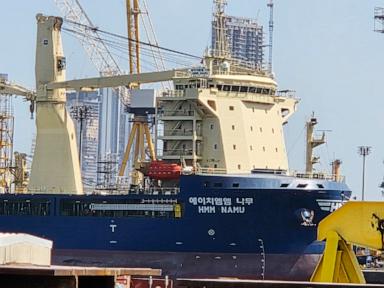
The root of this economic slowdown tracks back to recent airstrikes involving Iran, which led to a near-total blockade of the Strait of Hormuz. If you aren't familiar with global shipping lanes, just know that this tiny stretch of water is the throat of the global energy market. When it gets choked, the entire world gasps for air.
Most news reports focus entirely on oil prices when this happens. Sure, crude is spiking, and Brent oil is sticking around uncomfortable highs. But focusing only on gasoline misses the bigger crisis.
The Strait of Hormuz isn't just an oil highway. It's a critical route for liquefied natural gas and, crucially, petrochemicals like fertilizer. Shantanu Mukherjee, the UN director of economic analysis, pointed out that the skyrocketing prices of refinery products are directly crippling industrial production and commercial transport.
When fertilizer shipments stall, farming costs skyrocket. The World Bank noted a massive 31% surge in fertilizer prices this year, driven by a spike in urea. Farmers can't just absorb those costs. They pass them down the chain. That means the real consequence of a closed shipping lane in the Middle East is a direct inflation spike on food shelves in Chicago, London, and Tokyo.
The Disinflation Illusion is Officially Over
For the past couple of years, central banks have been taking victory laps. They told us inflation was cooling and that we were on a steady path back to normal. The UN report proves that was wishful thinking. The crisis has completely broken the global disinflation trend.
Worse, the pain isn't distributed evenly. The UN highlights a brutal double standard between rich and developing nations.
In wealthy developed nations, inflation is ticking up from 2.6% to a projected 2.9% this year. It's annoying, but manageable. But in developing countries, inflation is accelerating from 4.2% to a painful 5.2%. Higher costs for basic imported goods and transportation are eating real incomes alive.
Western Asia is bearing the brunt of the immediate damage, where economic growth is projected to plunge from 3.6% down to a miserable 1.4%. But the ripple effects are moving fast.
Let's look at how the world's biggest economic engines are holding up under this pressure.
- The United States: Standing relatively steady with a 2.0% growth forecast. Strong household demand and massive tech investment keep it afloat, but expensive gasoline is eating away at consumer confidence.
- China: Growth is moderating down to 4.6%. Sizable strategic energy reserves and a diversified energy mix provide a temporary shield, but weak domestic demand makes it vulnerable.
- Europe and the UK: Highly exposed. The region relies heavily on imported energy. The EU growth forecast has been dragged down to 1.1%, while Britain is staring at a dismal 0.7% growth projection.
Tech and Jobs Aren't Saving Us This Time
There is a weird paradox in the economic data right now. Labor markets look solid, consumer spending hasn't totally cratered, and money is pouring into artificial intelligence tech infrastructure. The UN report acknowledges that AI-driven trade and investment are providing a mattress for the economy to fall on.
But don't mistake a soft mattress for a cure.
Tech investments create localized stock market booms, but they don't lower the cost of shipping a container of goods across the ocean. High energy costs act like a hidden tax on every single business. When a company has to pay 20% more to keep its factories running and its trucks moving, it stops hiring. It pauses expansion plans.
We are already seeing this play out. While tech companies brag about productivity gains, overall employment growth in major economies is lagging. The cushion provided by the AI boom simply isn't big enough to offset the massive weight of a global energy crisis.
How to Protect Your Own Finances Right Now
Waiting for international diplomacy to clear up shipping lanes isn't a strategy. You need to adjust to an economic environment where growth is slow and prices stay sticky.
First, stop expecting interest rates to drop significantly anytime soon. Central banks can't lower rates when inflation is creeping back up. If you've been putting off locking in a fixed rate on debt or a mortgage hoping for a massive drop in interest rates, you might want to rethink that timeline.
Second, audit your business or household transport costs. Energy volatility is here to stay for the rest of 2026. If your business relies heavily on physical logistics, look at optimizing routes or locking in fuel contracts now before another headline sends oil back over $100 a barrel.
Finally, watch the input costs, not just the final prices. Keep a close eye on agricultural and energy commodities. When fertilizer and industrial inputs rise, retail prices follow roughly three to six months later. Spotting those trends early tells you exactly when to tighten your budget before the grocery store forces you to.

