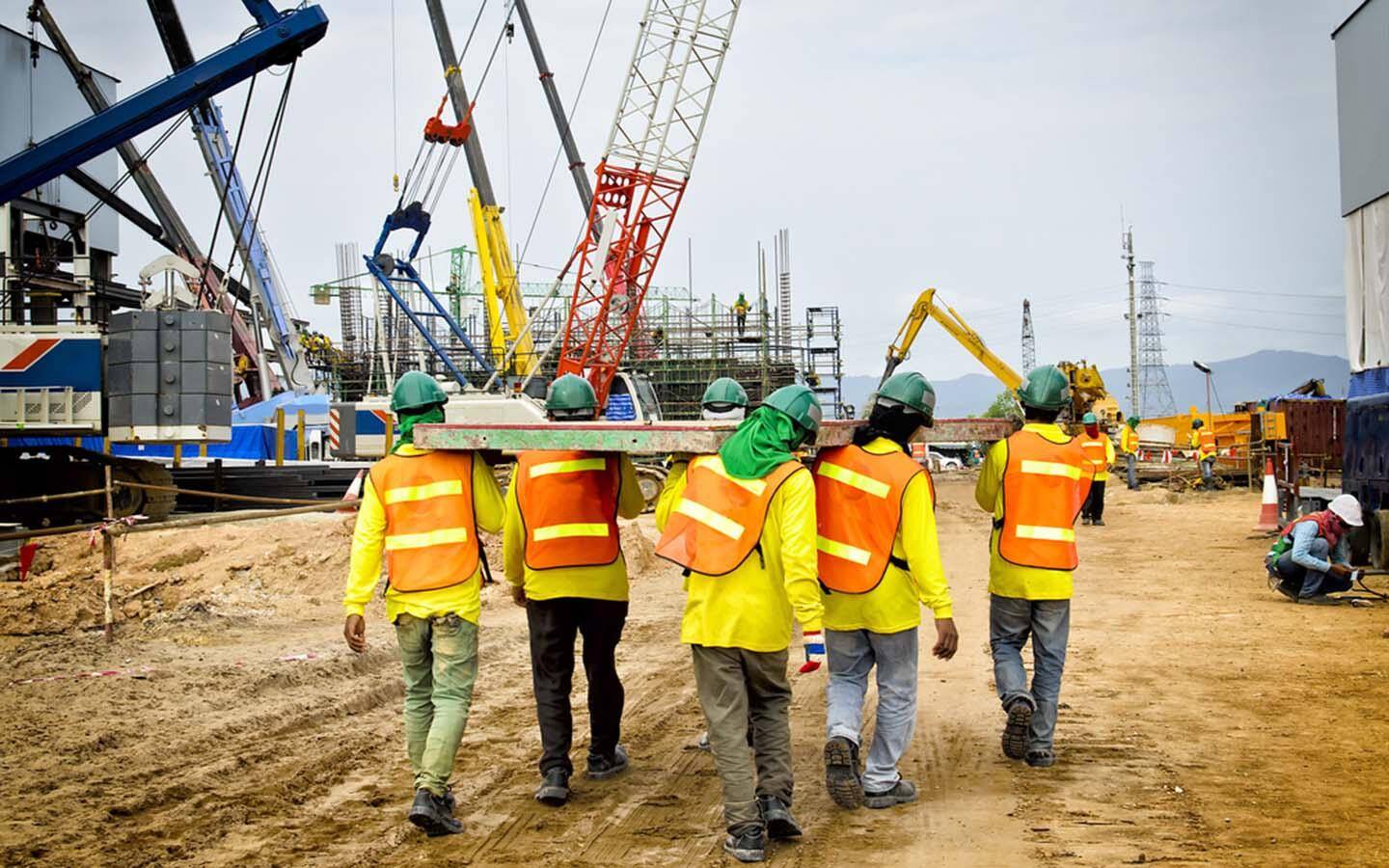
Every summer, the Gulf compliance industry executes a perfectly choreographed performance. The Ministry of Human Resources and Emiratisation (MoHRE) announces the annual midday work break. Headlines flash warnings of Dh50,000 fines for non-compliant employers. Human resources departments rush out press releases touting their corporate social responsibility. Activists celebrate a victory for human rights.
It is an annual exercise in collective self-delusion. You might also find this related coverage interesting: Why Britain Wants to Tear Up the Rulebook for Chatbots giving Financial Advice.
The blanket midday break—which bars outdoor work between 12:30 PM and 3:00 PM from mid-June to mid-September—is an operational band-aid. It does not solve heat stress. In many cases, it makes the physical toll on construction and logistical laborers worse.
By prioritizing rigid calendar dates over dynamic thermodynamics, and optics over operational reality, the current framework creates a false sense of security while actively compounding the dangers of industrial labor in extreme climates. As highlighted in recent articles by Investopedia, the implications are widespread.
I have spent fifteen years managing large-scale industrial projects across the Middle East. I have looked at the spreadsheets, managed the shift rotations, and stood on the pouring decks when the ambient temperature hits 48°C. The corporate consensus on this rule is lazy, superficial, and wrong.
The Split-Shift Trap: Extending the Exhaustion Window
The most glaring flaw in the midday break rule is the assumption that taking a two-and-a-half-hour break in the middle of the day equals rest. It does not. It creates a logistical nightmare known as the split shift.
Consider the basic math of a laborer's day under this regulation.
A standard shift cannot simply stop and disappear. Because the project deadlines do not move, the lost two and a half hours must be recovered. Employers push the morning shift earlier—often starting at 4:00 AM—and extend the evening shift long into the night.
What looks like a protective rest window on paper actually stretches the worker’s portal-to-portal day into a grueling 14- to 16-hour marathon.
The logistics of labor transport in the UAE mean workers are not heading back to high-quality, air-conditioned accommodation blocks during this 150-minute window. Labor accommodation camps in areas like Jebel Ali, Sonapur, or Mussafah are often a 45-minute to one-hour bus ride each way from prime construction zones in downtown hubs. Sending thousands of workers back to camp for a two-hour break is logistically impossible and economically ruinous.
Instead, workers spend the midday break in temporary on-site rest areas. While regulations mandate shaded spaces with cooling fans or air conditioning units, the microclimate inside a temporary structure sitting on baked concrete under a 50°C sun is brutal.
Instead of resting, workers endure prolonged exposure to elevated temperatures, extended wakefulness, and chronic sleep deprivation. They are trapped on-site for longer hours, burning metabolic energy just trying to stay cool in a static environment, before being pushed back onto the scaffolding to make up for lost time.
The Chronobiology Fallacy and the Wet-Bulb Illusion
The midday break assumes that the sun is the only enemy and that the hours between 12:30 PM and 3:00 PM are uniquely dangerous. This ignores basic meteorological science.
Thermal stress on the human body is not dictated by a clock. It is dictated by the Wet-Bulb Globe Temperature (WBGT), a composite index that accounts for temperature, humidity, wind speed, and solar radiation.
In the Arabian Gulf, peak ambient temperature does frequently occur in the early afternoon. However, peak relative humidity typically spikes in the late afternoon and early evening as the sea breeze shifts.
When humidity climbs to 80% at 4:30 PM, the human body loses its ability to cool itself through the evaporation of sweat. A worker returning to a high-intensity task at 3:05 PM, when the sun is slightly lower but the humidity is soaring, faces a higher risk of heat stroke than they did at noon when the air was dry.
Furthermore, climate change has rendered a fixed June-to-September calendar obsolete. Deadly thermal conditions regularly manifest in May and persist well into October. By treating heat safety as a seasonal switch that turns on June 15 and off September 15, the regulatory framework blinds companies to the acute dangers present during the shoulder months.
The Math of the Fine: Why Dh50,000 is Just the Cost of Doing Business
The media loves to trumpet the maximum fine of Dh50,000 for non-compliance. It sounds punitive. It sounds like a real deterrent.
To a Tier-3 subcontractor scraping by on razor-thin margins, that fine can be devastating. But to the Tier-1 contractors handling multi-billion dollar infrastructure, hospitality, and residential mega-projects, it is a rounding error.
Let’s look at the financial mechanics of a concrete pour. On a massive structural project, halting a continuous concrete pour because the clock struck 12:30 PM can cause structural defects, ruin millions of dirhams worth of material, and trigger liquidated damages from the developer that dwarf any regulatory fine.
If a contractor faces a choice between a Dh50,000 regulatory penalty and a Dh500,000 delay penalty from a developer, the economic incentive is clear. They will run the shift, take the fine, and instruct their legal or accounting department to absorb it as a project contingency cost.
The current system inadvertently penalizes the wrong entities. Smaller firms that cannot afford the fine are forced to squeeze their workers harder during allowed hours, accelerating their pace of work to unsustainable levels before and after the blackout period. Meanwhile, the largest players can afford to pay for non-compliance when scheduling milestones demand it.
The Fatal Hazards of the Shifting Night Economy
To circumvent the midday restrictions completely, an increasing number of projects have transitioned to heavy night-shift operations during the summer months. The consensus view is that this is a safer, more humane alternative.
The reality on the ground tells a darker story.
Moving heavy construction entirely to the night shift introduces a fresh suite of occupational hazards that are frequently more lethal than heat stress.
First, industrial illumination is rarely a perfect substitute for daylight. Poorly lit job sites lead to misjudged distances, increased crushing injuries involving heavy machinery, and fatal falls from scaffolding.
Second, the human body is governed by circadian rhythms. Forcing thousands of laborers to rapidly invert their sleep-wake cycles without transitional periods destroys cognitive function. Sleep deprivation impairs judgment, slows reaction times, and leads to catastrophic human error.
When you combine a fatigued worker, a poorly lit environment, and heavy machinery, you are not improving safety; you are trading heat exhaustion for blunt force trauma.
A Dangerous Lack of Individual Nuance
The blanket ban operates on the flawed premise that all outdoor work carries equal metabolic risk. It treats a worker operating a mechanized crane inside a shaded cab the exact same way it treats a worker manually tying rebar on an exposed roof deck.
By applying an identical rule across the board, the policy fails to incentivize the adoption of mechanical aids. If a company invests heavily in automated systems, exoskeletons, or remote-controlled machinery that drastically lowers the metabolic load on the worker, they are still forced to shut down operations for two and a half hours.
Conversely, the rule does nothing to address high-metabolic work performed outside the banned hours. A worker lifting heavy blocks at 10:00 AM under a high workload can experience higher core body temperatures than a worker performing light duties at 1:00 PM. The focus must shift from the clock to the workload.
Moving Beyond the Clock: A Dynamic Thermal Management Protocol
If the midday break is a blunt instrument that causes secondary operational failures, what is the alternative?
We must abandon the calendar and the clock completely. The path forward requires a shift to a dynamic, data-driven thermal management protocol.
| Metric | Current Fixed Approach | Proposed Dynamic Approach |
|---|---|---|
| Trigger | Calendar Date (June 15 - Sept 15) | Real-time Wet-Bulb Globe Temperature (WBGT) |
| Rest Structure | Single 2.5-hour block | Short, frequent hourly micro-breaks based on exertion |
| Monitoring | Periodic site inspections | Wearable biometric sensors measuring core heat metrics |
| Fines | Flat fee per worker up to a cap | Escalate based on corporate revenue and physiological data |
Instead of relying on a government decree to stop work at 12:30 PM, sites should be mandated to install automated weather stations that calculate the WBGT every fifteen minutes. When the WBGT crosses specific thresholds, mandatory work-to-rest ratios must be enforced instantly.
If the WBGT reaches a critical level at 10:00 AM on a humid day in May, work must stop or slow down immediately. If a dry wind keeps the WBGT safe at 1:00 PM in July, work should be allowed to continue, provided workers are given short, frequent micro-breaks rather than one massive, disruptive block.
Science proves that short, frequent rests (e.g., 15 minutes of rest every 45 minutes of work) are exponentially more effective at lowering core body temperature and preventing cumulative heat strain than a single long break after hours of continuous exposure.
Furthermore, the industry must transition to biometric monitoring. The technology exists to embed heat-index and heart-rate sensors into standard wearable PPE. Instead of guessing how a population of thousands is coping with the weather, safety managers can receive real-time alerts when an individual worker's physiological metrics indicate imminent heat exhaustion.
The downsides to this approach are obvious: it is harder to police, it requires upfront capital investment, and it destroys the predictable scheduling that corporate executives love. It forces developers to accept variable project timelines based on the weather, much like the aviation industry accepts delays based on atmospheric conditions.
But if the goal is truly the preservation of human life and worker health, rather than the generation of positive public relations copy, we must stop hiding behind the compliance shield of the midday break. The current system is comfortable for bureaucrats and profitable for corporate lawyers. For the person standing on the concrete, it is a failure.
Stop watching the clock. Start measuring the strain.