Silence.
That is the thing nobody tells you about the aftermath of gunfire in a concrete room—not the deafening crack of the nine-millimeter, which the brain mercifully compresses into a dull thud, nor the screaming that comes thirty seconds later, but the absolute, suffocating vacuum that hangs in the air right after the last shell casing stops spinning on the linoleum.
If you have ever stood in a township tavern in Soweto or a cramped lounge on the Cape Flats just before midnight on a Saturday, you know the exact texture of the air before that silence falls. It smells of spilled Castle Lager, damp wool, cheap menthol cigarettes, and the sharp, metallic tang of fried chicken grease cooling on a back-room stove. It is a soundscape of overlapping basslines—amapiano log drums thumping against corrugated iron walls—and the loud, theatrical laughter of people trying to forget that Monday morning exists.
Then, the door kicks open.
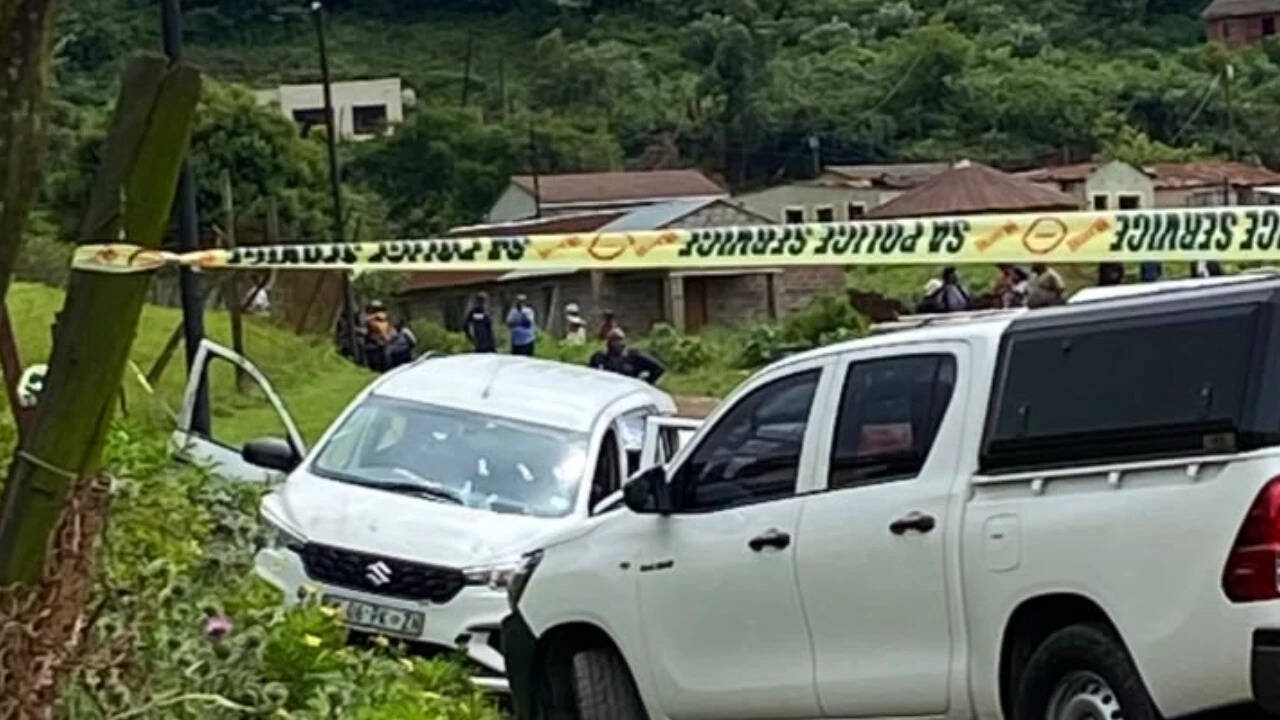
In the span of a single rotation of the earth, seventeen people died across two separate mass shootings in South Africa. Seventeen. On a news ticker, that number occupies less than half an inch of screen space, sandwiched between a weather alert for the Western Cape and a fluctuation in the rand. We read the headline, wince for a fraction of a second, and scroll down to see who won the rugby match. We have become fluent in the shorthand of tragedy.
To understand what those twenty-four hours actually mean, you have to strip away the sterile vocabulary of police press briefings and look at the invisible architecture of fear that now governs everyday life from Johannesburg to Gqeberha.
The Anatomy of an Ordinary Night
Consider a composite figure—let us call him Sipho, though his name changes depending on which province you visit. Sipho is thirty-four, works logistics at a warehouse outside Johannesburg, and sends forty percent of his paycheck home to his mother in Limpopo. On a Friday or Saturday night, he does not go to a high-end club in Sandton; he walks three blocks from his rented backroom to the local shebeen. It is his living room. It is where he debates football, where he negotiates side-hustle plumbing jobs, and where, for three hours, he is not a number on a payroll sheet.
Now, picture the mechanics of how that sanctuary collapses.
In both of the shootings that shattered that twenty-four-hour window, the pattern was chillingly familiar to anyone who tracks violent crime in the country. Men arrive in unmarked vehicles—often white Toyota Quantums or battered sedans with cloned plates. They carry high-caliber rifles alongside standard handguns. They do not ask for wallets. They do not empty the cash register behind the metal security cage. They simply open fire into the crowd, spraying bullets indiscriminately across plastic tables and cinderblock walls before vanishing back into the unlit labyrinth of informal settlements.
Why? That is the question that keeps criminologists, grieving mothers, and beat cops awake at three in the morning.
When seventeen lives are extinguished across two provinces in less than a day, the public naturally looks for a single, cinematic villain—a cartel boss, a political assassination plot, a sudden explosion of madness. The truth is far more mundane and infinitely harder to uproot. South Africa is currently drowning in a confluence of three distinct crises: an ocean of illegal firearms, the fracturing of local extortion rackets, and a criminal justice system that has effectively lost its deterrent teeth.
Think of the country’s illicit gun market like a slow-motion flood behind a cracked dam. For decades, weapons have leaked into civilian hands from two primary pipelines: porous borders with neighboring states still clearing out Cold War-era caches, and—far more damningly—corruption within South Africa’s own security apparatus. Thousands of firearms meant to be destroyed or locked in police armories have walked out the back doors of precincts, sold for the price of a used smartphone to street-level syndicates. When an automatic rifle costs less than a month’s rent in a suburban flat, every neighborhood turf dispute instantly escalates from a fistfight to a massacre.
The Geography of Grief
You cannot measure the impact of seventeen deaths by counting coffins. You measure it by counting the empty chairs at kitchen tables six months later, and the sudden, silent alterations in how millions of survivors move through their own neighborhoods.
When I spent time reporting in communities hit by similar tavern massacres over the past three years, the most striking detail was never the crime scene tape. It was the grocery stores at four in the afternoon. Usually, the hour before dusk is the loudest, most vibrant time in any South African township—children kicking flattened soda cans in the dust, commuters spilling out of minibus taxis, vendors shouting prices over the hum of generators. After a mass shooting, that hour empties out. By five o'clock, steel shutters slam down over spaza shop windows. Curtains are drawn tight. Streets that should be pulsing with life look like abandoned movie sets.
This is the invisible tax of violent crime. Economists love to calculate the cost of violence in terms of lost GDP, broken supply chains, and foreign investment jitters. They rarely calculate the psychological paralysis of a mother who has to decide whether to let her teenage son walk ten minutes to a neighbor's house to borrow a textbook, knowing that stray bullets do not respect property lines.
Let us be completely honest about what is happening here, because polite euphemisms do nobody any favors. South Africa records roughly seventy-five murders every single day. Let that sink in. Seventy-five. On an average Tuesday, without a single headline-grabbing mass shooting, more people are killed in the country than died in both of those viral twenty-four-hour attacks combined.
Why, then, do these two clusters of violence feel like a breaking point?
Because mass shootings violate the unspoken rules of survival that ordinary citizens rely on to stay sane. People in high-crime areas develop an intricate, exhausting mental calculus to navigate danger. You don't wear jewelry on the train. You don't walk alone after dark. You don't flash cash at the ATM. You tell yourself that if you follow the rules, if you keep your head down and mind your own business, the storm will pass over your roof.
A gunman kicking open the door of a neighborhood bar and firing blindly into a crowd of strangers destroys that illusion of control. It announces, in the loudest possible terms, that there are no safe zones, no rules of engagement, and no immunity for the innocent.
Follow the Money, Find the Trigger
To understand why gunmen are suddenly spraying crowds without bothering to rob them, you have to look at the business model of modern South African crime.
Over the last decade, organized crime in the country has pivoted from high-risk, one-off heists—like cash-in-transit bombings—to low-risk, recurring revenue streams. Chief among them is the "protection" racket. Across townships in Gauteng, KwaZulu-Natal, and the Western Cape, armed groups routinely demand a monthly cut from tavern owners, hair salons, construction sites, and even street-side meat vendors.
It works like a dark mirror of municipal taxation. Pay the fee, and your business stays open. Refuse, or pay a rival faction instead, and your establishment becomes a target.
In many of these mass shootings, the patrons drinking at the bar are not the intended victims at all; they are collateral damage in a brutal negotiation between extortionists and business owners. By turning a bustling tavern into a morgue, a syndicate sends an unmistakable message to every other shopkeeper within a five-mile radius: This is what happens when you don't pay. It is economic terrorism dressed up as gang warfare, and it thrives in the vacuum left behind by an under-resourced, demoralized police service.
Consider the numbers behind the badge. In several of South Africa’s most densely populated precincts, the ratio of police officers to citizens sits well below international standards, exacerbated by broken patrol vehicles, forensic backlogs at national laboratories, and a conviction rate for murder that hovers around a dismal fifteen percent. When a shooter knows there is an eighty-five percent chance they will never spend a single day in a prison cell, the law ceases to be a wall. It becomes a chalk line on the pavement—easily stepped over, washed away by the next rain.
The Myth of the Quick Fix
Whenever the death toll spikes like this, the political theater begins right on schedule. Ministers fly in with motorcades. Condolences are offered into clusters of microphones. Promises are made to deploy tactical response teams, set up roadblocks, and "leave no stone unturned."
Three weeks later, the tactical teams are rotated to the next hotspot, the cameras pack up, and the community is left alone with the trauma and the shell casings.
We have gotten the solution to this crisis completely backward because we keep treating an institutional collapse as a public relations emergency. You cannot police your way out of a gun epidemic with weekend blitzes and press conferences. If South Africa wants to stop counting its dead in multiples of ten every Sunday morning, the response has to happen in the unglamorous, fluorescent-lit corridors of state bureaucracy, far away from the television cameras.
First, it requires a ruthless, forensic audit of state armories and private security stockpiles, backed by mandatory prison sentences for any officer or official caught leaking weapons to the street. Every illegal gun on a township corner started its life as a legal firearm manufactured in a licensed factory. Cutting off the supply means prosecuting the suits and uniforms facilitating the leak, not just arresting the nineteen-year-old kid holding the rifle.
Second, intelligence-led policing has to replace reactive patrolling. Driving a police van down a main road with blue lights flashing does nothing to stop an extortion syndicate operating through encrypted messaging apps and burner phones. Dismantling protection rackets requires dedicated financial crime units tracking illicit cash flows, protecting whistleblowers who are currently left to fend for themselves, and guaranteeing that witnesses actually survive long enough to testify in court.
Finally, there is the harder, slower work of repairing the social fabric that makes a young man view a stolen handgun as his only viable career path. When youth unemployment hovers above forty-five percent, entire generations are locked out of the formal economy before they ever get a chance to prove their worth. A society that offers millions of young men zero stake in its future should not be surprised when some of them decide to burn down the present.
What Remains When the Sirens Fade
It is easy, sitting miles away from the yellow tape, to let these stories blur into background noise. Outrage has a short half-life in the digital age, and tomorrow there will be another crisis, another scandal, another number to scroll past.
But before you move on, picture that concrete room again.
Think about the bartender sweeping shattered brown glass into a dustpan at dawn, scrubbing dark stains out of the grout with bleach and cold water because the tavern has to open at noon if he wants to feed his kids. Think about the mother sitting on the edge of a plastic chair outside a state mortuary in the gray morning light, clutching a laminated ID book in both hands, waiting for an orderly to call her name so she can identify a face she has known since the day it took its first breath.
Seventeen people walked out their front doors expecting nothing more extraordinary than a cold drink, a familiar song, and the company of neighbors. None of them knew they were stepping onto the front lines of a war their country still refuses to admit it is fighting.
Until the living refuse to accept that silence as normal, the sweeping will never stop.