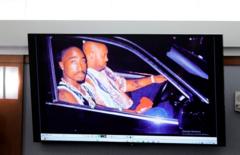
Every anniversary of Tupac Shakur’s death brings the same predictable ritual. Media outlets dust off archival footage of Las Vegas, witnesses step up decades late with cinematic soundbites about hell breaking loose on the Strip, and the public gorges on another serving of true crime theatre. The recent trial surrounding Duane Davis has only accelerated this addiction. The lazy consensus says we are finally getting justice, that the gears of the legal system are slowly grinding toward truth, and that closing this chapter will heal a wound in hip-hop history.
It is a comforting illusion. It is also completely wrong.
We are not watching a pursuit of historical accuracy. We are watching a multi-million-dollar entertainment ecosystem desperately trying to wrap a messy, systemic tragedy into a neat, Hollywood-approved courtroom package.
The Fallacy Of The Smoking Gun
The entire narrative of the Tupac murder trial rests on a fundamental misunderstanding of how street violence operated in the mid-1990s. The mainstream media treats the September 1996 shooting outside the MGM Grand as an isolated anomaly driven by a sudden personal beef over a medallion snatching earlier that night. Witnesses testify about chaos, gunshots ringing out from a white Cadillac, and immediate panic.
That framing misses the forest for the trees.
The shooting was not a spontaneous eruption of gangster rage. It was the predictable terminal velocity of an unchecked corporate and street war fueled by neglect, institutional indifference, and the exploitation of real human beings for commercial gain. When investigators and journalists focus solely on who pulled the trigger or who handed the gun across the console of a car, they absolve the broader ecosystem that allowed the conflict to escalate unchecked for months.
I have watched music industry executives and media syndicates milk this tragedy for decades while acting as detached spectators. They love the drama of the courtroom because it keeps the focus on individuals—a convenient scapegoat—rather than the structural rot of an era where young men were treated as disposable marketing collateral.
Why Now Matters Less Than You Think
Let us look at the timing. Decades pass, memories blur, key players die, and suddenly law enforcement secures an indictment. The public treats this longevity as persistence.
It is not persistence. It is opportunistic convenience.
When a case lingers for nearly thirty years, the value of the truth depreciates while the value of the spectacle skyrockets. By the time witnesses take the stand in their twilight years, their testimonies are filtered through decades of media saturation, documentaries, podcasts, and personal incentives. To accept modern courtroom testimony as unadulterated historical fact is an insult to basic epistemology.
People ask why it took so long to arrest someone if the evidence was supposedly sitting there all along. The premise of the question is flawed. It assumes the system was actively, tirelessly working to solve the murder the entire time. The reality is much harsher: law enforcement cared very little about solving homicides within the inner-city music community of the 1990s until those homicides could be repackaged into lucrative true-crime content for a suburban audience decades later.
Dismantling The Myth Of Closure
Society has an unhealthy fetish for closure. We believe that every open wound requires a guilty verdict, a gavel slam, and a press conference to heal.
It does not work that way.
Putting an aging man on trial in Clark County does not rewrite the history of Death Row Records. It does not bring back a generational talent whose life was cut short at twenty-five. More importantly, it does not fix the modern entertainment complex that continues to commodify trauma, violence, and premature death for clicks, streams, and algorithmic engagement.
If you want to understand why Tupac Shakur died, stop looking at the backseat of a Cadillac in Las Vegas. Look at the culture that watched two coasts turn a creative golden age into a fatal corporate turf war and cheered from the sidelines because the record sales were astronomical.
We are obsessed with the mechanics of the crime because confronting the economics of the culture is too uncomfortable. A courtroom drama gives us villains we can boo and a narrative arc with a beginning, middle, and anticipated end. Real life is messier, more systemic, and far more damning to the people who profited off the chaos then and profit off the nostalgia now.
Stop waiting for a legal verdict to validate what was obvious in 1996. The trial is not about justice. It is the final box office run for a tragedy that the culture refuses to let die because the profits are still too good to walk away from.