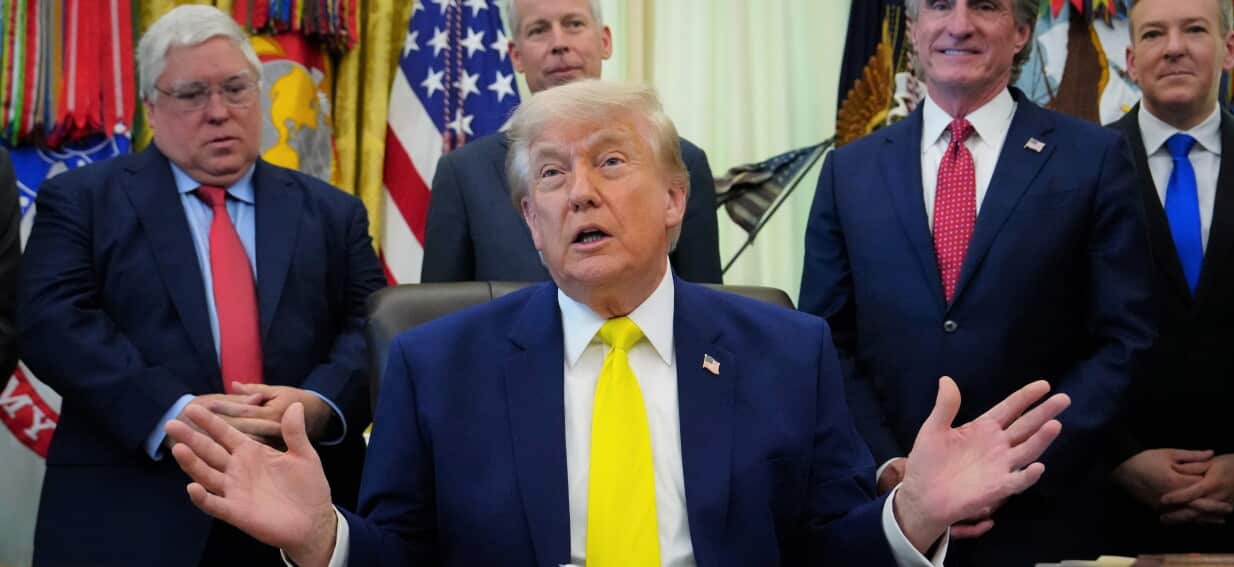
The White House just picked a massive fight with California, and it is using a Cold War-era military law to do it.
President Donald Trump announced a major federal intervention to revive the American coal industry. The headline shocker for West Coast residents is a $75 million taxpayer handout to construct a brand-new marine export hub right on the waterfront in Oakland, California.
If you think a deep-blue city like Oakland would never agree to become a shipping hub for the dirtiest fossil fuel on the planet, you are exactly right. Local leaders and activists have spent more than a decade fighting this exact project in court. But the administration is trying to bypass local democracy entirely by declaring a national energy emergency.
Here is what is actually happening behind the scenes, why the federal government is stepping in, and what it means for the economy and the environment.
The Secret Weapon Invoking the Defense Production Act
To understand how a president can suddenly fund a coal terminal in a city that despises it, look at the 1950 Defense Production Act. This law lets the executive branch control domestic industry for national security purposes. Trump is using it to push an $800 million package into coal infrastructure nationwide.
The administration argues that the explosive growth of artificial intelligence data centers is pushing the American electric grid to the brink. Tech companies need immense amounts of electricity right now. While tech firms love to talk about solar and wind power, the White House says those sources cannot scale fast enough to meet the demand.
That is why the federal plan includes $425 million to prop up 13 existing coal plants across 10 states and another $185 million to build two brand-new coal plants in Alaska and West Virginia.
But a revival needs a marketplace, and that is where the Oakland project comes in.
Breaking the West Coast Supply Chain Bottleneck
America still has vast reserves of coal sitting in states like Wyoming and Montana. The problem is not digging it up. The problem is moving it.
Asian markets, particularly Japan and Taiwan, still buy hundreds of millions of tons of coal. For years, Western governors have complained that they cannot get their product across the Pacific Ocean because liberal West Coast states refuse to build the necessary ports. Oregon, Washington, and California have consistently blocked fossil fuel terminals on environmental grounds.
The $75 million federal injection targets the West Gateway project, a long-delayed plan by developer Phil Tagami and the Oakland Bulk and Oversized Terminal company. The site sits on the city's former Army Base right by the San Francisco Bay shoreline.
Federal officials want this port to handle up to 12 million tons of coal per year. Uncovered rail cars would haul the fuel from the mountain West straight through California neighborhoods to ships waiting at the docks. Wyoming Governor Mark Gordon explicitly thanked the president at the press conference, noting that opening the Oakland port is essential for the economic survival of his state's mines.
What Most People Get Wrong About the Costs
The political rhetoric claims this move will lower utility bills for regular families, but the raw economics say otherwise. Building and operating coal infrastructure is simply more expensive than maintaining existing natural gas lines or installing utility-scale solar and wind arrays.
Market forces, not just government regulations, have spent the last two decades crushing the coal industry. Power companies transitioned to cheaper alternatives because they made financial sense. Forcing these aging facilities to stay open costs money.
Legal experts are already questioning where the money for this rollout is coming from. The administration is pulling from funds originally passed by Congress for clean energy technologies, converting them into fossil fuel subsidies. This setup guarantees an immediate, messy wave of lawsuits from environmental groups and state attorneys general.
The Real Health Risks for West Oakland Residents
For the people living near the port, this is not an abstract debate about data centers or global trade. It is a direct threat to the air they breathe.
West Oakland is already heavily burdened by industrial pollution from the nearby highway infrastructure and existing shipping operations. Organizations like Earthjustice and San Francisco Baykeeper point out that local air quality districts have spent millions of dollars trying to drive down diesel particulate matter and emissions in this exact neighborhood.
Bringing in millions of tons of coal means bringing in coal dust. When coal moves in uncovered trains, fine black dust escapes into the air, settling on homes, playgrounds, and lungs. Long-term exposure to this particulate matter correlates heavily with spiked rates of asthma, cardiovascular disease, and respiratory failure.
Local community leaders who have successfully blocked the terminal for over ten years feel completely blindsided by the use of wartime powers to override municipal zoning laws.
The Upcoming Legal War
Do not expect bulldozers to start rolling in Oakland tomorrow. The administration claims the project will break ground this summer and finish by 2028, but that timeline ignores the reality of California regulatory litigation.
Local advocacy groups and the state of California will challenge every single permit, environmental impact report, and the legal validity of using the Defense Production Act for this purpose. If you want to watch how this unfolds, keep your eyes on the federal courts in Northern California.
The immediate next step will be the filing of injunctions to freeze the transfer of the $75 million in federal funds. If the courts grant those injunctions, the project will stall out before a single rail car arrives.