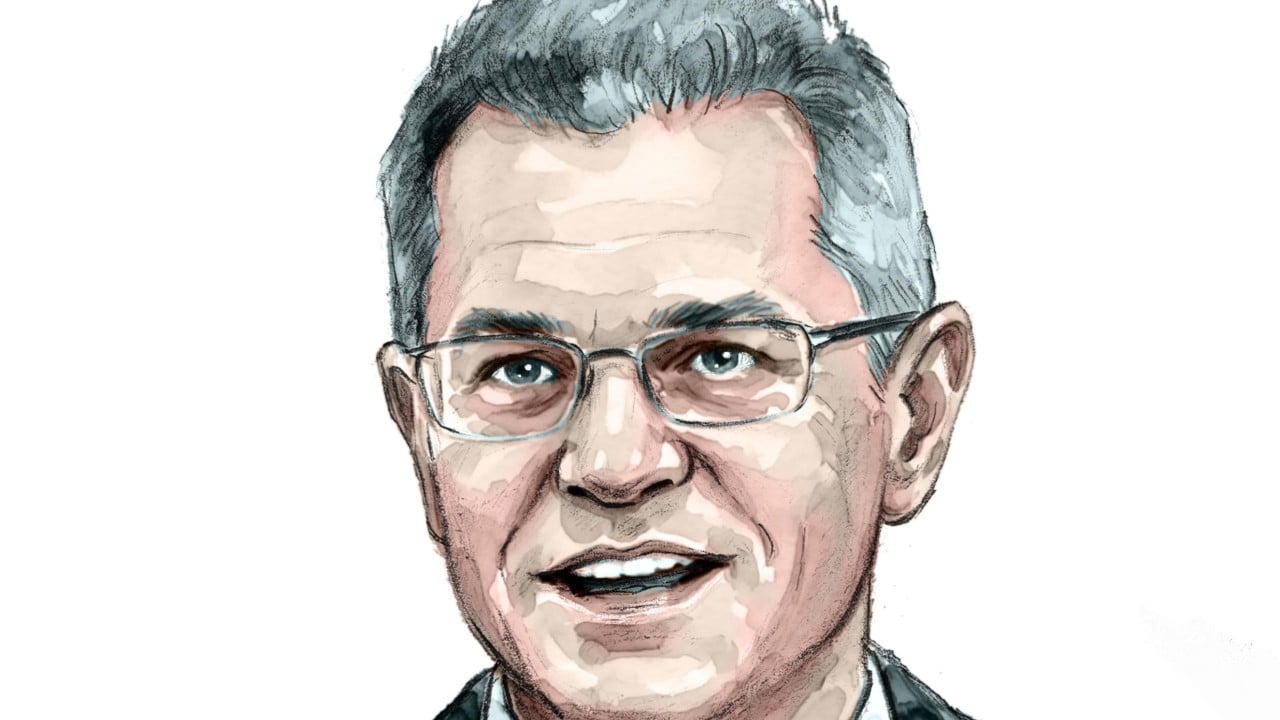
Foreign policy commentators love a dramatic breakup story. Right now, the favorite narrative across European think tanks and international summits—championed heavily by figures like former UN General Assembly President Vuk Jeremić—is that the transatlantic alliance is fracturing beyond repair, forcing Europe to "adjust" to a multipolar world while hedging between Washington and Beijing.
It sounds sophisticated. It plays well at conferences in Davos and Belgrade. And it misses the structural reality of global power.
Europe is not fracturing away from the United States to become an independent pole in a multipolar order. Rather, the current friction between Washington and Brussels is the predictable growing pain of a subordinate partner realizing it has zero structural leverage—security, energy, or technological—to actually go it alone.
The Illusion of "Strategic Autonomy"
When diplomats like Vuk Jeremić analyze the strains between the US and Europe, they often frame it as a symmetric divergence of interests. According to this consensus view, Washington is becoming more unilateral and protectionist, leaving Europe with no choice but to pursue "strategic autonomy" and maintain open economic channels with China.
Look at the actual balance sheets, though, and that autonomy evaporates.
- Security Architecture: Despite years of rhetoric from Paris and Brussels about a European defense pillar, European NATO members still rely entirely on the US nuclear umbrella, American satellite intelligence, heavy airlift, and command-and-control infrastructure. When war returned to the European continent in Ukraine, European capitals did not turn to a unified EU defense force; they expanded NATO and bought American F-35s and Patriot missile systems.
- Energy Reality: Before 2022, Europe’s industrial model relied on cheap Russian pipeline gas. Today, it relies heavily on American liquefied natural gas (LNG). You do not achieve geopolitical independence by trading dependence on Moscow for dependence on Houston.
- Capital and Tech: Europe has produced virtually no sovereign hyperscale cloud providers, dominant AI foundation models, or domestic semiconductor foundries capable of competing at the leading edge. European data lives on American servers; European venture capital increasingly exits to American buyers.
You cannot have a multipolar foreign policy on a unipolar balance sheet. Calling the current US-EU tension a "fracture" implies two tectonic plates drifting apart on equal terms. In reality, it is a landlord raising the rent on a tenant who has nowhere else to move.
Misreading the EU-China Triangle
The second major blind spot in the mainstream multipolar commentary is the idea that Europe can serve as a balancing bridge—or at least a neutral commercial third party—between the United States and China.
Proponents of this view argue that Europe should resist American pressure to "de-risk" from Beijing because European exporters need the Chinese market. German automakers, French luxury conglomerates, and European chemical giants certainly want that to be true.
The economics, however, have fundamentally inverted.
For two decades, the EU-China relationship was complementary: Europe sold high-end machinery, cars, and industrial components to China, and China sold low-cost consumer goods to Europe. That era is over. Under Beijing’s state-backed industrial policy, China has moved aggressively up the value chain into electric vehicles, batteries, solar panels, wind turbines, and industrial robotics—the exact sectors that form the backbone of European manufacturing.
China is no longer Europe’s customer; it is Europe’s primary industrial competitor.
When Brussels imposes tariffs on Chinese electric vehicles, it is not merely bowing to pressure from Washington. It is attempting to prevent the deindustrialization of Central Europe. Analysts who frame EU-China tensions primarily as collateral damage from US-China rivalry ignore the fact that Beijing’s export-driven overcapacity threatens European factories far more directly than it threatens American ones, simply because manufacturing accounts for a much larger share of the European economy.
Why "Multipolarity" Is a Flattering Euphemism
"Adjusting to a multipolar world" has become the ultimate diplomatic cliché, frequently invoked by middle-power statesmen to suggest that Western dominance is fading into a neat, balanced concert of nations.
Vuk Jeremić and other observers of Eurasian geopolitics often point to the rise of BRICS+, the growing assertiveness of the Global South, and the relative decline of Western share in global GDP as proof that we have entered a multipolar era.
This confuses economic diffusion with geopolitical polarity.
In international relations theory—specifically the structural realism of Kenneth Waltz and John Mearsheimer—polarity is not measured by how many countries have growing middle classes or seat-at-the-table diplomatic summits. It is measured by the distribution of hard military, financial, and technological power capable of projecting force globally.
By those metrics, the world is not multipolar. It is an asymmetric bipolar system contested between the United States and China, surrounded by middle powers—Europe, India, Russia, Japan, Brazil, and the Gulf states—that possess regional weight and tactical veto power, but cannot independently set global systemic rules.
Consider what happens in a crisis:
- Financial Chokepoints: When global liquidity freezes, central banks do not ask for swap lines from the European Central Bank or the People's Bank of China. They ask the Federal Reserve.
- Maritime Security: When Houthi militants disrupt global shipping in the Red Sea—a chokepoint vital to European trade—Europe’s naval mission (Operation Aspides) operates with limited defensive rules of engagement, while the heavy strike capability remains overwhelmingly American.
- Supply Chain Coercion: When export controls are deployed over advanced lithography (ASML in the Netherlands) or rare earth processing (China), European firms find themselves caught between Washington's extraterritorial legal reach and Beijing's resource dominance.
Framing this environment as "multipolar" flatters middle powers into believing they have agency to play great powers off against one another. In practice, middle powers rarely get to play the referee; they get squeezed in the clinch.
Answering the Wrong Question
Most policy discussions ask: How can Europe balance its relationship between the United States and China?
That question assumes Europe has the internal political cohesion to act as a unitary geopolitical actor. It does not.
The European Union is a regulatory superpower and a trade bloc, not a federal state. Its foreign policy requires unanimity among 27 member states with wildly divergent threat perceptions:
- Poland and the Baltic states view Washington as their sole existential guarantor against Russian aggression and have zero appetite for antagonizing the White House to please Paris or Berlin.
- Hungary and Slovakia actively court Chinese investment and maintain diplomatic channels with Moscow, routinely blocking or watering down unified EU statements.
- Germany remains torn between its security reliance on the US and the legacy lobbying of its export-dependent industrial conglomerates in China.
- France pushes rhetorical independence while lacking the fiscal capacity to underwrite European security on its own.
Imagine a scenario where Washington demands strict alignment on semiconductor export controls to China, while Beijing threatens retaliatory tariffs on European agricultural and automotive exports. Brussels does not respond with a unified grand strategy. It responds with months of bureaucratic infighting, watered-down compromises, and bilateral side-deals by individual prime ministers flying to Beijing or Washington with corporate delegations in tow.
The real question is not how Europe balances the US and China. The real question is how European nations manage their internal fragmentation while operating inside an American security perimeter that is becoming more transactional.
The Transactional Reality of the Transatlantic Alliance
What commentators interpret as a "fracture" in US-Europe relations is actually a transition from ideological alliance to transactional partnership.
During the Cold War and the unipolar moment of the 1990s, Washington was willing to absorb asymmetric costs—tolerating European trade surpluses, underfunded European militaries, and regulatory friction—because keeping Western Europe stable and aligned was the top strategic priority.
Today, Washington’s strategic bandwidth is consumed by systemic competition with China, domestic industrial policy, and fiscal constraints. Consequently, US administrations—regardless of party—treat European allies less like protected dependents and more like junior partners expected to pay their own way and align on core strategic technologies.
Europeans dislike the bluntness of this shift, and diplomats like Jeremić rightly note the growing frustration in European capitals over American industrial subsidies (like the Inflation Reduction Act) and unilateral tariffs. Yet frustration is not divorce.
The Trade-Off Nobody Wants to Admit
Even a clear-eyed, unsentimental alignment with Washington carries severe downsides for Europe—and pretending otherwise is dishonest.
- Industrial Hollowing: Aligning with US export controls and decoupling agendas cuts European firms off from lucrative revenue streams in Asia, reducing the R&D capital they need to stay competitive globally.
- Policy Subordination: Accepting the American security umbrella means accepting that Washington ultimately holds veto power over Europe’s strategic red lines, from Middle East diplomacy to technology standards.
- Internal Populist Backlash: Higher energy costs, increased defense spending, and trade friction feed domestic political instability across European democracies, empowering nationalist parties that oppose both Brussels and Washington.
Choosing alignment hurts. Choosing true independence, however, would require European voters to accept massive cuts to welfare states to fund a multi-trillion-euro military-industrial complex, nuclear deterrence, and sovereign tech stack—a political impossibility in aging European democracies.
Stop Mistaking Friction for Freedom
The pundit class will continue to dissect every speech at the Munich Security Conference and every diplomatic snub as proof that the West is splitting apart and a new multipolar harmony is emerging.
Watch what states actually do, not what diplomats say at panels. Look at where European defense budgets are spent, where European sovereign wealth and pension funds are invested, where European energy ships from, and which security guarantees keep European borders intact.
Europe is not breaking away from America to join a multipolar world; it is arguing over the terms of a contract it cannot afford to cancel.