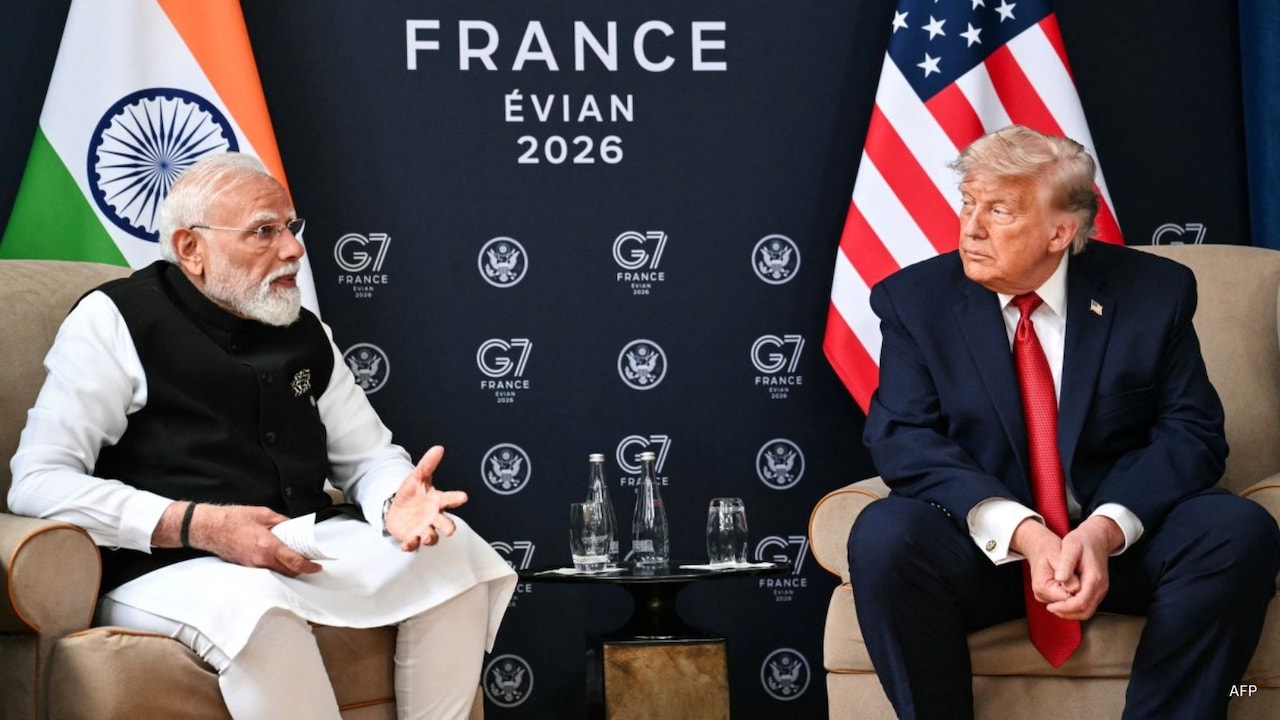
Foreign policy under populist leadership functions not as an optimization of long-standing institutional treaties, but as an optimization of personal rapport. When Donald Trump singled out Indian Prime Minister Narendra Modi and Chinese President Xi Jinping as the foreign leaders he respects most, mainstream commentary treated the remarks as standard rhetorical performance. This misinterprets the operational code of transactional diplomacy. These selections reveal a systematic preference framework based on two variables: the capacity for absolute sovereign control and an explicit commitment to economic zero-sum negotiation.
By deconstructing these relationships through political science and game theory, we can map the exact criteria that govern this worldview, exposing the underlying mechanics of modern bilateral statecraft.
The Sovereign Maximization Metric
The foundational criterion for status in this geopolitical framework is domestic executive dominance. Leaders who operate within highly decentralized, coalition-dependent, or strictly rule-bound constitutional systems are treated as fundamentally weak partners because they cannot guarantee the execution of a personal agreement. Conversely, leaders who have centralized authority are viewed as highly competent counterparties.
- Xi Jinping and 'All Business' Realism: The description of Xi as "all business" reflects an appreciation for streamlined decision-making structures. In a centralized state, policy formulation bypasses parliamentary friction, judicial review, and electoral cycles. For a transactional leader, this eliminates the primary variable of political uncertainty: ratification risk.
- Narendra Modi and the 'Tough Cookie' Paradox: The characterization of Modi as a "very tough cookie" who looks "like an angel" but operates with absolute tactical resolve highlights the premium placed on asymmetric negotiation styles. Modi possesses a distinct asset class in international relations: massive domestic electoral capital that allows him to execute structural policy shifts without risking systemic collapse.
This creates a distinct hierarchy of statecraft. Institutional democracies with rotating, short-term leadership are devalued because their commitments are structurally temporary. Centralized actors are prioritized because their policy trajectories are stable, predictable, and fully backed by state power.
The Payoff Matrix of Asymmetric Alignment
Traditional alliances are built on multilateral frameworks like NATO or the Quad, which rely on diffuse mutual defense clauses and shared ideological platforms. The populist operational model replaces these networks with discrete, bilateral transactions. This can be understood through a classic payoff matrix where cooperation is contingent on visible, immediate concessions rather than long-term strategic alignment.
                  Partner Cooperates (Concessions)   Partner Defects (Resists)
Trump Cooperates  (High-Value Bilateral Trade Deal)  (Tariff Retaliation / Sanctions)
Trump Defects     (Exploitative Asymmetric Terms)    (Complete Diplomatic Decoupling)
Within this matrix, praising a counterpart serves a specific tactical function: it raises the psychological and diplomatic stakes of the negotiation.
The Indian Calculus: Strategic Empathy as Tactical Leverage
The declaration that the United States would defend India in the event of a military conflict—conditioned specifically on Modi remaining in power—is a calculated decoupling of state-to-state commitments from institutional permanence. By personalizing the security guarantee, the administration creates a strong structural incentive for New Delhi to maintain political continuity and offer reciprocal economic concessions, specifically in civil aviation, energy imports, and defense procurement.
The Chinese Calculus: The Cost Function of Defiance
Praising Xi while simultaneously engineering a systematic tariff framework appears contradictory only to traditional diplomats. In a transactional model, public praise reduces defensive diplomatic posturing, allowing the counterparty to save face domestically while face-to-face negotiations extract structural economic shifts. It separates the individual leader from the state apparatus, making it possible to penalize the Chinese economy through aggressive protectionism while preserving the personal channel required to settle high-stakes trade friction.
Structural Vulnerabilities of Personalized Statecraft
This operational framework yields rapid, highly visible breakthroughs, but it possesses three structural limitations that introduce long-term systemic risk into the international order.
- The Succession Bottleneck: Because these diplomatic architectures are built entirely on personal rapport between individual executives, they lack institutional memory. If a leadership transition occurs in any of the participating states, the entire strategic framework resets to zero, creating severe unpredictability for corporate supply chains and defense planners who require decade-long horizons.
- The Credibility Deficit: Conditional security commitments—such as linking military assistance to specific individual leaders—undermine the deterrent value of alliances. Adversaries calculate that they do not need to outpower an entire nation; they merely need to outlast or politically outmaneuver a single administration.
- The Counterparty Trap: By signaling deep respect for leaders who leverage absolute domestic control, this strategy inadvertently validates aggressive state capitalist and protectionist models. This reduces the United States' long-term leverage to advocate for open market reforms or multilateral legal frameworks, as foreign capitals realize that raw political leverage and domestic consolidation are the only currencies recognized at the negotiating table.
The Strategic Directive
Western corporate executives and geopolitical strategists must discard the expectation that foreign policy will return to an era of predictable, multilateral treaty adherence. The dominant operational model is now permanently transactional.
To navigate this landscape, organizations must systematically de-risk their international exposures by running stress tests against sudden bilateral policy shifts. Supply chains must be built with maximum modularity, assuming that tariffs and security guarantees can change based on a single executive meeting. Finally, corporate diplomacy must focus less on broad cultural alignment with foreign nations and more on mapping the specific personal incentives, domestic constraints, and centralized leverage points of the individuals holding executive power.
Why Trump Admires Leaders Like PM Modi and Xi Jinping
This video provides direct coverage and context regarding the specific bilateral statements made during high-stakes trade meetings, capturing the exact tone and rhetoric analyzed above.