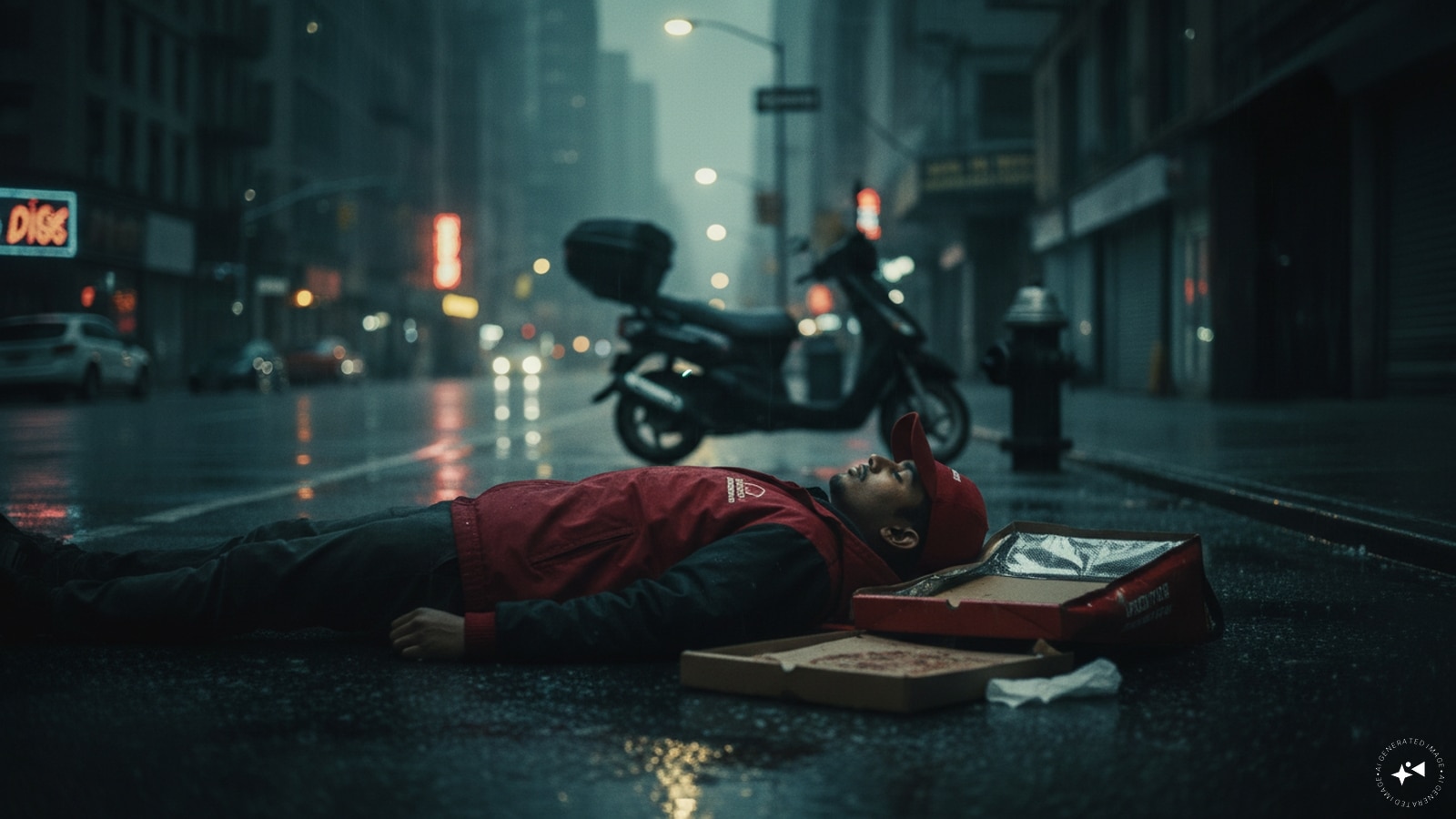
You leave your small village in Punjab with a heart full of hope, a mountain of debt, and a single goal: build a better life for your aging parents. Thirteen years later, that journey ends on a dark Brooklyn street over a delivery dispute.
The brutal killing of 27-year-old Gurdeep Singh in New York City has sent shockwaves through immigrant communities and left a family thousands of miles away pleading for answers. This is not just another headline about urban crime. It is a stark look at the vulnerabilities faced by thousands of foreign-born workers grinding out late-night shifts in American cities.
The Anatomy of a Tragedy in Brooklyn
It happened around 10 PM on a Friday near Stanley Avenue in the East New York neighborhood. Gurdeep Singh, who lived in Queens and worked tirelessly as a pizza delivery driver, arrived to drop off an order. According to statements from his grieving family and initial police reports, a dispute erupted when payment was withheld, quickly escalating into a physical confrontation.
Surveillance footage captured a brief, violent struggle in the street. A flash of light pierced the dark. A single gunshot struck Singh in the chest. The shooter jumped into a waiting vehicle and sped away into the night, leaving Singh bleeding out on the pavement.
First responders rushed him to One Brooklyn Health-Brookdale Hospital Medical Center, but it was already too late. Doctors pronounced him dead shortly after arrival. New York Police Department investigators combed the neighborhood for hours, recovering evidence and reviewing security cameras, but as of now, no arrests have been made.
The Heavy Price of Migration
To truly understand why Gurdeep's death hurts so deeply, you have to look back at where he started. Hailing from Jabbowal village near Begowal in Punjab's Kapurthala district, Singh came from a family of modest means. To finance his trip to the United States roughly a decade ago, his family borrowed roughly 30 lakh rupees.
His father, Pyara Lal, works as a daily-wage laborer and owns no agricultural land. That massive loan hung over the household for years. While outsiders often romanticize moving abroad, the daily reality for many young men like Gurdeep involves grueling hours, dangerous neighborhoods, and constant financial anxiety.
Singh was unmarried and planning a long-overdue trip back home to visit his relatives next year. Instead of a joyful reunion, his family is now begging both Indian and American authorities to help repatriate his remains so they can perform his final rites.
Growing Dangers for Delivery Workers
Gig workers and late-night food couriers face immense hazards across major American metropolitan areas. Operating alone, carrying cash or high-value food orders into unfamiliar housing complexes, they make prime targets for robberies and assaults.
Advocacy groups like the North American Punjabi Association (NAPA) have stepped forward to demand accountability. NAPA executive director Satnam Singh Chahal noted that incidents of violence, extortion, and threats targeting the Indian diaspora in the United States are mounting.
"Every time a young Punjabi or Sikh person is killed, a family is destroyed," Chahal said. "We cannot allow repeated violence to become something the community simply learns to live with."
Community leaders argue that these episodes should never be dismissed as isolated criminal anomalies. They reflect systemic safety gaps for gig economy workers who lack basic corporate security, health insurance, or emergency support systems.
The Fight for Accountability
Right now, the Consulate General of India in New York is in direct contact with Singh's relatives, offering coordination and support to bring his body back to Punjab. Yet, repatriation is only half the battle.
For Pyara Lal and the rest of Gurdeep's family, true peace depends entirely on law enforcement catching the person responsible. They want a transparent investigation and maximum penalties for the killer.
As the NYPD continues its manhunt, the street corners of Brooklyn remain busy, and delivery drivers continue riding into the night. But for the people who knew Gurdeep Singh, the illusion of safety is shattered for good.