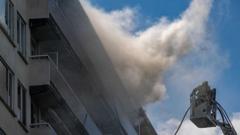
A horrific morning in Belgium just reminded us how fast a high-rise residential building can turn into a death trap.
On Wednesday morning, July 1, 2026, a massive fire ripped through a 10-story apartment block in the Linkeroever neighborhood of Antwerp. Emergency services received the call at 9:53 a.m. regarding a raging fire on the eighth floor of the building. The property is home to more than 200 residents, sparking a chaotic and terrifying evacuation process.
Local police confirmed that several people lost their lives, and numerous others suffered serious injuries or severe smoke inhalation. Thick black smoke billowed from balconies as several fire brigades fought intense, difficult conditions to control the blaze. Belgian Prime Minister Bart De Wever publicly expressed his grief for the victims of the Linkeroever tragedy.
While investigators scramble to find the source of the ignition, this disaster exposes a glaring truth. We simply aren't doing enough to protect people living in aging high-rise structures.
The Anatomy of High Rise Fires
When a fire starts on the eighth floor of a 10-story block, firefighting tactics get complicated quickly. Heat and smoke travel upward, trapping everyone on the floors above. In the Antwerp incident, emergency crews even deployed a specialized drone unit just to assess the situation and look for survivors.
The sheer speed of the spread in modern apartment complexes often comes down to old construction materials, lack of compartmentalization, and missing retrofitted safety measures. If a building holds over 200 residents, a single point of failure can lead to mass casualties.
Many older European high-rises lack central sprinkler systems. They rely instead on dry risers or internal pipes that firefighters must hook up to from the ground level. If those systems fail or suffer from poor maintenance, response times slow to a crawl while the fire grows exponentially.
What to Do If Your Building Catches Fire
Most people panic during a building emergency because they don't know the basic mechanics of how smoke moves. You don't want to figure out an escape plan while your hallway is filling up with toxic carbon monoxide.
Know Your Escape Routes
Never use the elevator during a fire. It seems obvious, but panic makes people do foolish things. Elevators can easily lose power, leaving you trapped in a shaft filling with smoke. Find the fire stairs, and make sure they are completely clear of bicycles, boxes, or trash. Blocked stairwells kill.
The Stay Put Dilemma
Many European cities advise residents to stay inside their apartments if the fire is on a different floor, assuming the flat is a fire-rated box that can hold off flames for 30 to 60 minutes. But if smoke begins entering your home, you must leave immediately. If you're trapped inside, seal the edges of your front door with wet towels and tape. Turn off any HVAC or ventilation systems instantly to prevent smoke from sucking into your rooms.
Protect Your Lungs
Smoke inhalation kills far more people than actual flames do. Crawl on your hands and knees if you encounter smoke. The cleanest air will always be closest to the floor. Cover your nose and mouth with a wet cloth if possible.
Demanding Better Standards From Landlords
We can't keep treating these high-rise tragedies as unpredictable accidents. They are often the result of systemic neglect and weak enforcement of building codes.
If you live in a multi-story apartment building, look around today. Ask your property manager when the fire alarms were last tested. Demand to know if the building has functional fire doors that close automatically. If the building relies on external cladding, ask if it has been tested for flammability. Taking these steps isn't being paranoid. It's staying alive.
Check your local municipality website for free fire safety checklists, and insist that your building association conducts annual evacuation drills.