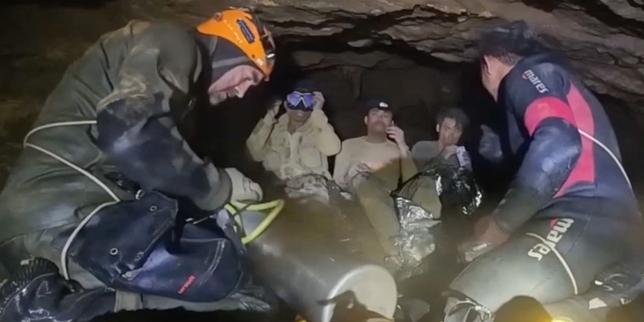
Four more tourists walk out of a cave in Laos, smiling for the cameras, and the global media machine immediately fires up its favorite script. The narrative is always identical. We celebrate the triumph of human endurance, laud the heroism of local authorities, and treat the entire near-fatal blunder as an inspiring tale of survival.
This framing is completely wrong. It is actively making adventure travel more dangerous.
By treating lucky escapes as uplifting human-interest stories, the media feeds a dangerous delusion: the belief that the world has a safety net. It does not. Every time a major rescue operation succeeds, it masks a systemic failure of personal accountability and encourages the next wave of under-prepared thrill-seekers to push the boundary just a little bit further. We need to stop romanticizing the rescue and start confronting the real cost of subsidized recklessness.
The Mirage of the Safety Net
The fundamental flaw in how we cover these incidents is the assumption that rescue is a right, a guaranteed service provided by the universe to bail you out when a calculated risk goes sideways.
When you step off the beaten path into unmapped cave systems, dense jungles, or high-altitude peaks, you are choosing to leave civilization behind. Yet, the moment the environment strikes back, travelers expect civilization to deploy millions of dollars in technology and put dozens of local lives at risk to pull them out.
Consider the mechanics of a cave rescue. It is not a clinical, controlled operation. It is a chaotic, high-risk gamble where local volunteers and specialized divers face hypothermia, falling rocks, and sudden flooding. When four people walk out alive, we focus on the happy ending. We ignore the sheer mathematical probability that easily could have resulted in a body recovery operation instead.
I have spent years tracking how safety protocols evolve in remote regions. The pattern is clear. When a region becomes a hotspot for "extreme" exploration, the local infrastructure is rarely equipped to handle the fallout. Yet, Western media covers these events with a patronizing tone of relief, completely detached from the reality on the ground.
The False Comfort of "Lessons Learned"
Whenever a close call happens, industry pundits rush to talk about how this will improve safety standards. They argue that these incidents help us better understand the risks, map the caves, and refine emergency response protocols.
This is a comforting lie.
The data tells a completely different story. Making a hazardous environment appear "savable" does not deter people; it invites them. This is a classic demonstration of risk compensation, a psychological theory formalised by Sam Peltzman. When safety measures—or in this case, perceived rescue capabilities—are introduced, individuals adjust their behavior to take more risks, keeping the overall level of danger constant or even increasing it.
- The Illusion of Control: If a cave system is known to have a functional rescue team nearby, amateur explorers treat it like an amusement park ride with a malfunction clause, rather than a volatile natural structure.
- The Valuation Gap: Tourists rarely bear the financial or physical cost of their extraction. The economic burden falls on local governments or underfunded volunteer organizations, decoupling the risk of an activity from its actual consequence.
Dismantling the Amateur Explorer Narrative
Let us answer the question that always populates search engines after these incidents: How can we make adventure tourism completely safe?
You cannot. And attempting to do so ruins the very nature of adventure while creating a moral hazard.
The hard truth nobody wants to admit is that a significant portion of extreme tourism relies on a lack of actual expertise. True exploration requires years of rigorous technical training, local mentorship, and respect for environmental indicators. What we see today is commercialized adrenaline. People buy a flight, hire a guide, and assume that their financial transaction shields them from the laws of nature.
If you are trapped in a cave because you ignored seasonal weather patterns, rising waters, or clear warning signs, you are not a protagonist in a survival epic. You are a liability.
The Cost Nobody Talks About
The praise heaped upon rescue operations conveniently leaves out the long-term damage inflicted on local communities.
When an international incident occurs in a developing nation, local authorities are forced to divert scarce resources away from domestic infrastructure, healthcare, and basic services to manage a public relations crisis. A single high-profile rescue can drain the annual budget of a regional emergency service department.
Furthermore, the psychological toll on local divers and guides—who are frequently pressured into volunteering because of their intimate knowledge of the terrain—is immense. They face the grim reality of navigating tight, pitch-black underwater passages knowing that a single misstep means their own death, all to save someone who chose to enter that environment for recreation.
How to Actually Fix Adventure Travel
If we want to stop these recurring crises, we have to change the rules of engagement entirely. The current model of unconditional rescue must end.
Implement Strict Liability Agreements
Before entering designated high-risk wilderness zones or unguided cave networks, travelers should be legally required to sign binding liability waivers that explicitly state the limits of state intervention. If you get stuck, the state will deploy resources only if it poses zero risk to personnel. If the risk is too high, you wait until conditions clear naturally, or you do not come out.
Mandatory High-Risk Insurance Pools
Standard travel insurance does not cut it. We need an aggressive, tier-based insurance mandate operated by independent actuarial firms. If you want to enter a volatile cave system during a shoulder season, your premium should reflect the literal cost of a multi-day commercial salvage operation. If you cannot afford the premium, you do not get the permit.
End the Media Hero Worship
Journalists need to stop interviewing survivors as if they achieved something great. The coverage should be clinical, focusing heavily on the logistical failures, the financial waste, and the specific rules that were broken. Shaming reckless behavior is a far more effective deterrent than celebrating a lucky escape.
The Uncomfortable Reality
The world is not a managed playground. The oceans, mountains, and caves do not care about your itinerary, your social media feed, or your intent.
When we celebrate a successful rescue without condemning the sequence of poor decisions that necessitated it, we guarantee that it will happen again. We are telling the next group of travelers that they can push past the warning signs because someone will always come to save them.
Stop clapping for the survivors. Start holding them accountable for the chaos they leave in their wake.