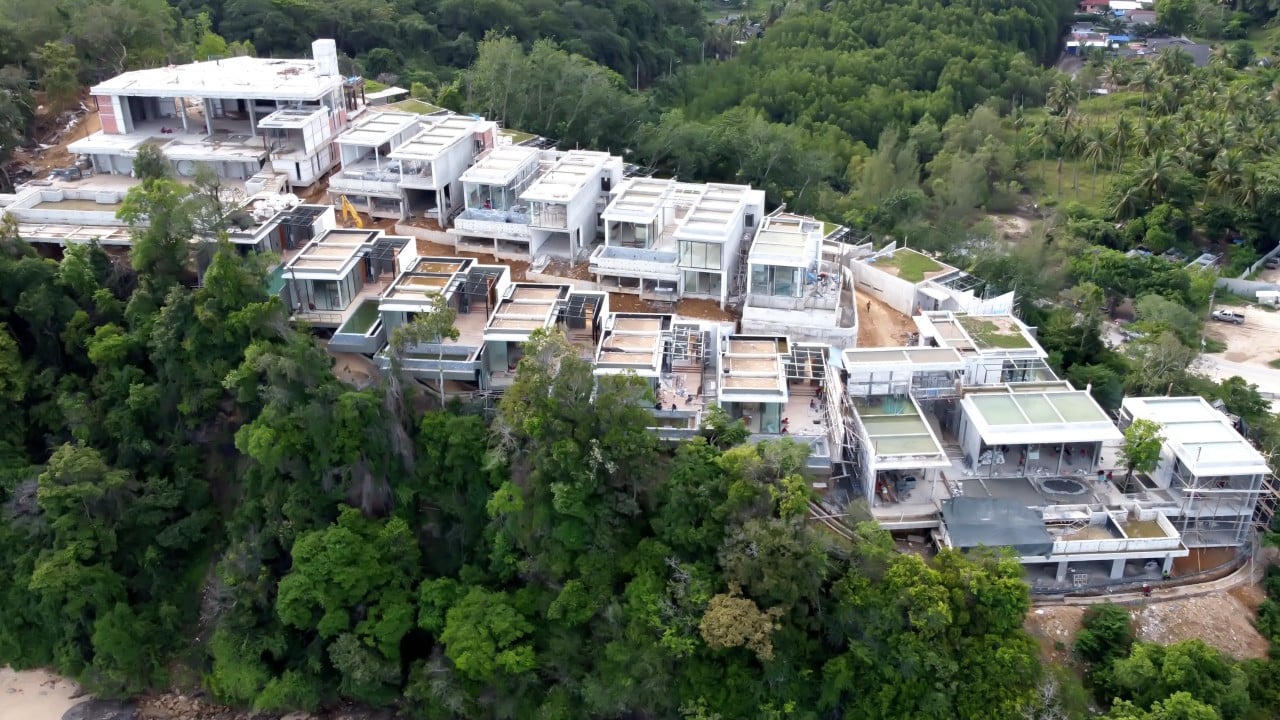
Foreign property buyers across Southeast Asia are facing a harsh reality check. In Thailand, aggressive enforcement against illegal nominee structures is stripping overseas investors of villas and land they thought they owned, while neighboring Malaysia is aggressively courting those exact same buyers with relaxed visa thresholds and outright freehold ownership.
For decades, expatriates, retirees, and international investors treated Thailand as an easy haven for tropical real estate. They ignored the strict legal boundaries prohibiting non-citizens from owning land, relying instead on local lawyers who promised that setting up a Thai shell company was a standard, risk-free workaround. That era is dead. Thai authorities have launched coordinated crackdowns across Phuket, Koh Samui, and Pattaya, auditing corporate registries and freezing assets tied to sham shareholders. Meanwhile, Kuala Lumpur has watched Bangkok's self-inflicted wound with quiet opportunism, overhauling its Malaysia My Second Home program and expanding special economic zones to absorb the flight of foreign capital.
The Anatomy of the Thai Crackdown
To understand why buyers are losing their shirts in Thailand, you have to look at the Foreign Business Act and the Land Code. Both laws are unambiguous. Foreigners cannot own land in Thailand, barring narrow exceptions for massive industrial investments that almost no individual homebuyer qualifies for. You can own a condominium unit outright, provided foreign ownership in the entire building does not exceed 49 percent of the total floor area.
Villas, townhouses, and raw land are completely off-limits.
Yet tens of thousands of foreigners live in sprawling beachfront estates from Hua Hin to Chiang Mai. How did they buy them? Almost universally, through nominee shareholding structures. Under this arrangement, a buyer sets up a Thai limited company. The foreigner holds 49 percent of the shares, while Thai nationals hold the remaining 51 percent. On paper, it is a majority Thai-owned business capable of buying land. In practice, the Thai shareholders are often low-paid clerks from the law firm that incorporated the entity, signing away their voting rights and dividend claims through stacked preference shares.
Thai regulators always knew this was happening, and for years, they looked the other way because foreign money fueled local construction booms. That tolerance evaporated when unchecked foreign speculation began pricing locals out of prime coastal provinces and triggering complaints from domestic hotel operators losing business to unlicensed foreign-owned Airbnb villas.
The Department of Special Investigation and the Department of Business Development are no longer waiting for whistleblowers. They are cross-referencing land office deeds with corporate tax filings. If a Thai company owns a luxury villa, generates zero legitimate business revenue, and relies on Thai shareholders whose bank accounts show no capacity to fund their equity stake, the state classifies the setup as an illegal proxy.
Once flagged, the consequences are swift. Prosecutors freeze the company assets, void the land title transfers, and force the liquidation of the property. Foreigners who poured millions of dollars into custom builds discover they have zero legal standing to recover their equity because the underlying contract was built on an unlawful circumvention of the Land Code.
The Leasehold Trap Nobody Mentions
When nervous buyers ask Thai real estate agents how to avoid the nominee crackdown, they are usually steered toward 30-year leaseholds. Agents pitch this as the clean, fully legal alternative. You register a 30-year lease at the local Land Department, and the developer promises two automatic 30-year renewals in a private side contract, giving you an effective 90-year term.
Do not fall for this.
Under Thailand's Civil and Commercial Code, the maximum enforceable lease term for residential property is strictly capped at 30 years. Any contractual clause promising automatic renewals beyond that initial three-decade window is legally treated as a mere personal promise between the original parties, not a real property right attached to the land.
Consider a hypothetical example to see how this unravels. Suppose you pay $800,000 upfront for a 30-year villa lease in Phuket with a side agreement for two renewals. Fifteen years later, the Thai landowner dies, goes bankrupt, or simply sells the underlying land to a third-party developer. Because your renewal clauses cannot be registered on the title deed, the new owner has no legal obligation to honor them. When year 30 arrives, you hand over the keys and walk away with nothing. Even worse, if you try to sell that villa in year 18, your buyer only gets 12 guaranteed years left on the clock, cratering your resale value.
Malaysia's Calculated Play for Displaced Capital
While Bangkok tightens the noose, Malaysia is executing a textbook playbook to capture the fallout. Malaysian policymakers recognize that high-net-worth retirees, digital nomads, and regional family offices want stability, clear title deeds, and predictable immigration rules.
Unlike Thailand, Malaysia allows foreigners to purchase freehold property directly in their own names. You do not need a local partner. You do not need a shell company. You do not need to navigate opaque lease extensions. When you buy a landed house or a high-rise apartment in Kuala Lumpur, Penang, or Johor Bahru, your name goes directly onto the state-backed title deed.
The primary restriction in Malaysia is not ownership structure, but price floor. State authorities set minimum purchase thresholds for foreign buyers to protect affordable housing stock for Malaysian citizens. Depending on the state and property type, these minimums typically range from 600,000 Malaysian ringgit to 2 million ringgit. For an investor accustomed to paying upwards of a million dollars for a risky leasehold villa in Phuket, a million-ringgit freehold condo in Penang feels like both a bargain and a massive upgrade in legal security.
Malaysia has paired this straightforward property law with an aggressive overhaul of its Malaysia My Second Home (MM2H) residency program. After a period of policy confusion a few years ago that temporarily scared off applicants with excessive income requirements, Putrajaya recalibrated. The restructured tiered system—spanning Silver, Gold, and Platinum categories, alongside a special tier for the Johor-Singapore Special Economic Zone—directly links long-term residency visas to real estate acquisition.
By purchasing a qualifying property, foreign applicants secure multi-year, renewable residency passes for themselves and their dependents. Crucially, the government mandates that buyers hold the property for at least ten years, a rule designed to weed out short-term flippers while rewarding serious, long-term residents with legal certainty.
Comparing the Real Estate Realities
Investors weighing both markets need to strip away the glossy brochure promises and look at the hard mechanics of owning assets in each jurisdiction.
| Investment Factor | Thailand | Malaysia |
|---|---|---|
| Land Ownership | Strictly prohibited for individuals | Permitted outright (subject to state minimums) |
| Condo Ownership | Freehold up to 49% of building area | Freehold permitted above price thresholds |
| Primary Risk | Asset seizure via nominee audits | Currency fluctuation and market oversupply |
| Transaction Taxes | ~6.3% split between buyer and seller | Progressive stamp duty up to 4% for foreigners |
| Residency Link | Thailand Privilege visa offers zero property rights | MM2H tiers directly reward property purchases |
The contrast in how both nations treat foreign capital extends to financing and exit strategies. In Thailand, getting a local bank mortgage as a non-resident is nearly impossible, forcing buyers to wire 100 percent cash from abroad and obtain a Foreign Exchange Transaction form just to prove the money entered the country legally. Without that specific bank form, you cannot repatriate your proceeds when you eventually sell.
In Malaysia, foreign buyers with verifiable overseas income or local fixed deposits can regularly secure domestic mortgages covering 60 to 70 percent of the property value from major banks like Maybank or CIMB. Repatriating funds upon sale is routine, provided capital gains taxes—known locally as Real Property Gains Tax—are settled.
The Hidden Friction in the Malaysian Market
If Malaysia looks like an obvious winner on paper, veteran analysts know better than to treat any emerging market as friction-free. Buying property in Malaysia comes with its own set of structural headaches that glossy relocation seminars rarely highlight.
The biggest issue is chronic oversupply in the high-end residential sector. For over a decade, Malaysian and Chinese developers built massive luxury condo towers in Kuala Lumpur, Penang, and particularly in Johor's Iskandar region, betting on an endless wave of foreign buyers that never fully materialized at the projected scale.
If you buy a shiny new unit off-plan from a developer, you might enjoy pristine legal title, only to discover upon completion that half the units in your tower sit empty. Rental yields in oversupplied luxury towers frequently hover around a sluggish 2 to 3 percent gross, barely covering maintenance fees and sinking funds. Selling a unit in a building where hundreds of identical layouts are competing for the same narrow pool of expatriate buyers requires steep discounting.
Furthermore, Malaysia's federal-state split creates bureaucratic friction. Land matters fall under individual state jurisdictions rather than the federal government. Before a foreign sale can close, the buyer must apply for State Authority Consent. While usually a formality if you meet the minimum price threshold, this approval process routinely adds three to six months to the closing timeline, tying up deposits and testing the patience of buyers used to fast Western or Singaporean transactions.
There is also the matter of cultural and lifestyle trade-offs. Thailand's appeal was never really about its legal system; it was about an unmatched tourism infrastructure, vibrant street life, and an effortless hospitality culture that turns every weekend into a vacation. Malaysia offers superior infrastructure, widespread English proficiency, world-class healthcare, and common-law legal protections inherited from the British system, yet parts of the country feel decidedly more conservative and subdued than Phuket or Bangkok.
Why Thailand Cannot Easily Reverse Course
Some optimistic real estate brokers in Bangkok argue that the current crackdown is merely a temporary political theater that will fade once tourism numbers dip or construction lobbies complain loudly enough. They point to occasional cabinet discussions about extending lease terms to 99 years or raising the foreign condo quota from 49 percent to 75 percent as proof that liberalization is around the corner.
Do not bet your net worth on Thai legislative reform.
Land ownership in Thailand is an intensely emotional, third-rail political issue tied directly to national sovereignty. Every time a cabinet minister floats the idea of allowing foreigners to own even a tiny plot of land—such as a 2022 proposal granting one rai of land to wealthy investors bringing in 40 million baht—the backlash from opposition parties, academics, and the general public is immediate and ferocious. Politicians routinely frame any relaxation of the Land Code as "selling off the homeland."
Even if a future administration manages to push through extended lease laws, retroactive protection for existing illegal nominee companies is out of the question. You cannot legalize a corporate structure that was fraudulent from its inception. For the thousands of foreigners currently sitting in villas held by dormant Thai shell companies, the legal defect is permanent. Attempting to unwind those companies now by transferring the property into a 30-year lease triggers massive transfer taxes and immediately alerts the Land Department to the prior nominee arrangement.
Strategic Moves for Cross-Border Buyers
Capital does not care about sentiment; it flows where property rights are enforced rather than improvised. The divergence between Bangkok and Kuala Lumpur offers a clear lesson for anyone deploying money into Asian real estate.
If you currently hold Thai property through a corporate nominee structure, stop taking advice from the local lawyer who set it up. You need an independent audit from a reputable international firm to assess your exposure, because restructuring before an official investigation begins is infinitely cheaper than fighting a prosecutor after your bank accounts are frozen. If you are determined to buy in Thailand going forward, stick strictly to foreign-quota freehold condominiums where your name appears directly on the back of the Chanote title deed, and verify the building's foreign ownership ratio directly at the Land Department before wiring a single dollar.
For buyers who insist on landed houses, private gardens, and long-term generational security without the constant anxiety of regulatory raids, the window in Thailand has closed. Malaysia, despite its sluggish resale market and bureaucratic closing timelines, offers the one asset that no tropical resort town can fake: an unassailable deed in your own name.