There is a particular kind of quiet that settles over an arena at two in the morning. The Zamboni has long since retreated, leaving behind a slick, mirrored sheet of water that slowly freezes into glass under the humming amber lights. The smell of melted rubber, stale popcorn, and cold concrete hangs heavy in the empty rafters. In most places, this is when the story ends. The doors lock. The lights go out.
Except when someone decides that ten thousand dollars is simply not enough.
Consider the arithmetic of ordinary grief. When someone we love is struck by the unthinkable—when a diagnosis lands like a fist in the ribs—our first instinct is usually helplessness. We fold our hands. We wait for professionals. We accept the smallness of our individual impact against the vast, indifferent machinery of modern medicine.
Sylvia Hodgson did not fold her hands.
To understand how a modest backyard hockey tournament in a small Canadian community metastasized into a fundraising juggernaut exceeding one million dollars, you have to look past the spreadsheets and the corporate sponsorships. You have to look at the ice.
Ice is unforgiving. It demands balance. It punishes hesitation. If you stand still too long, your blades sink, and you lose your footing. Sylvia understood this long before she laced up her skates for a cause that felt, in its infancy, almost impossibly heavy. Her nephew, Ryan, had been diagnosed with leukemia. The word itself feels jagged in the mouth, a collection of hard consonants designed to shatter the predictable rhythm of family dinners, Saturday morning chores, and minor-league hockey practices.
When leukemia enters a home, it does not knock. It kicks the door off its hinges. It brings with it a relentless parade of sterile hospital corridors, the chemical tang of chemotherapy, and the soul-crushing weight of watching a child fight a war his body was never built to endure.
Most people give what they can, write a quiet check, and carry the private ache in their chests. Sylvia looked at the ten thousand dollar goal she had initially set for a local charity hockey game and realized something fundamental about human generosity. People do not give money to numbers. They give money to momentum. They give because they want to believe that ordinary people, armed with little more than composite sticks, taped-up goals, and stubborn affection, can push back against the dark.
The first year smelled of damp wool and freezing rain.
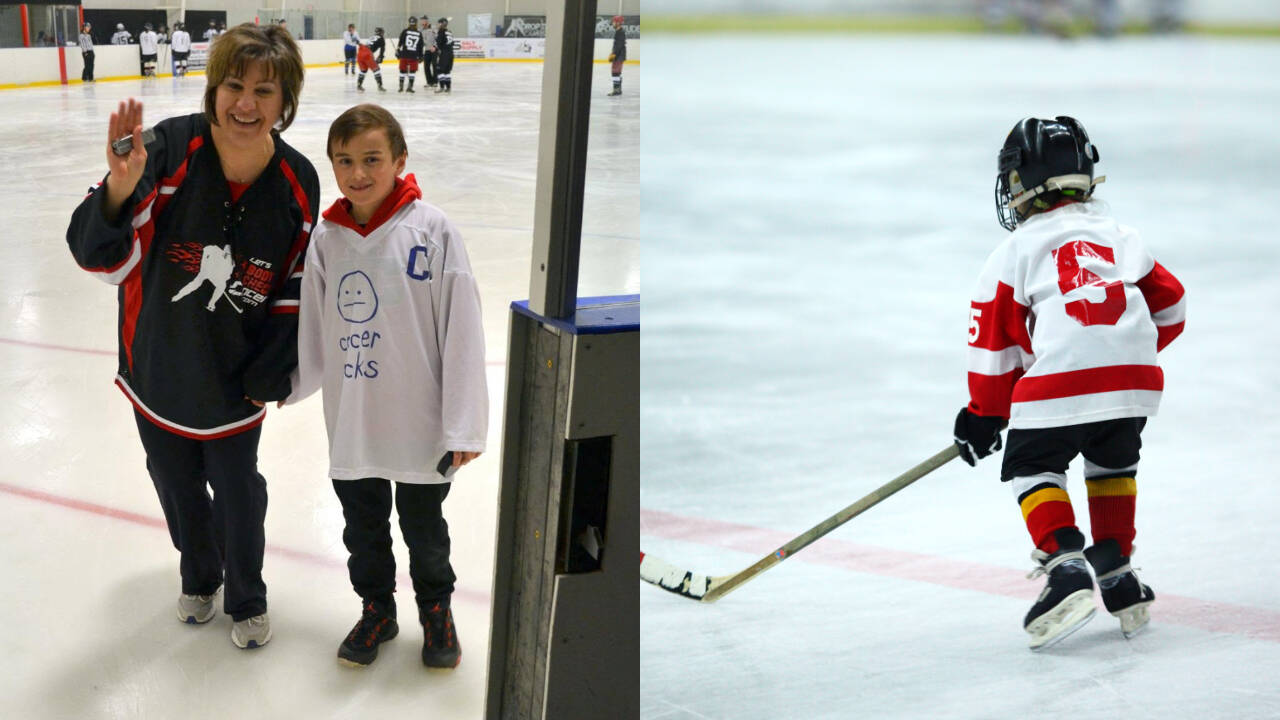
Imagine standing on the boards of an outdoor rink in rural Canada as the wind cuts straight through your thermal layers, howling off the fields like a freight train. Your toes lose sensation within twenty minutes. Your breath billows out in ragged white clouds. Yet, around the boards, shoulder-to-shoulder, stand neighbors, strangers, local merchants who closed their shops early, and kids wearing oversized jerseys bearing the names of local heroes.
That first tournament raised ten thousand dollars. For a grieving family, it was a lifeline. For Sylvia, it was a proof of concept.
But scale does not happen by accident. It happens through the gradual accumulation of sweat, phone calls, and relentless, unapologetic hope. By the second year, the local rink was too small. The parking lot overflowed onto secondary roads. Local firefighters volunteered to man the barbecue pits, feeding hundreds of freezing spectators flipping burgers through driving snow. Players from neighboring towns drove hours just to secure a spot on a roster, not for glory, but for the sheer privilege of playing on a team where the score mattered less than the survival of a little boy.
Growth is a strange phenomenon. It feeds on itself. As the totals climbed—from fifty thousand to a hundred thousand, then marching inexorably toward half a million—the character of the event shifted. It stopped being merely a local fundraiser and transformed into a pilgrimage.
Think about what it takes to raise a million dollars one slap shot at a time. It requires local bakeries donating thousand-pie weekends. It requires retired goalies pulling their old pads out of dusty basement rafters, straps cracked and leather stiff, just to face blistering wristers from teenagers half their age. It requires corporate executives swallowing their pride to stand in the freezing cold selling raffle tickets for a signed jersey.
The invisible stakes of such an endeavor are rarely talked about. When a community rallies around a sick child, they are not just funding research or buying equipment. They are buying time. They are buying the quiet certainty that no matter how cruel or random a diagnosis might be, no family has to face the abyss alone.
By the time the milestone crossed into seven figures, the numbers had grown almost too large to comprehend. Yet, standing by the glass, watching the spray of white ice chips fly off a defenseman's skates, the magnitude of the achievement dissolved into something deeply intimate. It was still just Sylvia, standing in her winter jacket, her cheeks wind-burned and bright red, watching another game unfold.
We live in an era obsessed with scale, metrics, and algorithmic virality. We look for digital hacks to manufacture outrage and sympathy in equal measure across glowing glass screens. We forget that the most enduring monuments to human kindness are often built the old-fashioned way. One frozen sheet of water. One community refusing to look away. One aunt who decided that ten thousand dollars was just the opening face-off.
The lights in the arena will eventually go out tonight. The ice will melt, drain, and freeze again. But the warmth generated in those sub-zero Canadian winters remains trapped in the rafters, proof that when ordinary people step onto the ice together, the cold never really wins.